|
*𝘷𝘢𝘯 2007 𝘵/𝘮 2017 𝘩𝘦𝘣 𝘪𝘬 𝘪𝘯 𝘎𝘦𝘭𝘥𝘦𝘳𝘭𝘢𝘯𝘥 𝘦𝘦𝘯 𝘱𝘦𝘯𝘴𝘪𝘰𝘯𝘴𝘵𝘢𝘭 𝘨𝘦𝘳𝘶𝘯𝘥 𝘸𝘢𝘢𝘳 𝘪𝘬 𝘴𝘰𝘮𝘴 𝘰𝘰𝘬 '𝘱𝘳𝘰𝘣𝘭𝘦𝘦𝘮𝘱𝘢𝘢𝘳𝘥𝘦𝘯' 𝘵𝘳𝘢𝘪𝘯𝘥𝘦. 𝘖𝘱 𝘮𝘪𝘫𝘯 𝘍𝘢𝘤𝘦𝘣𝘰𝘰𝘬 𝘦𝘯 𝘸𝘦𝘣𝘴𝘪𝘵𝘦 𝘷𝘪𝘯𝘥 𝘫𝘦 𝘩𝘪𝘦𝘳 𝘮𝘦𝘦𝘳 𝘰𝘷𝘦𝘳 Do it yourself: Likstenenbar voor Paarden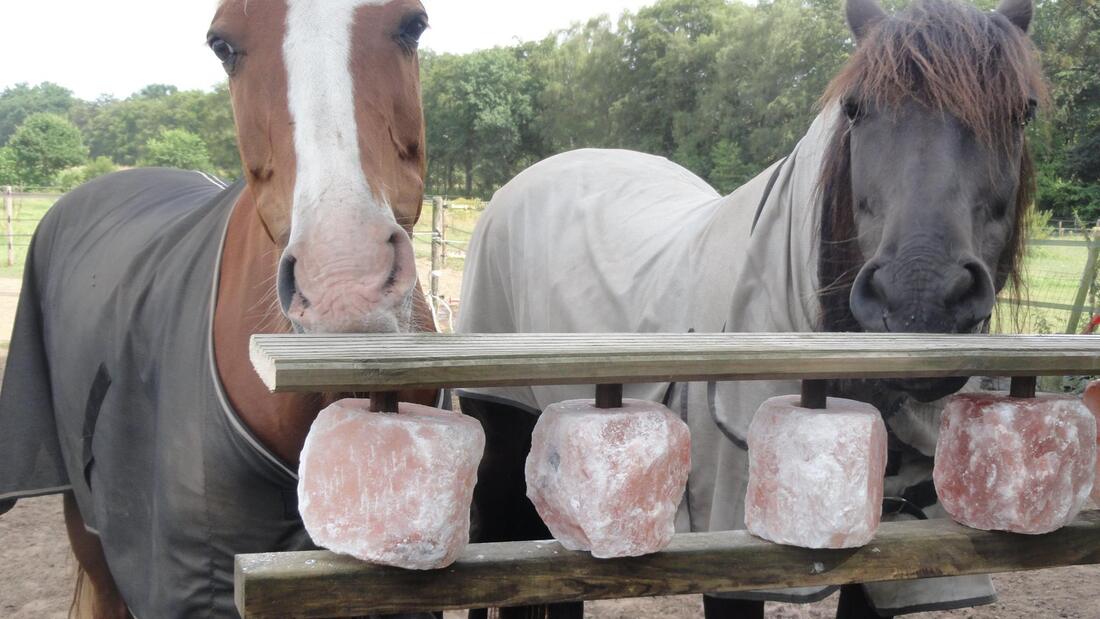 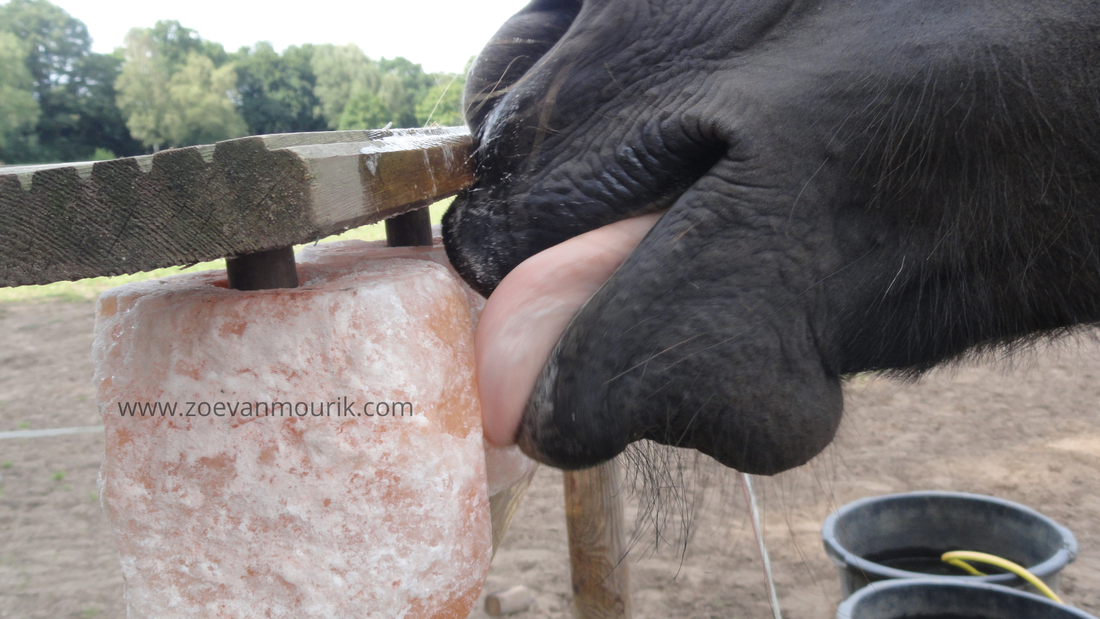 In de zomer van 2014 kreeg ik een ingeving om de paarden op mijn pensionstal op een andere manier zout aan te bieden. Dankzij hevige regen en pony's die met de zoutblokken speelden gingen ze niet erg lang mee, in elk geval niet lang genoeg om elk van de 11 vaste paarden en de trainingspaarden te voorzien van wat extra's.. Na wat uurtjes tekenen in de vroege ochtend, onderdelen verzamelen en vervolgens alles in elkaar zetten, werd de Zoutbar diezelfde middag al dankbaar in gebruik genomen! Voor de pony's/mini's kun je hetzelfde systeem maken, maar dan lager. 𝗕𝗲𝗻𝗼𝗱𝗶𝗴𝗱𝗵𝗲𝗱𝗲𝗻: * 2x houten palen van ca. 3m voor een vaste Zoutbar of 2x houten palen van 1.50 voor een mobiele bar (op wielen) * grondboor + hamer voor vaste bar of 4x zwenkwielen + schroeven * 1x plank 1m lang, ca 3cm dik en 5cm breed * 1x plank 1m lang, 2cm breder dan 1e plank * 6x houten spijlen, Ø 27 mm, 12-15 cm lang (een bezemsteel werkt goed!) * cilinderzaag Ø 27 mm * houtlijm, schroeven, schuurpapier, & zout/mineraal/houtblokken 𝗛𝗼𝘄 𝗧𝗼 (𝘃𝗮𝘀𝘁𝗲 𝗰𝗼𝗻𝘀𝘁𝗿𝘂𝗰𝘁𝗶𝗲): * verdeel de 6 zoutblokken over de 1e (dikste) plank en teken af * zaag 6 Ø 27 mm cirkels in de plank, in het midden van de afgemeten stukken * plaats de 6 spijlen in de 6 uitgezaagde cirkels en lijm vast; schroef ze aan de onderkant vast voor extra bevestiging * bevestig de 2 houten palen in je weide of paddock * monteer met behulp van schroeven de plank met spijlen bovenop de 2 houten palen * plaats de zoutblokken over de spijlen * plaats de laatste plank over de zoutblokken; schroef de plank aan 1 kant niet helemaal vast en bevestig aan de andere zijde een haakje; zo kun je de plank gemakkelijk wegdraaien en nieuwe blokken toevoegen Je kunt deze constructie dus ook op wielen maken! Handig als jouw paarden veel van weide wisselen of wanneer ze niet allemaal bij elkaar staan. Dankzij de spijlen draaien de zoutblokken rond als er paard eraan likt. Zo 'slijten' de blokken gelijkmatig af en vallen ze niet uit de constructie wanneer ze kleiner worden. Zorg altijd voor voldoende water! 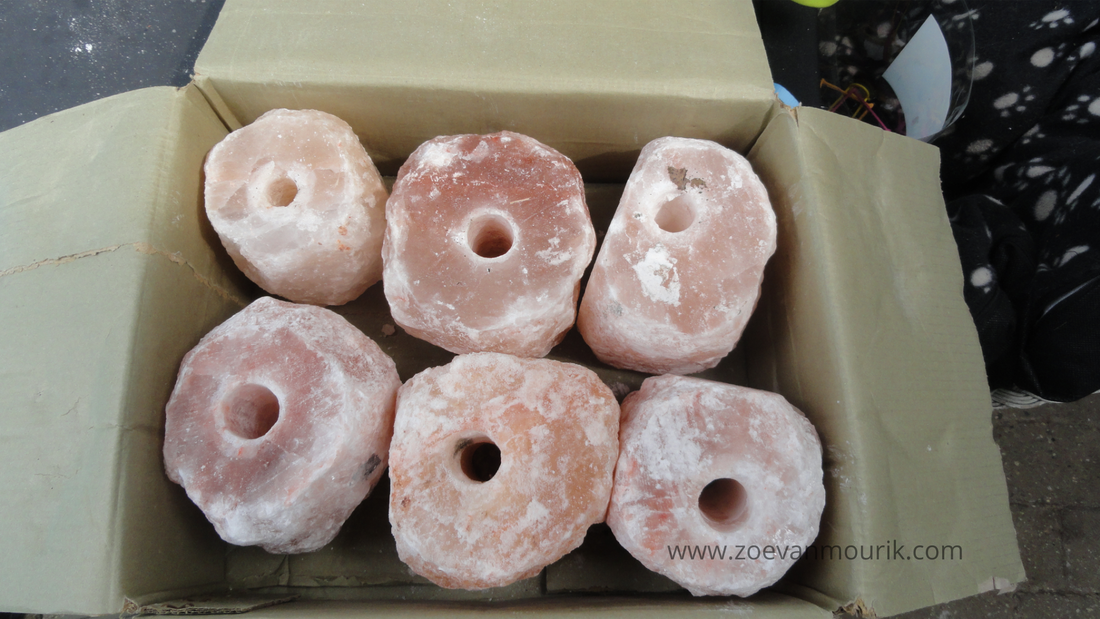 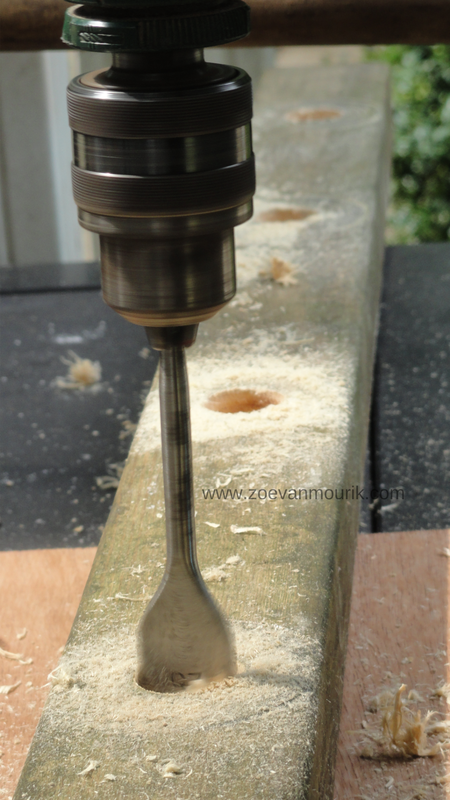 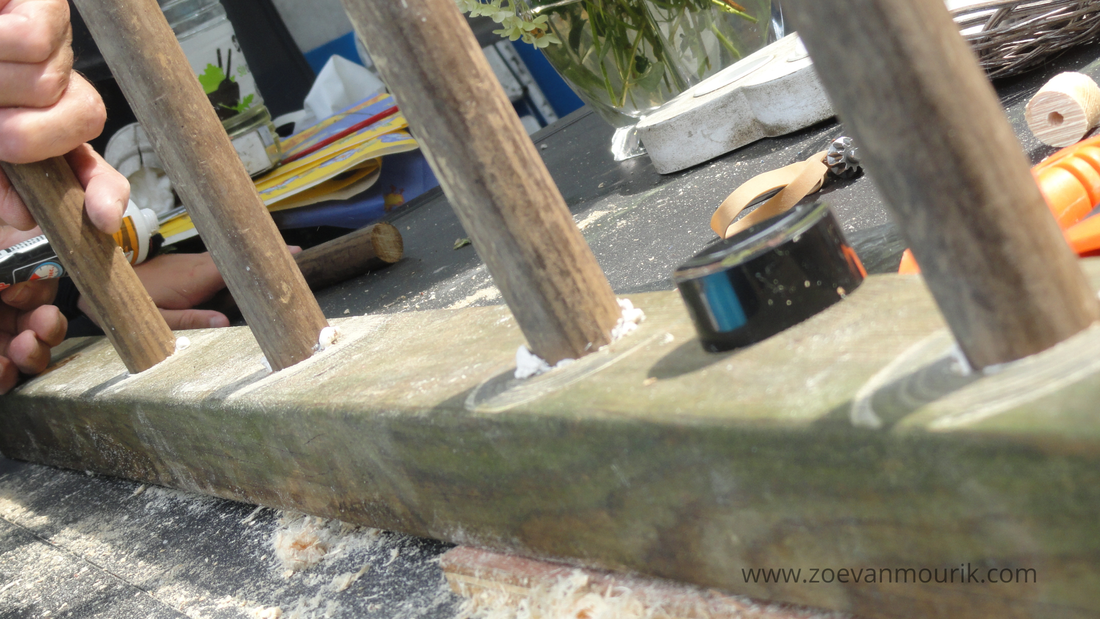 Monitor in ieder geval de eerste paar dagen hoe de paarden omgaan met deze nieuwe situatie. Paarden die bijvoorbeeld voernijd hebben of nog in hun Decompressing Period zitten kunnen ontzettend dominant lijken tegenover andere paarden wanneer er voer in het spel is. 2x een bar met 3 blokken op verschillende plekken neerzetten kan dus ook, of 3 constructies met elk 2 blokken. Let goed op wat jouw kudde nodig heeft en wat het beste bij ze past. In het geval van mijn kudde is er altijd veelvuldig en vreedzaam gebruik gemaakt van de bar, door heel veel verschillende paarden. 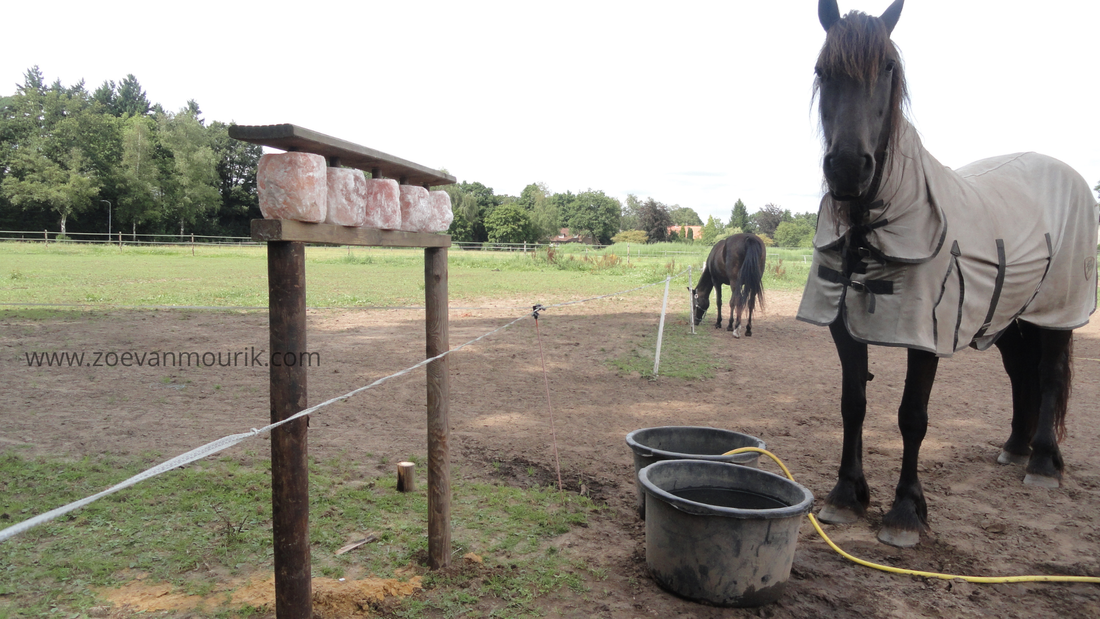 *Bekijk meer foto's onderaan deze pagina Love,
Zoë van Mourik | Equine Trauma & Behavior Specialist www.zoevanmourik.com & www.houseofhorsemanship.nl
0 Comments
Monty Roberts is een bekende naam in de paardenwereld. Ook in Nederland zweren trainers bij de Join Up of het gebruik van dually halters. Maar waarom is de "Monty Method" inmiddels achterhaald? Allereerst is het onmogelijk om het juiste te doen als we niet over de juiste/alle informatie beschikken. Door de jaren heen zijn veel principes vanuit Natural Horsemanship methoden onder de loep genomen, met schrikbarende resultaten. Dankzij research, praktische en wetenschappelijke onderzoeken van deskundigen weten we steeds beter hoe de dynamiek tussen paarden onderling en tussen mens en paard wel werkt. 'Correct Roundpenning' is een belangrijk voorbeeld; iets dat in heel veel gevallen niet correct en niet paardvriendelijk of natuurgetrouw wordt uitgevoerd. Door het paard fysiek in ruimte te beperken, een onnatuurlijke/drijvende houding aan te nemen zonder respect voor de threshold van elk individueel paard, voeren we onnodig veel druk op bij paarden die daar toch al moeilijk mee om kunnen gaan. Stress, onbegrip en angst zijn 3 dingen die mij bij ieder paard in een sessie met Monty Roberts (en Linda en Pat Parelli) zijn opgevallen en bijgebleven. Nee, het is NIET normaal dat een paard in èèn enkele sessie gerehabiliteerd is. Het is NIET normaal om een paard in stress eindeloos rondjes te laten rennen. Het is NIET normaal om zo veel onnodige druk te blijven gebruiken, laat staan continue op te voeren. Het is NIET normaal dat we onze paarden pesten om maar tot het gewenste resultaat te komen, binnen een bepaald tijdsframe en dit alles slechts "voor de show"... Om ze hun natuurlijke omgeving af te nemen en te verwachten of zelfs eisen dat zij ons leiderschap accepteren. Leiderschap = Partnerschap, plain and simple; voor een paard is er geen verschil. Bij het opvolgen van methodes als die van Monty hebben we het dus niet over deze natuurgetrouwe dynamiek. In zo'n geval hebben we het over "Bullying Into Submission". Meer lees je in het originele artikel: https://phys.org/news/2012-07-urge-rethink-monty-roberts-horse.html?fbclid=IwAR3enh-XF71O_fAvOyu38rO3lcxbRa5GOfv6mok5LTx_ADAQb8QO1u2XlqM 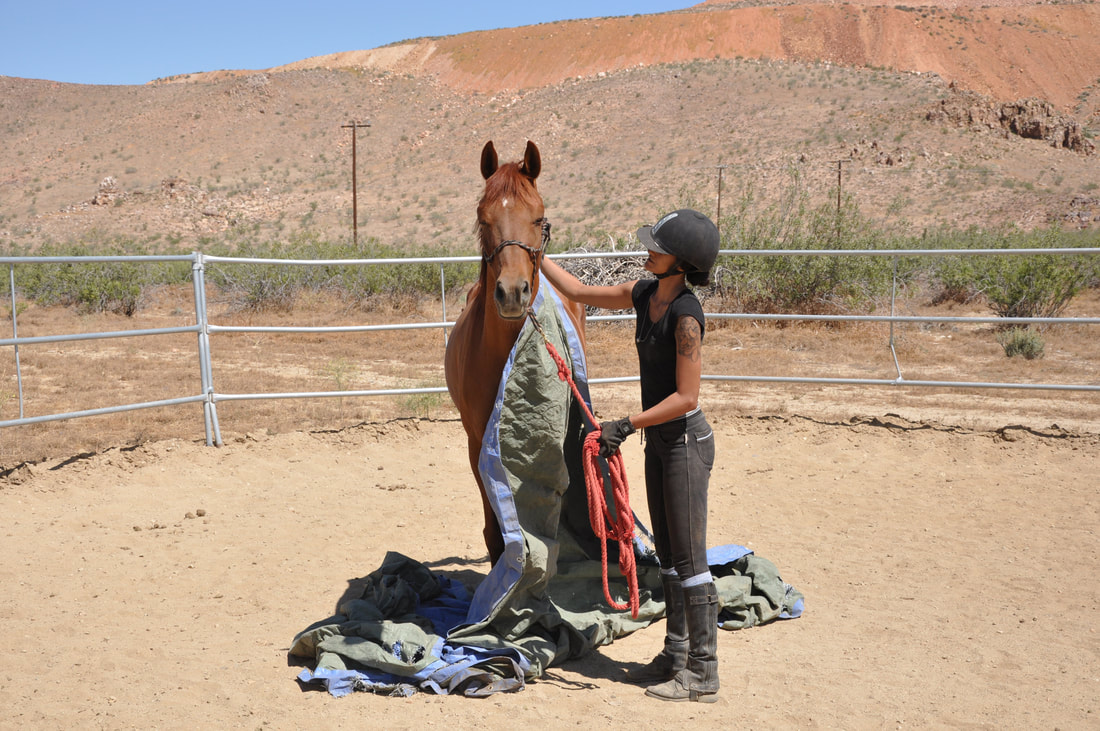 "Volg het Paard, niet de Methode"
Love, Zoë van Mourik | Equine Trauma & Behavior Specialist www.zoevanmourik.com & www.houseofhorsemanship.nl 》Over waarom voerbeloningen niet altijd een goed idee is, we R+ te veel vermenselijken en daardoor alsnog te veel druk op het paard leggen & meer; "Operant conditioning, and the usual methods we employ with non-traumatised horses may not be adequate for those animals with a trauma history (Schlote,2017 aShalev et al., 1996). Generally speaking operant conditioning requires the horse to perform behaviours that can be reinforced. Traumatised horses do not offer behaviours we can easily reinforce or even would want to reinforce! Escape behaviour is often what we would see instead.These animals are often too fearful for food rewards to be effective (it also can cause approach/avoidance conflict).This means they can quickly take themselves over threshold something to be avoided. It is especially problematic if a horse has a history of food deprivation as their desire for food even a low value food/reinforcer may lead them to come outside their comfort zone or window of tolerance (Corrigan et al., 2011; Siegel, n.d.)." . Een heel duidelijk en mooi beschreven artikel dat tevens belicht waarom ik woorden als "Rehabiliteren" of "Decompressing" prefereer boven "Training". Lees het originele artikel hieronder: Trauma and Operant Conditioning : Why You Can’t Train it Away?"Operant conditioning, and the usual methods we employ with non-traumatised horses may not be adequate for those animals with a trauma history (Schlote,2017 aShalev et al., 1996). Generally speaking operant conditioning requires the horse to perform behaviours that can be reinforced. Traumatised horses do not offer behaviours we can easily reinforce or even would want to reinforce! Escape behaviour is often what we would see instead. These animals are often too fearful for food rewards to be effective (it also can cause approach/avoidance conflict).This means they can quickly take themselves over threshold something to be avoided. It is especially problematic if a horse has a history of food deprivation as their desire for food even a low value food/reinforcer may lead them to come outside their comfort zone or window of tolerance (Corrigan et al., 2011; Siegel, n.d.). It is important to recognise that the behaviours that we are seeing are attempts by the horse or dog to make themselves feel safe or it is offering them a sense of relief. Each horse or dog will have their own ways of behaving that help them to feel better this is where simply observing can be so helpful. Fear may be so all consuming it overrides everything else! Touch may be frightening and targeting may also be inappropriate. Just because the horse is on a target does not always indicate the absence of negative emotional states. Avoiding the use of a fake hand (Marder et al., 2013) is better so that they become truly used to humans using classical conditioning and later shaping once a level of physical and emotional safety has been established (Van Fleet,2010). Using non-contingent reinforcement that does not depend on the animal offering a behaviour or relaxation but instead allows them to slowly begin to form a positive association whilst remaining below or at threshold may be more helpful. This is challenging in practice though and may require some trial and error. Making use of distance with or without protected contact (Laule & Whittaker, n.d.) can also be beneficial as can awareness of the animals spatial requirements which may vary even during a session for many reasons such as changes in the environment . It is important to understand though that with traumatised horses their feelings of safety and comfort may change day to day or even hour by hour depending on other factors. Adopting a purely operant approach when working with trauma or even with other challenges for that matter fails to address the underlying emotions the horse or dog is experiencing. Emotions drive and influence behaviour , the underlying emotion and the strength of that emotion also determine how and with what intensity the behaviour is expressed. Behaviours are also communication. Simply asking a horse to stand at a stationary target or asking a dog to sit or “go to mat” does not mean that the underlying emotion has been changed or that they are now able to cope. All horses and dogs are individuals how they respond and feel will differ. This is dependent on their genetics , previous experience in particular early experiences are especially powerful and their current environment (Champagne & Curley, 2009; Raoult et al., 2017; Špinka, 2012). Understanding what they need in one moment may differ in the next . Seeking to offer support rather than immediately stepping in to modify a behaviour that is determined by ourselves to be undesirable , that is not to say that there is no role for changing behaviour particular if they are unsafe or detrimental to the horse or dog or their caregiver but any alternative should genuinely be helpful to them. Having awareness of signs of tension , stress and arousal level and tailoring the training or interaction accordingly is important in helping them feel safe enough to learn. Then positive reinforcement training in combination with meeting their physical and emotional needs with friends, forage and freedom can begin. This is an updated blog post from 2019 inspired by all of the incredible discussions looking beyond operant conditioning in particular the amazing Beyond the Operant discussions with Dr Kathy Murphy of Barking Brains, Andrew Hale of Dog Centred Care , Kim Brophy of the Dog Door and Scott Stauffer at Affective Dog Behaviour . Not to forget the always inspiring conversations I have with my colleagues at Mimer Centre on this subject. References Champagne, F. A., & Curley, J. P. (2009). Epigenetic mechanisms mediating the long-term effects of maternal care on development. In Neuroscience and Biobehavioral Reviews (Vol. 33, Issue 4, pp. 593–600). https://doi.org/10.1016/j.neubiorev.2007.10.009 Corrigan, F. M., Fisher, J. J., & Nutt, D. J. (2011). Autonomic dysregulation and the Window of Tolerance model of the effects of complex emotional trauma. In Journal of Psychopharmacology (Vol. 25, Issue 1, pp. 17–25). https://doi.org/10.1177/0269881109354930 Laule, G., & Whittaker, M. (n.d.). Protected Contact and Elephant Welfare. Marder, A. R., Shabelansky, A., Patronek, G. J., Dowling-Guyer, S., & D’Arpino, S. S. (2013). Food-related aggression in shelter dogs: A comparison of behavior identified by a behavior evaluation in the shelter and owner reports after adoption. Applied Animal Behaviour Science, 148(1–2). https://doi.org/10.1016/j.applanim.2013.07.007 Raoult, C. M. C., Moser, J., & Gygax, L. (2017). Mood as cumulative expectation mismatch: A test of theory based on data from non-verbal cognitive bias tests. Frontiers in Psychology, 8(DEC). https://doi.org/10.3389/fpsyg.2017.02197 Shalev, A. Y., Bonne, O., & Eth, S. (1996). Treatment of posttraumatic stress disorder: A review. In Psychosomatic Medicine (Vol. 58, Issue 2). https://doi.org/10.1097/00006842-199603000-00012 Siegel, D. J. (n.d.). Attachment and Self-Understanding: Parenting with the Brain in Mind. Špinka, M. (2012). Social dimension of emotions and its implication for animal welfare. Applied Animal Behaviour Science, 138(3–4), 170–181. https://doi.org/10.1016/j.applanim.2012.02.005 Resources Affective Dog Behaviour Animal Assisted Play Therapy -Rise Van Fleet and Tracie Faa-Thompson Barking Brains Control the Meerkat Dog Centred Care Dogs Impacted by Trauma EQUUSOMA The Dog Door Mimer Centre Understand Animals https://www.facebook.com/mimercentre/ Jessie Sams (2021) Animal Behaviour and Trauma Recovery Service  Case Study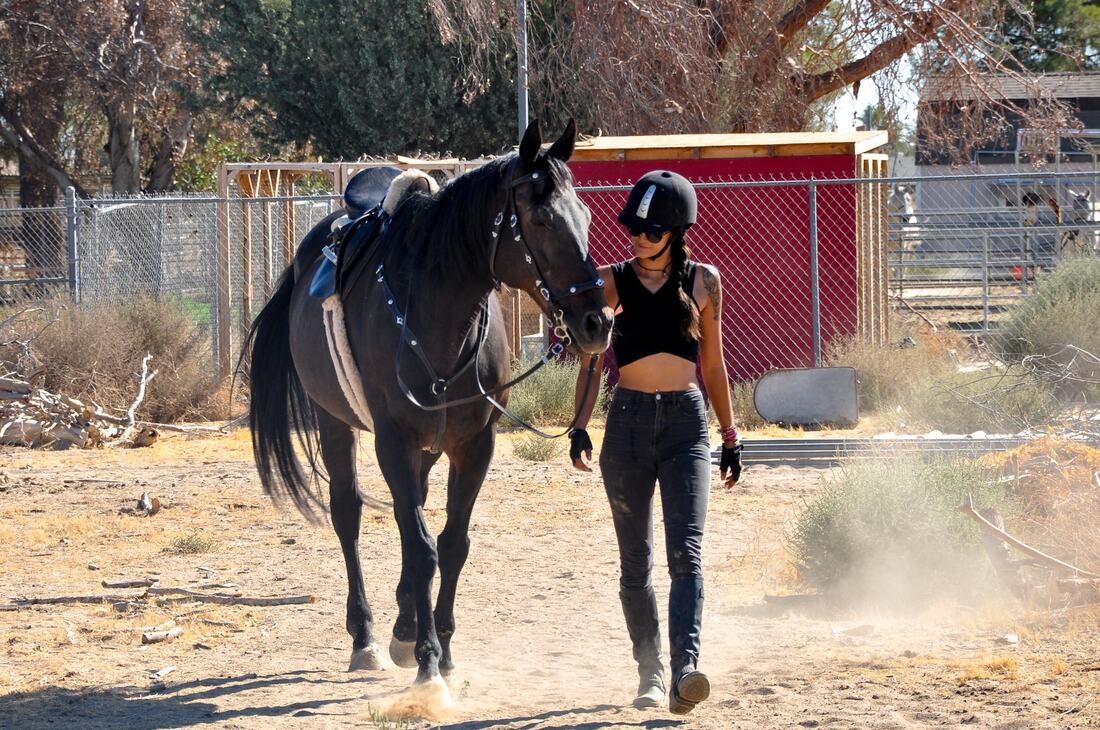
Zeus werd in 2018 naar de opvang gebracht nadat zijn eigenaar bang voor hem was geworden. Hij liep iedereen omver, vaak met een flinke vaart en zette soms zijn tanden in je arm of nek. Onder het zadel was hij onrustig en kroop snel in een valse knik, waardoor zijn rug hol werd en zijn achterhand ook niet goed mee kwam. Zijn kaken en schouders zette hij ook snel vast; werk aan de winkel dus! Nadat de eigenaars van de opvang zelf een assessment met hem hadden uitgevoerd mocht ik het werk verder oppakken. Grondwerk was al snel geen probleem meer, bekijk in de video hieronder hoe ik met Zeus werk aan zijn zogenaamde "dominantie-problemen" zoals bijten. Een bodyworker was inmiddels langs geweest om wat misalignments te corrigeren en met mij werkte Zeus aan o.a. rechtrichten. Het rijden pakten we vervolgens rustig op, te beginnen met zijn anxiety. Doordat hij al snel zo veel beter in zijn lijf zat was zijn niveau van spanning en stress direct een stuk minder! "Balans is voor een prooidier als een paard ontzettend belangrijk; dit vergroot namelijk de kans op succesvol kunnen vluchten van potentieel gevaar, oftewel zelfbescherming. Onbalans in het paard kan dus voor anxiety, stress, schrik-/ groot gedrag, vluchtgedrag maar ook voor fysieke problemen zorgen." In de bak was hij gewillig, alert en ontspannen. Hierdoor voelde het al snel vertrouwd om onder het zadel het terrein van de opvang eens te verlaten, om te werken aan het volgende probleem: Buddy & Barn Sourness, oftewel Verlatingsangst. Op de foto's hieronder zie je het verloop van onze 1e rit naar buiten, halverwege kreeg Zeus het toch even moeilijk en begon te staken midden op een kruispunt. Gelukkig was dit een rustige straat/wijk en kon ik in alle rust Zeus helpen met zijn opspelende anxiety. Waar hij eerder zou zijn gaan steigeren, achteruit rennen en/of naar huis rennen, hoefde ik maar 2 keer de One Rein Stop toe te passen om hem fysiek en emotioneel spanning te laten afvloeien! 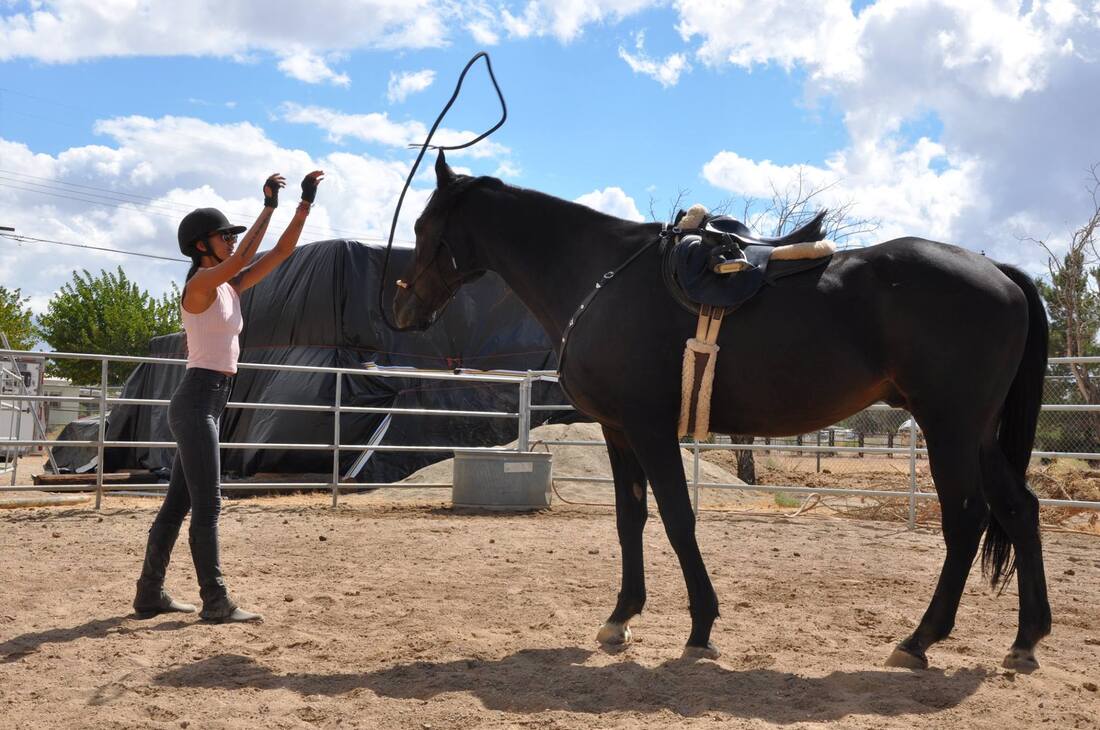
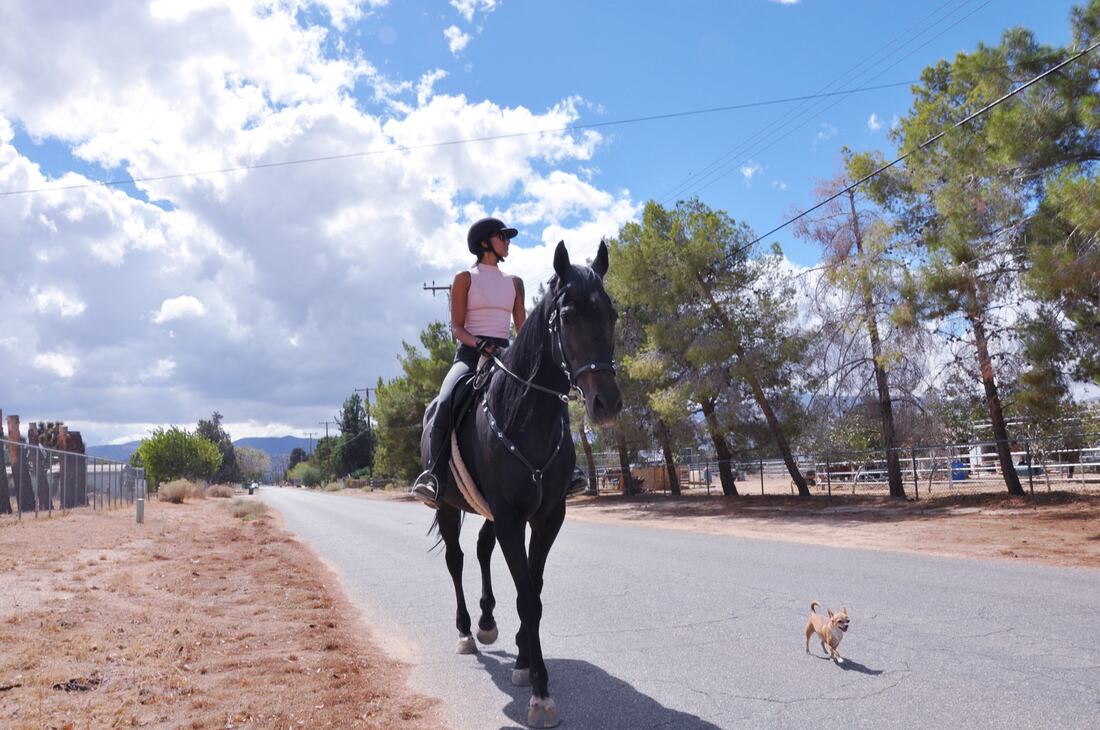
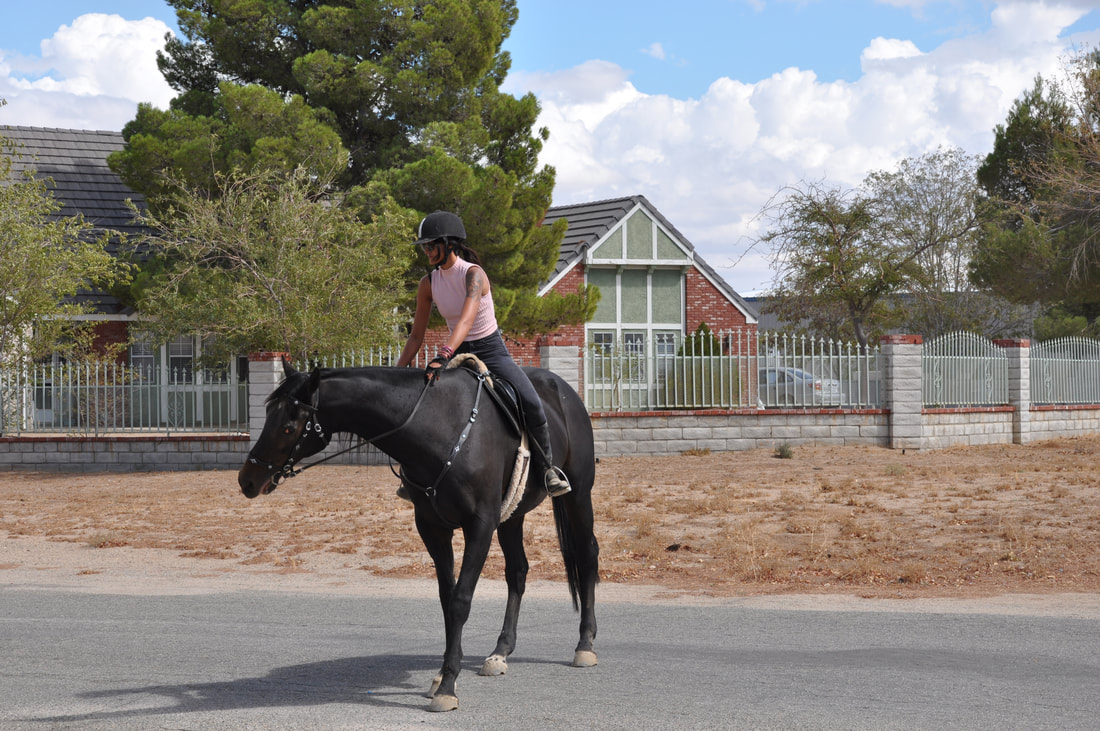
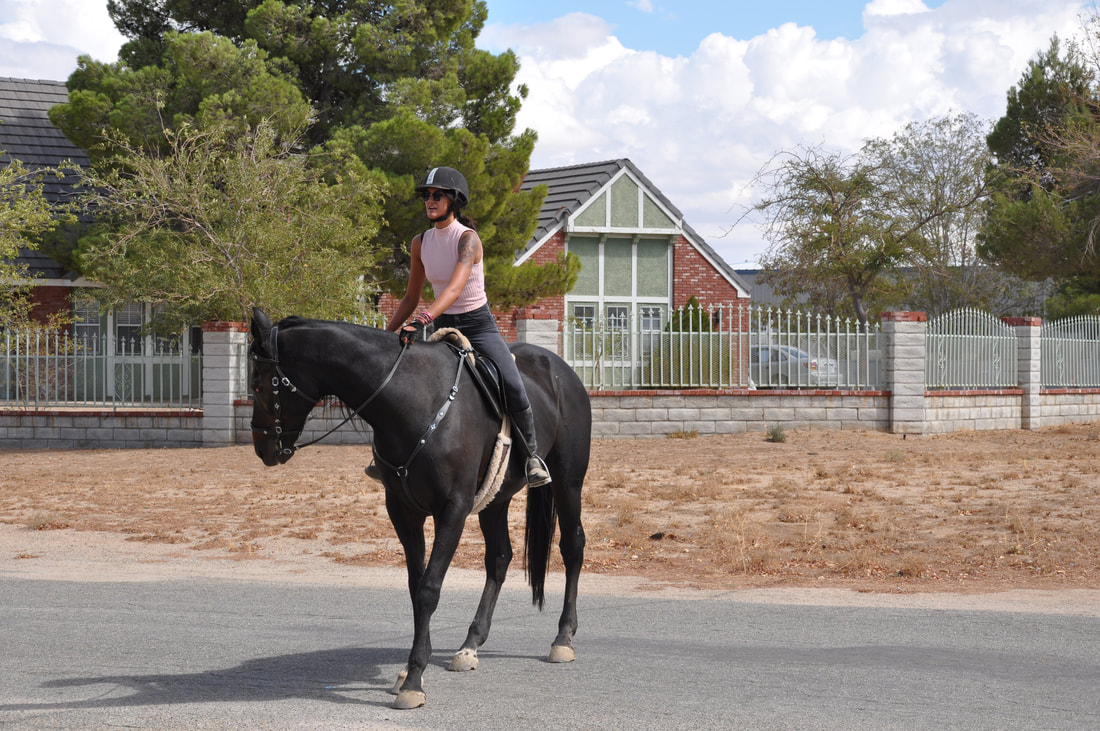
Er kwam een enorme zucht los bij Zeus en we hebben nog even rustig zo op het kruispunt gestaan, tot ik merkte dat zijn aandacht naar iets nieuws ging. Op dit precieze moment nam ik licht de teugels aan (Zeus werd Engels gereden) en vroeg ik om 1 enkele stap naar voren. Zeus voelde zich zo relaxed dat hij direct dapper naar voren stapte, bleef stappen en relaxed genieten van onze rit. Wat een verschil! Een paar maanden later was Zeus nog bij de opvang, maar klaar voor adoptie. Ook tijdens deze periodes blijf ik doorwerken met een paard, om hun kans op succes bij een nieuwe eigenaar te vergroten. Ik besloot hem om te scholen naar bitloos, via een simpele en handmade sidepull. Tijdens het rijden in de bak wilde Zeus nog wel eens terugvallen in oude patronen, door stug en hard in zijn lijf te worden en weer de valse knik houding aan te nemen. In de video hieronder zie je hoe ik Zeus help met licht contact aannemen; neurologische pathways zorgden er soms voor dat Zeus mentaal in het oude verviel en dus een valse knik liet zien. Om deze pathways te doorbreken probeerde ik iets anders: Telkens wanneer Zeus een interne/mentale struggle had om contact te accepteren via de teugels, vroeg ik hem met behulp van mijn lijf (en/of voice cues) te verzachten, groot door te stappen en recht te blijven. Zodra de verzachting kwam gaf ik het teken om links- of rechtsaf te gaan en verlengde direct de teugels om Zeus zijn hals te laten strekken. Hiermee probeerde ik Zeus te laten zien dat ik: A. Slechts ontspanning en samenwerking vraag B. Dat hij zich daar aan kan overgeven en C. Dat er daarna nòg meer ontspanning komt, in plaats van inspanning. Veel paarden zijn gewend dat cues en vragen van de mens niet bij 1 enkele vraag blijven. We willen vaak te snel en te veel; en, en, en, en... Bij overgestimuleerde paarden (wat eruit kan zien van freeze/fawn tot schijnaanvallen) zit het emmertje al/nog te vol om dingen toe te voegen. Een observatie die ik tijdens mijn 1e jaar in Amerika deed en waarom ik fan geworden ben van MINDER doen, in plaats van MEER. Als je nu al met zo min mogelijk ruis en poespas samen uit de voeten kunt, stel jezelf eens voor hoe jullie samenwerking en resultaten er over een paar jaar uit kunnen zien! 'Follow the Horse, not the Method' 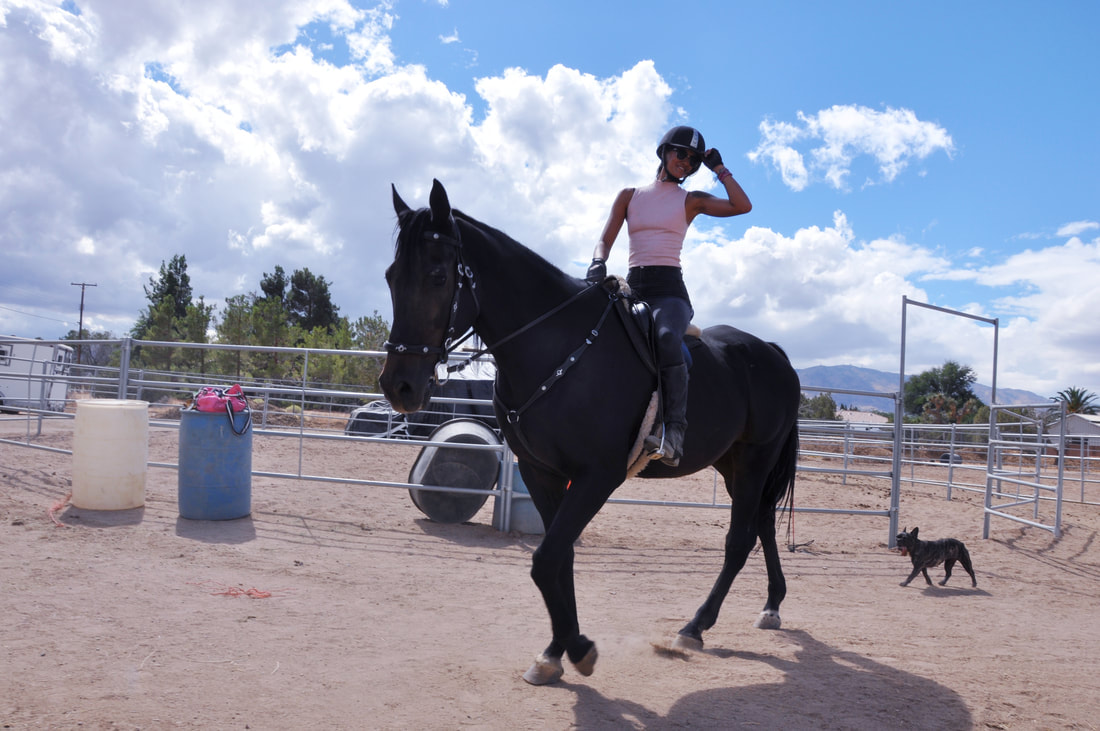
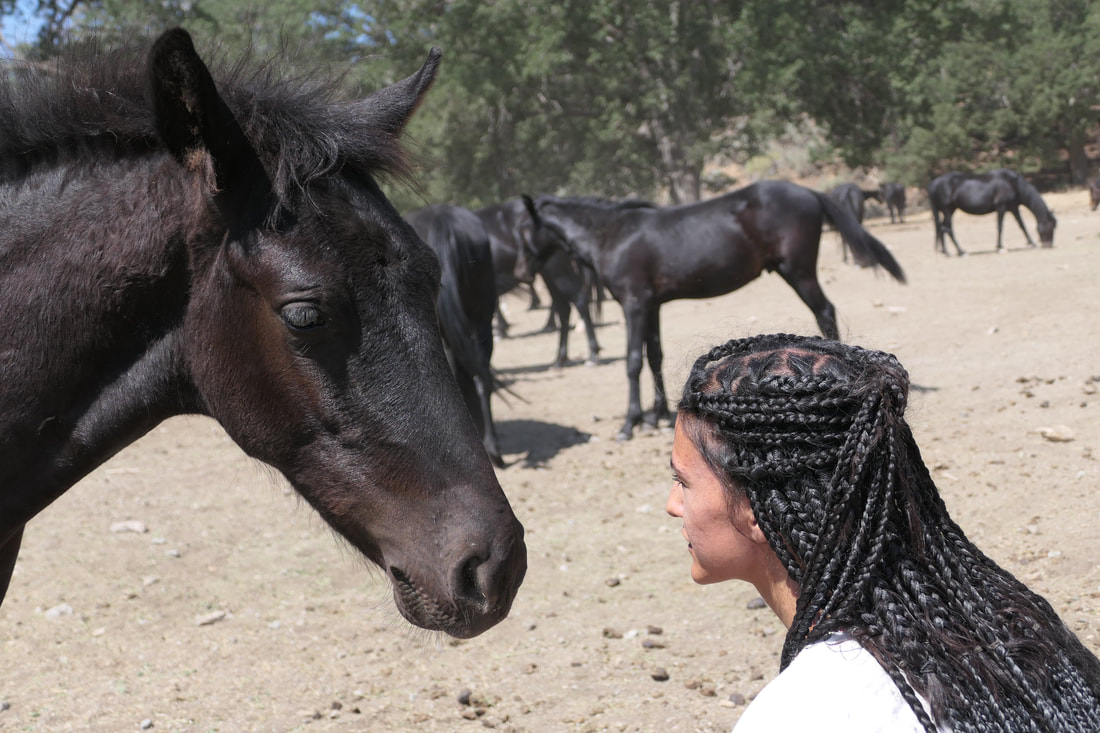
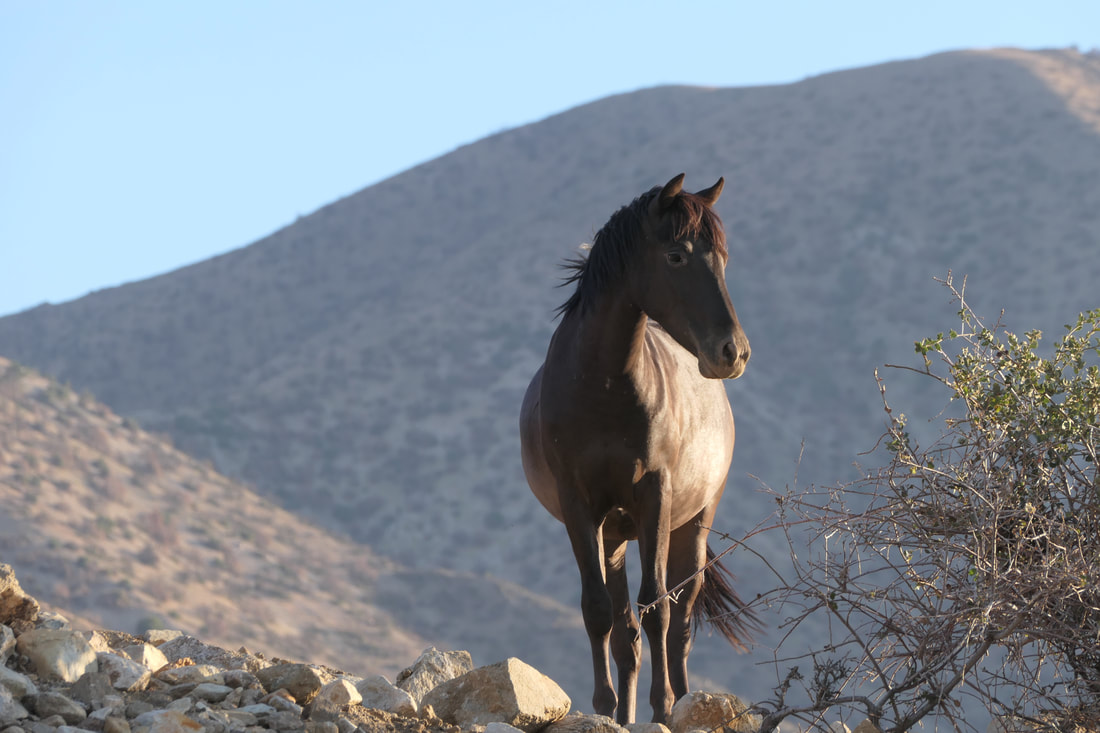
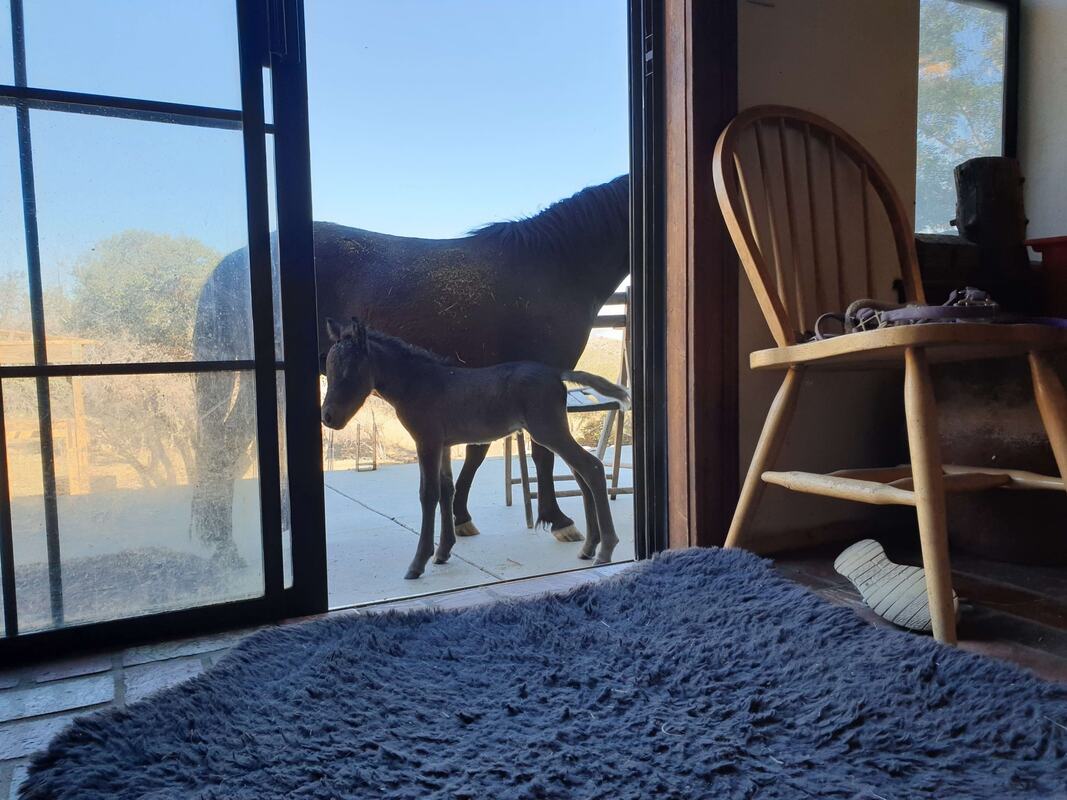
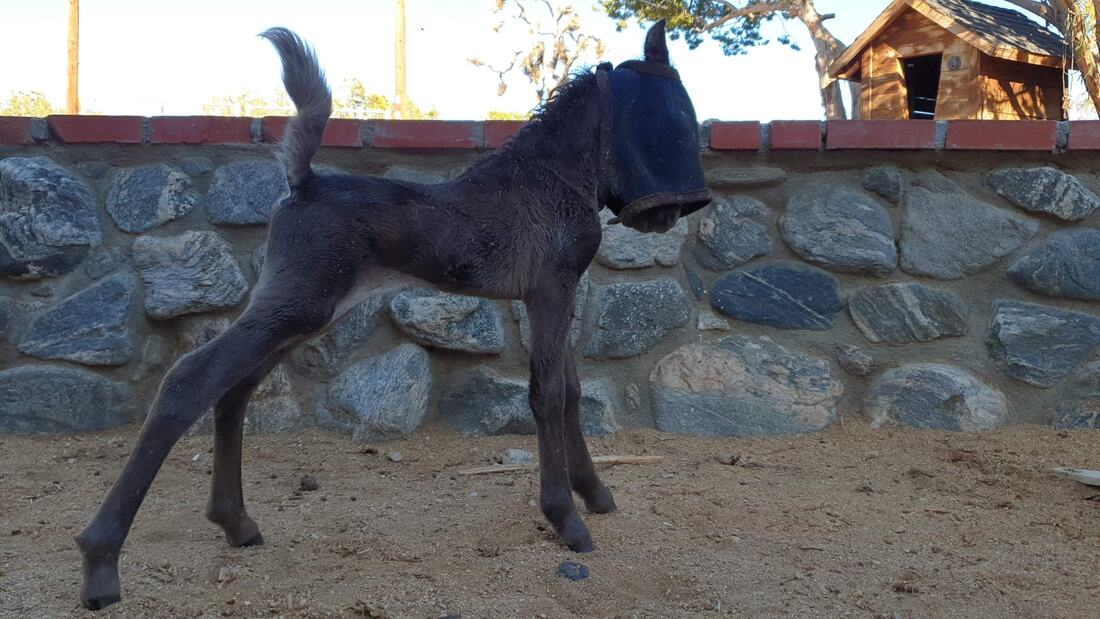
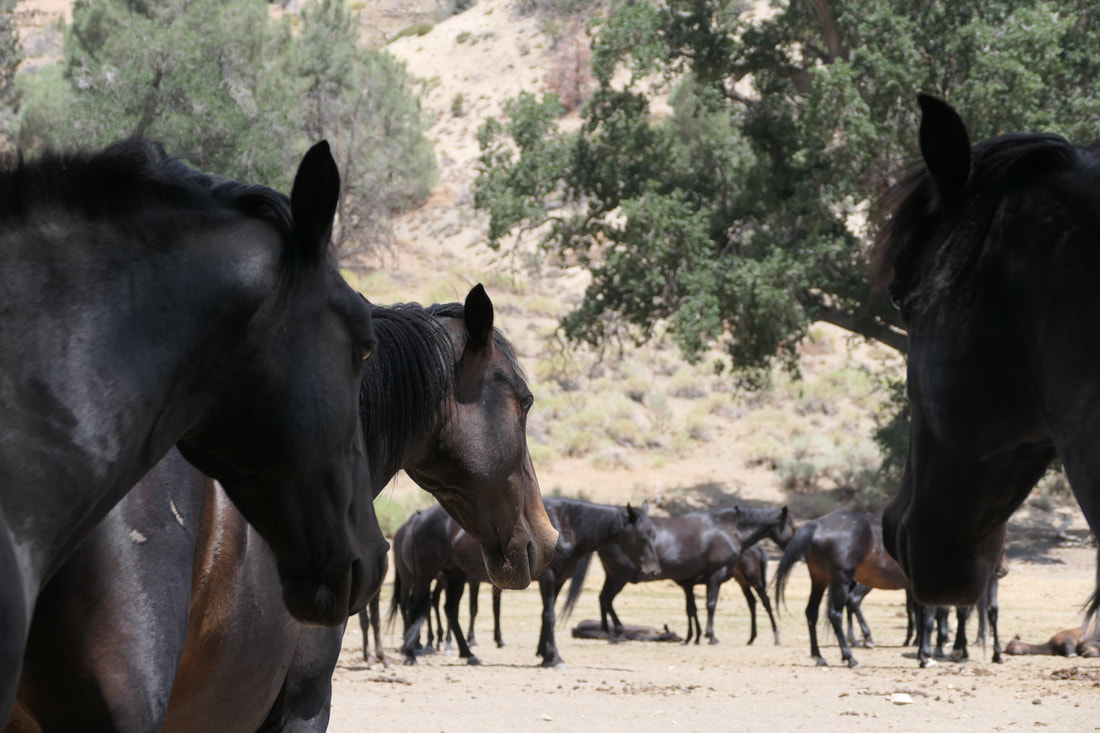
Love, Zoë van Mourik | Equine Trauma & Behavior Specialist www.zoevanmourik.com & www.houseofhorsemanship.nl Is Your Horse Aggressive? Or Are You Intimidated? *recent conversation turned into a blog* 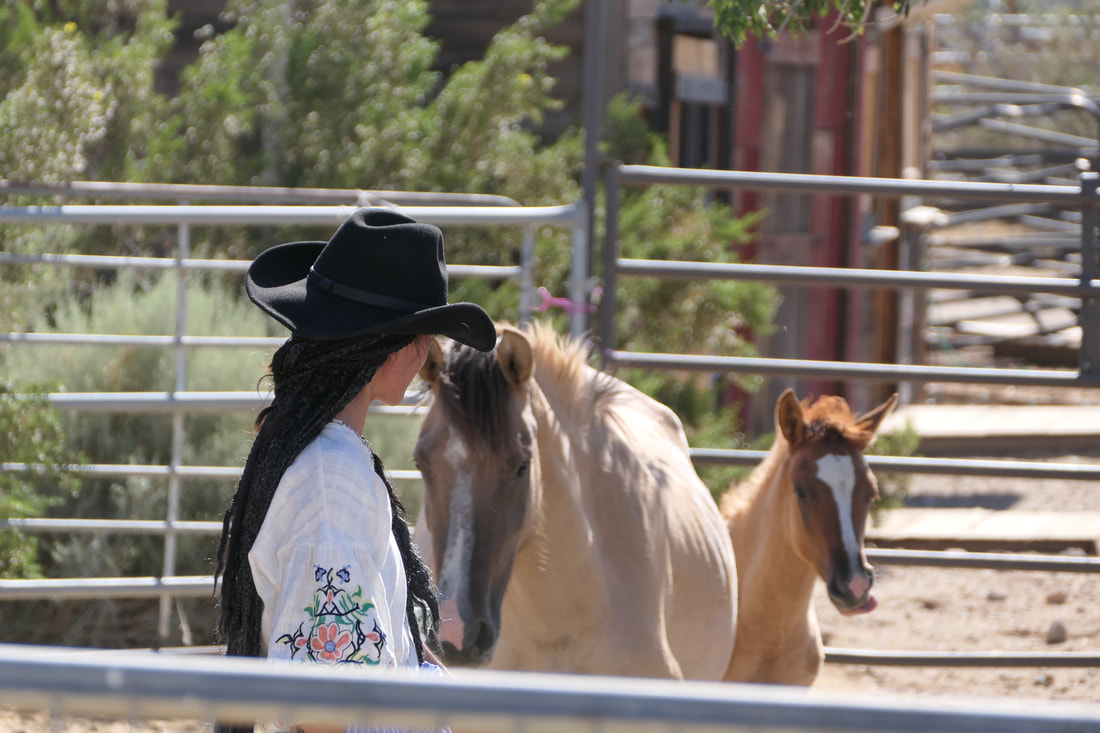 Horses are big (flight) animals, so it makes sense why people would be scared or at least intimidated by their presence alone. But being scared isn't the problem; not acknowledging it is! Because if we don't or can't admit and then control our own emotions, it becomes too easy to judge a horse and anthropomorphize their behavior. Two other important things to consider are; A: Horses are energy-conservers, being 'aggressive' or 'naughty' takes up a lot of energy! B: Aggression or Anger are secondary emotions, so when a horse is threatening to strike, bite or attack (and there are no physical ailments to be found!) you aren't dealing with 'bad behavior' but self-preservation. Blaming or punishing them for their behavior instead of holding space for their repressed emotions is one example of how these horses eventually do become aggressive. They have learned how to protect themselves and by then, humans have too often proved that that is in fact necessary. It's an undesirable but inevitable outcome of not dealing with the emotions of the horse, and the emotions we are keeping trapped inside ourselves. Do you hold space for emotions? For your horse(s), and for yourself? Are you able to correctly read what emotion goes behind the behavior? 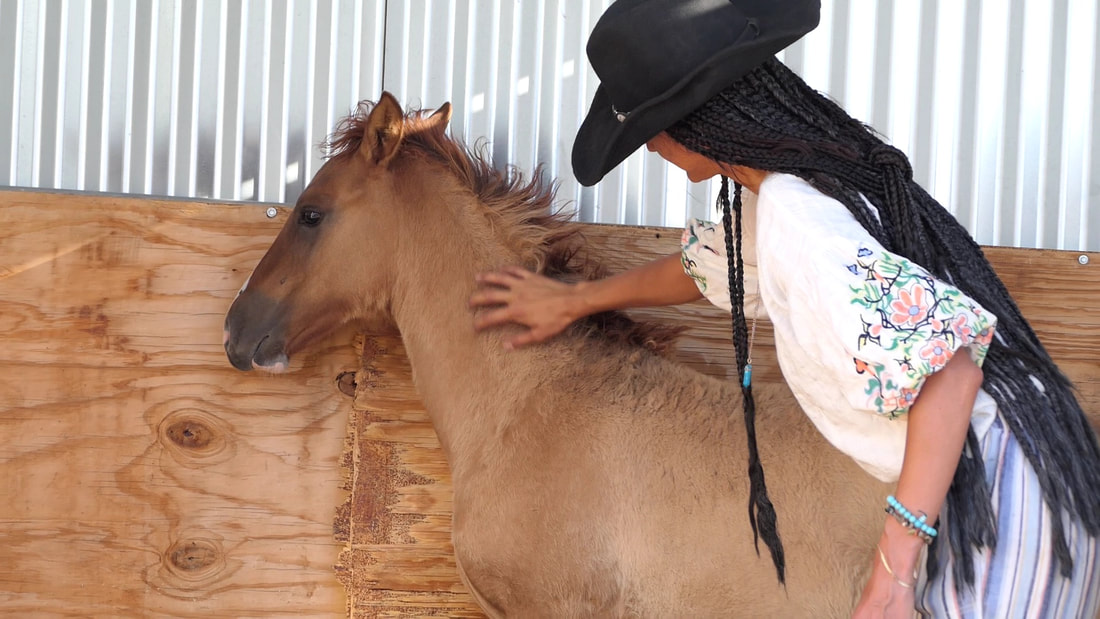 Above: gentling feral filly Freya, who is standing with her butt towards me. This is NOT a sign of aggression, but a sign of self-preservation Love, Zoë van Mourik | Equine Trauma & Behavior Specialist www.zoevanmourik.com & www.houseofhorsemanship.nl Tehachapi, USA Juli 2022 Op 18 Juli maakte ik eindelijk kennis met de Oak Creek Wild Horses! Een groep wilde/feral paarden die al meer dan 100 jaar in de bergen van Tehachapi leeft. Normaalgesproken rennen de kuddes weg zodra ze mensen zien of horen, maar doordat caretaker Diana ze bijvoert herkennen ze haar en haar auto en kun je heel dichtbij komen. Maar zò dichtbij, dat had ik niet verwacht! 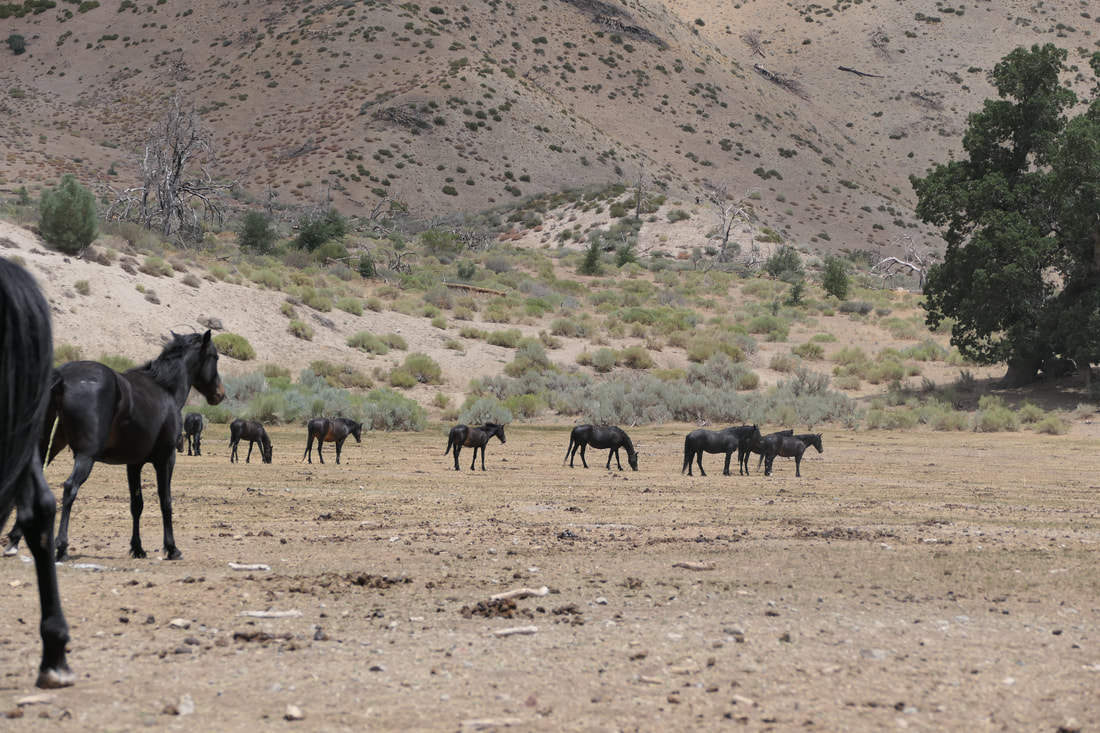 Er zijn 6 hengsten met elk hun eigen kudde die ze beschermen en begeleiden, hun nakomelingen stoten ze af en worden onderling geruild. Er is ook een groepje ruinen, te zien aan het kleine brandmerknummer achterop hun been/bil. Dankzij de Puma en Beer die ook in dit gebied leven zijn er vorig jaar 18 veulens weggevallen, daarnaast liepen er ook paarden die zo te zien net aan een aanval ontsnapt waren. Er waren gelukkig ook veel sterke en gezonde veulens, waaronder 1 van net een paar uur oud! Om de populatie onder controle te houden worden jonge hengsten gecastreerd en veel paarden beschikbaar gesteld voor adoptie. Omdat deze paarden niet zoals de Mustangs op openbare grond leven wordt er niet naar ze omgekeken, waardoor ze vermagerd en zwak waren toen Diana ze destijds vond. Haar hulp is dus van levensbelang voor al deze dieren! De paarden stammen overigens waarschijnlijk af van mijnwerkers/ranchers van vroeger, die hun paarden destijds hebben losgelaten en verwilderd zijn. Ze komen het meest overeen met de Morgan Horse, maar doordat testresultaten onduidelijk zijn wordt er gesproken van zowel 'feral' (wild uit vroeger gedomesticeerde paarden) en 'wild' (geen gedomesticeerde voorouders). De paarden zijn ontzettend veelzijdig, adoptanten rijden onder het zadel of aangespannen met ze, zowel Western als Engels. Dante (een van de hengsten) is een kalme, lieve ziel en geeft dat door aan al zijn nakomelingen, maar eigenlijk zijn ze allemaal ontzettend intelligent en zacht. Ik was onder de indruk van hoe dichtbij ze ons lieten en sommigen zich lieten aanraken, zoals Romeo een veulen dat sinds zijn geboorte dol op mensen en aandacht is. En wat een kracht en tegelijkertijd rust die de hengsten uitstralen, terwijl ze een split-second later met ontblote tanden achter een andere hengst of ruin aan rennen. Wat een ervaring! Èèn van Diana's eerste vragen aan ons was overigens of wij 'Horse People' zijn, zodat ze wist dat we de signalen van de paarden - en met name de hengsten - op tijd zagen en niet per ongeluk in the line of fire terechtkomen! 》Ook een Oak Creek Wild Horse adopteren?《 In 2020 waren wij al redelijk ver in het proces van het realiseren van een eigen ranch; Walter zou hier naartoe komen en ik had interesse om ook een Oak Creek Horse te adopteren. De geadopteerde paarden bevinden zich trouwens door heel Amerika, in 13 verschillende staten en vanuit Duitsland en Zweden is er ook interesse in deze bijzonder veelzijdige, vriendelijke, intelligente en geharde paarden. Ik sprak met Diana over hoe gaaf het zou zijn om ze ook in Europa te kunnen uitadopteren en wat de kosten daarvan zouden zijn. Zelf was ik daar destijds ook in gedoken om Walter naar Nederland over te laten vliegen (maar nu probeer ik naar hèm te komen). Heb je interesse, dan kun je contact opnemen met mij of met Diana Palmer. Sluit je ook aan bij de Facebook Groep 'Friends of Oak Creek Wild Horses' voor meer verhalen, informatie en beelden van - met name - geadopteerde paarden. Lees meer over deze wilde kuddes op www.oakcreekwildhorses.com, zo loopt er bijvoorbeeld al heel lang een onderzoek naar waarom deze kuddes zich (als enige) niet hebben samengevoegd met de Mustangs. 》Alle beelden zijn later te zien in de Leeromgeving, voor educatieve doeleinden. Foto's vind je in deze galerij.
Een verslag van onze werkvakantie bij Freedom Ranch
|
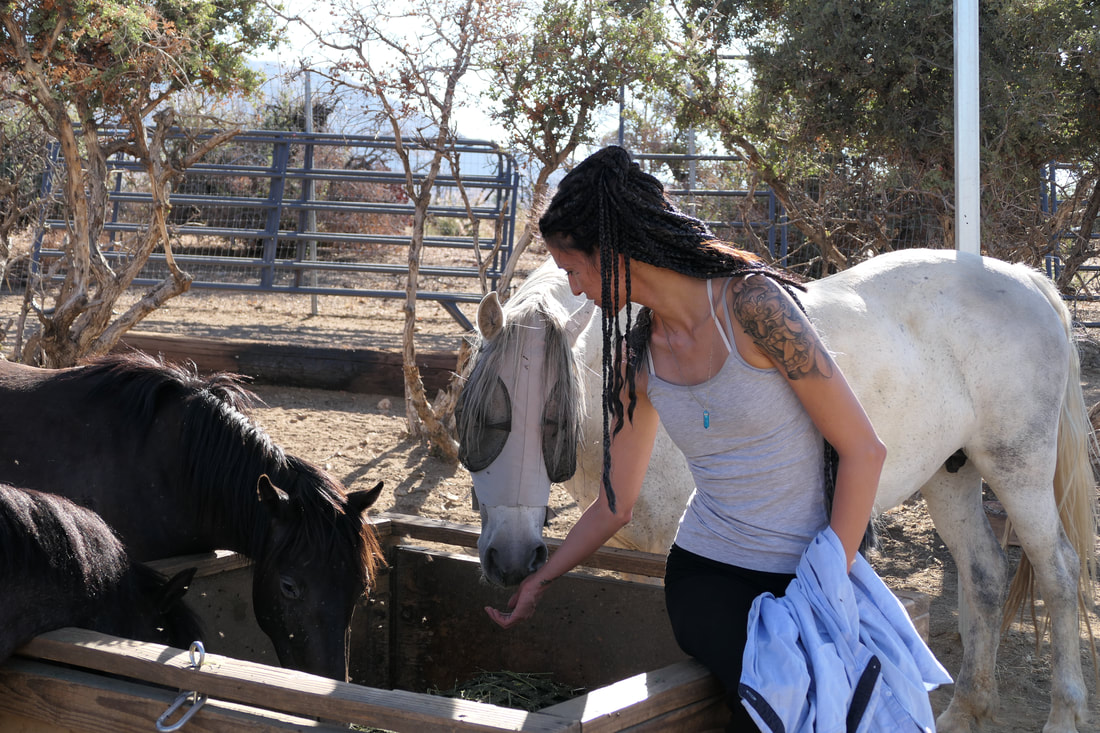
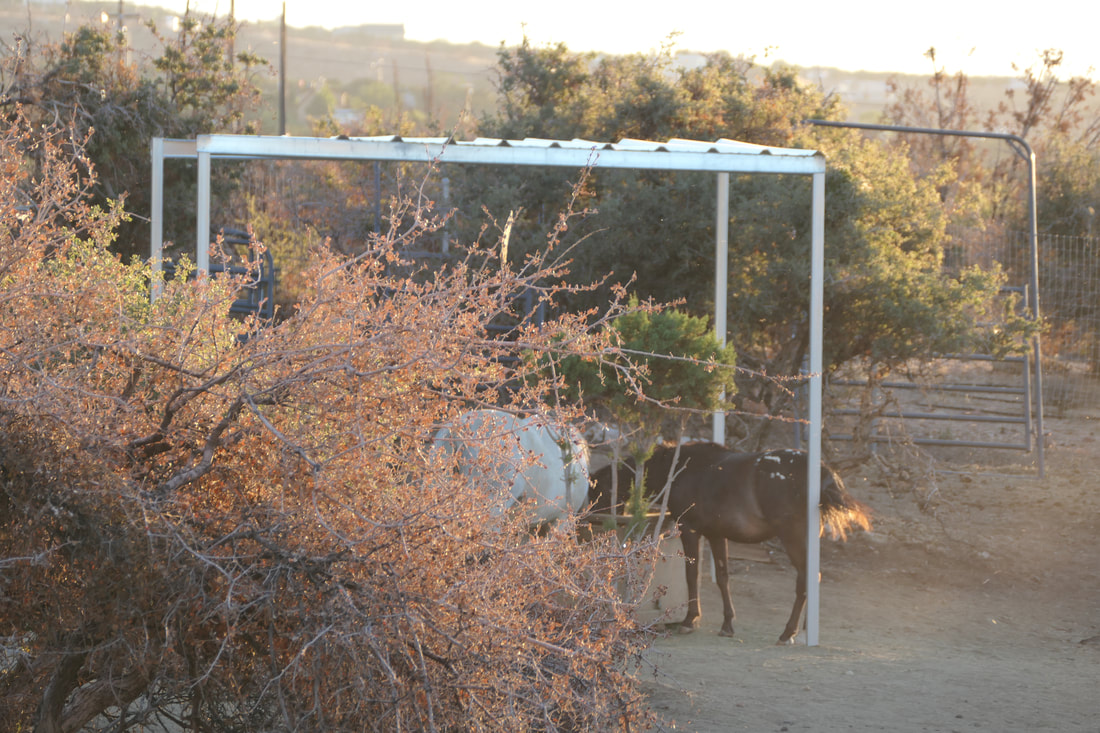
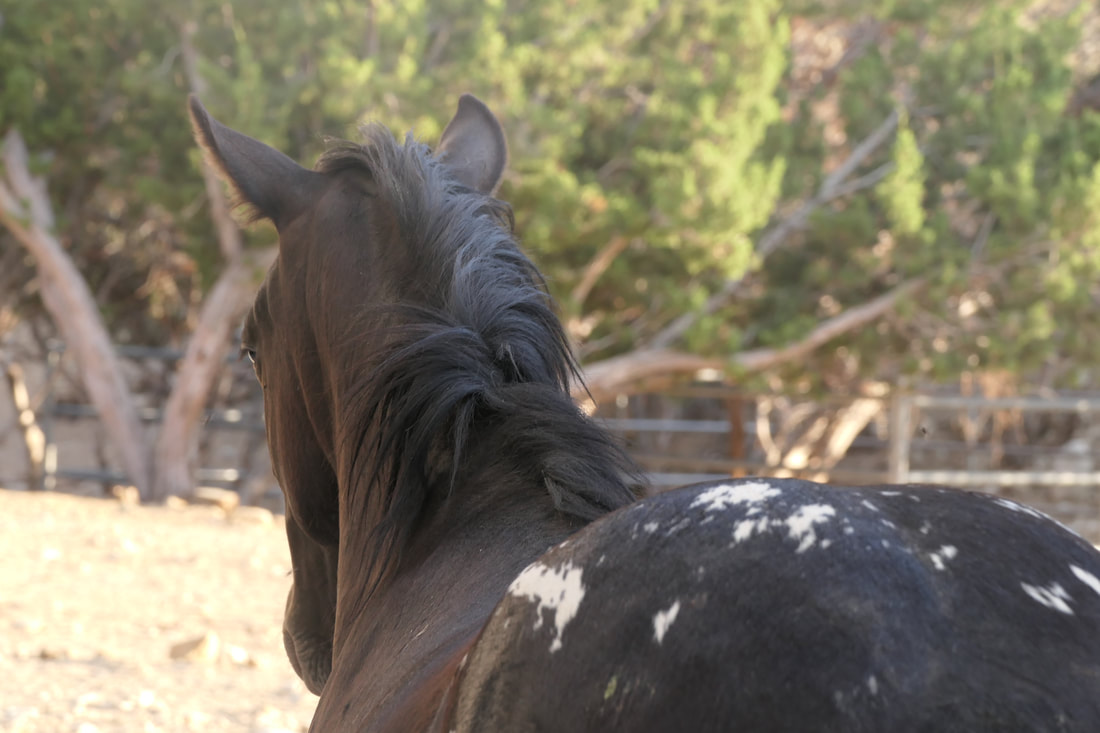
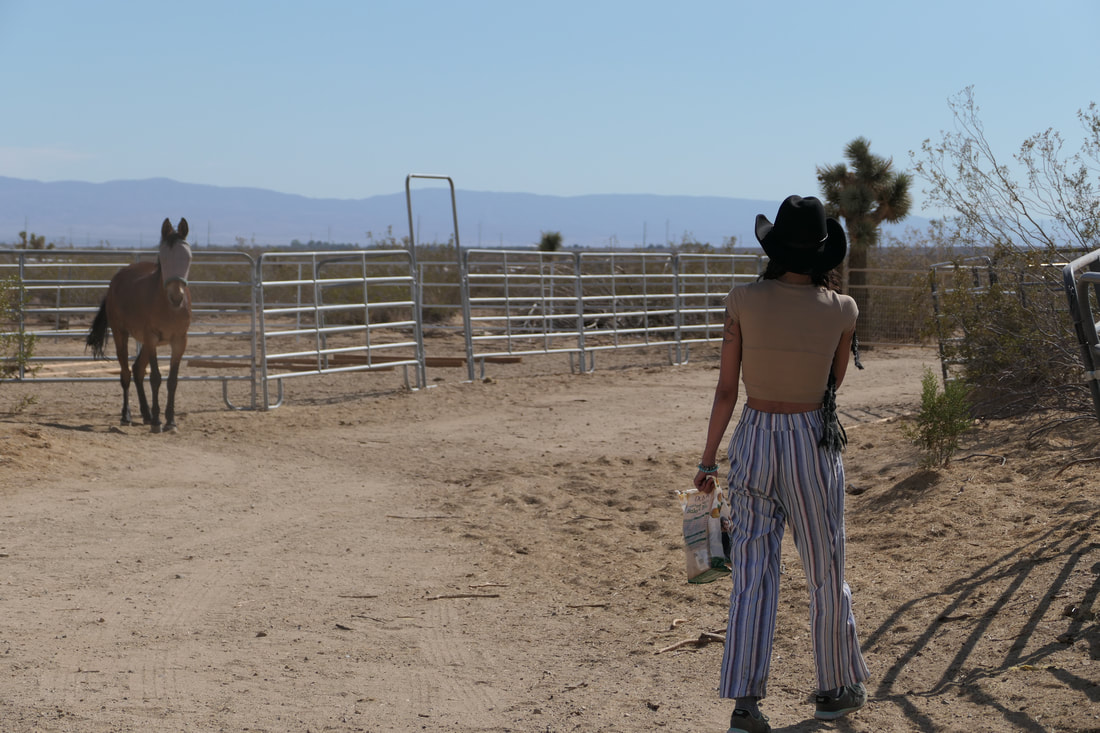
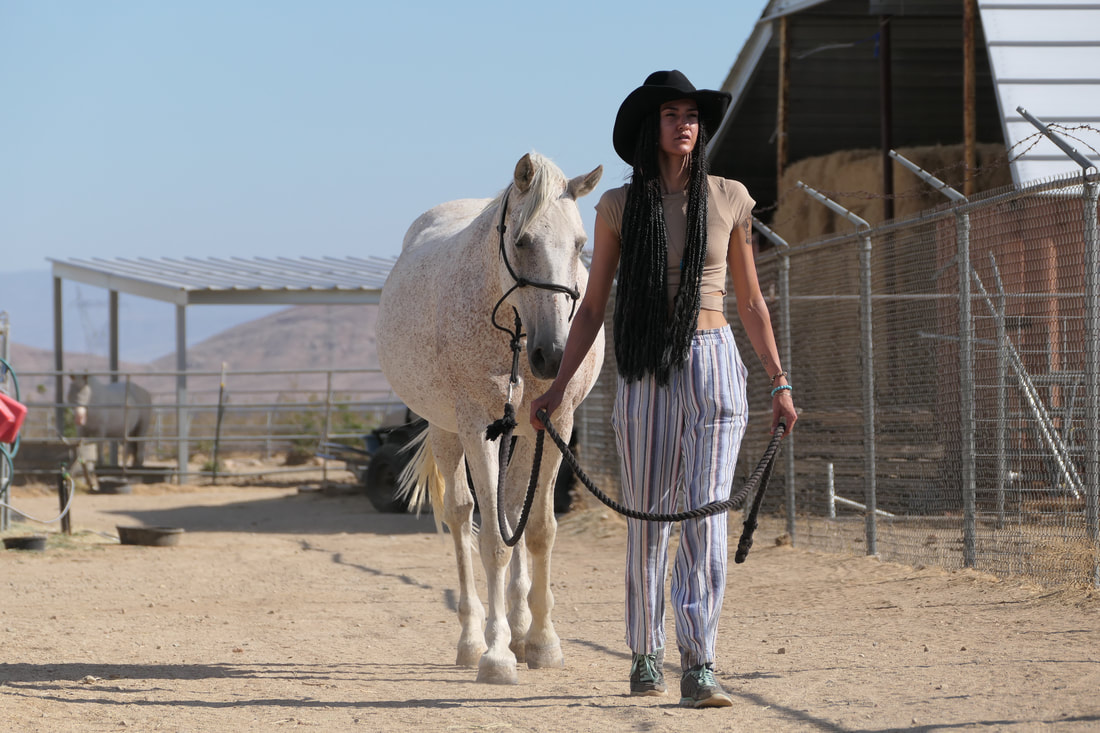
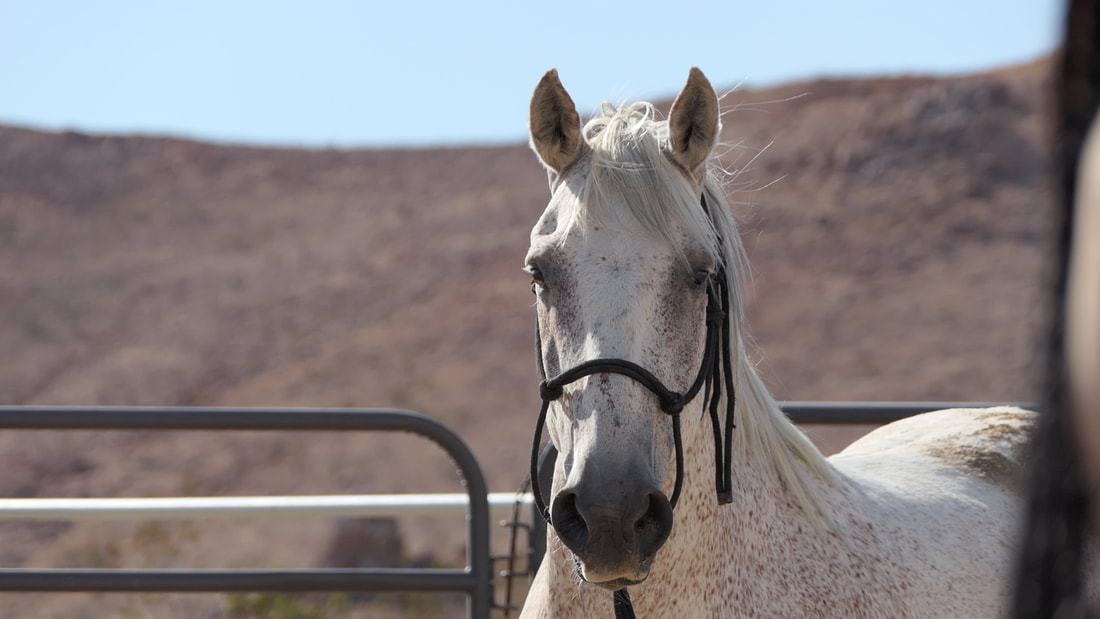
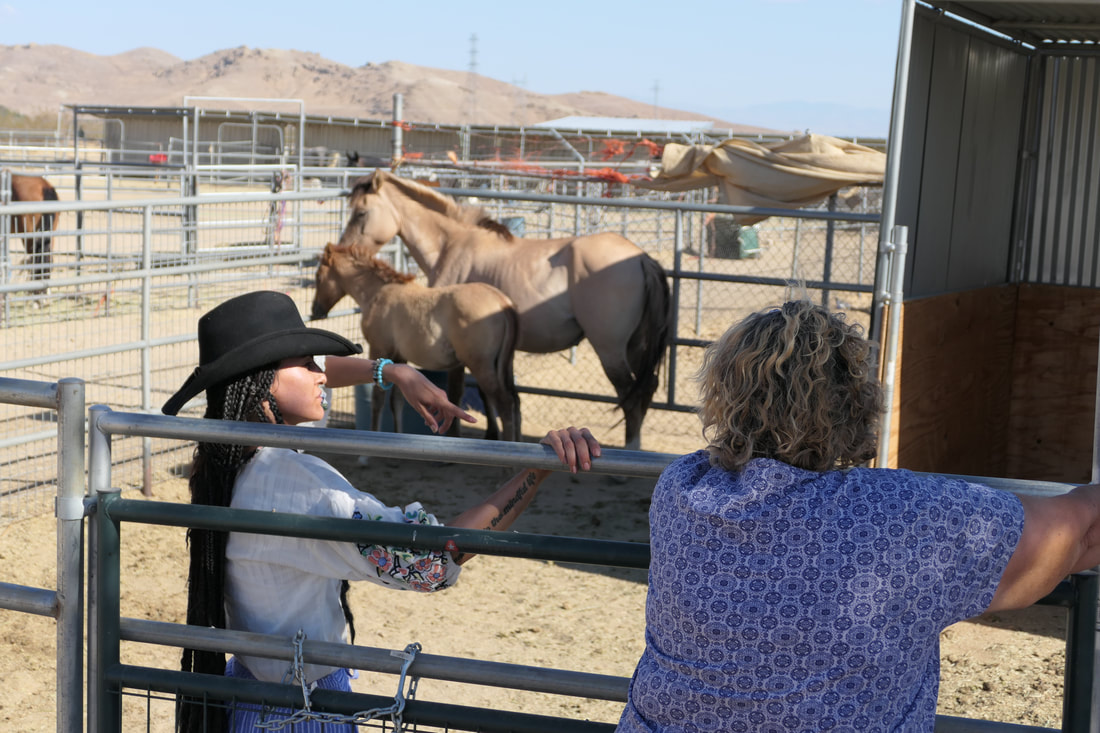
|
Liefs,
Zoë van Mourik | Equine Trauma & Behavior Specialist www.zoevanmourik.com & www.houseofhorsemanship.nl |
Horses are not machines, like computers. We have to unlearn that 'if we apply steps 1/2/3, the outcome will be x/y/z'. Because with horses, there is no waterproof or failsafe plan. Stumbles happen. Accidents happen. We have to mindfully be aware of the fact that in our core, we are the same. We breathe the same air, share experiences, form partnerships and friendships, grow and learn together and maybe get a chance to pass all of that wisdom onto the next generation. And not two of them are the same, just like with us. We make mistakes so that we can learn, adapt and do better. Not to be punished or shamed. And the same goes for our horses.
Earning trust should always come first before we think of applying methods. The horse will tell you when the time is right, what methods to use and how long it's going to take. We just have to be quiet enough to fully comprehend this experience. It's "Feel" on her deepest level, grounding and anchoring you through your feet, sending small shivers through your spine, and slowly letting feelings of gratefulness expand and consume you, from your heart to the top of your head. Your ExtraSensory Perceptors are firing and you see things differently. More clearly, moving slowly and allowing you to not just feel, but BE that flow.
Any horse will appreciate this kind of state and energy, where there is room to breathe and eventually learn again. But we have to stop being afraid of the Feel. Be there for the horse first, acknowledge his emotions and don't try to change them. Every horse, every emotion has it's own process and we have to let it run it's course.
Honoring Emotions should come before Correcting Behavior. That is what "Feel" is to me.
Earning trust should always come first before we think of applying methods. The horse will tell you when the time is right, what methods to use and how long it's going to take. We just have to be quiet enough to fully comprehend this experience. It's "Feel" on her deepest level, grounding and anchoring you through your feet, sending small shivers through your spine, and slowly letting feelings of gratefulness expand and consume you, from your heart to the top of your head. Your ExtraSensory Perceptors are firing and you see things differently. More clearly, moving slowly and allowing you to not just feel, but BE that flow.
Any horse will appreciate this kind of state and energy, where there is room to breathe and eventually learn again. But we have to stop being afraid of the Feel. Be there for the horse first, acknowledge his emotions and don't try to change them. Every horse, every emotion has it's own process and we have to let it run it's course.
Honoring Emotions should come before Correcting Behavior. That is what "Feel" is to me.
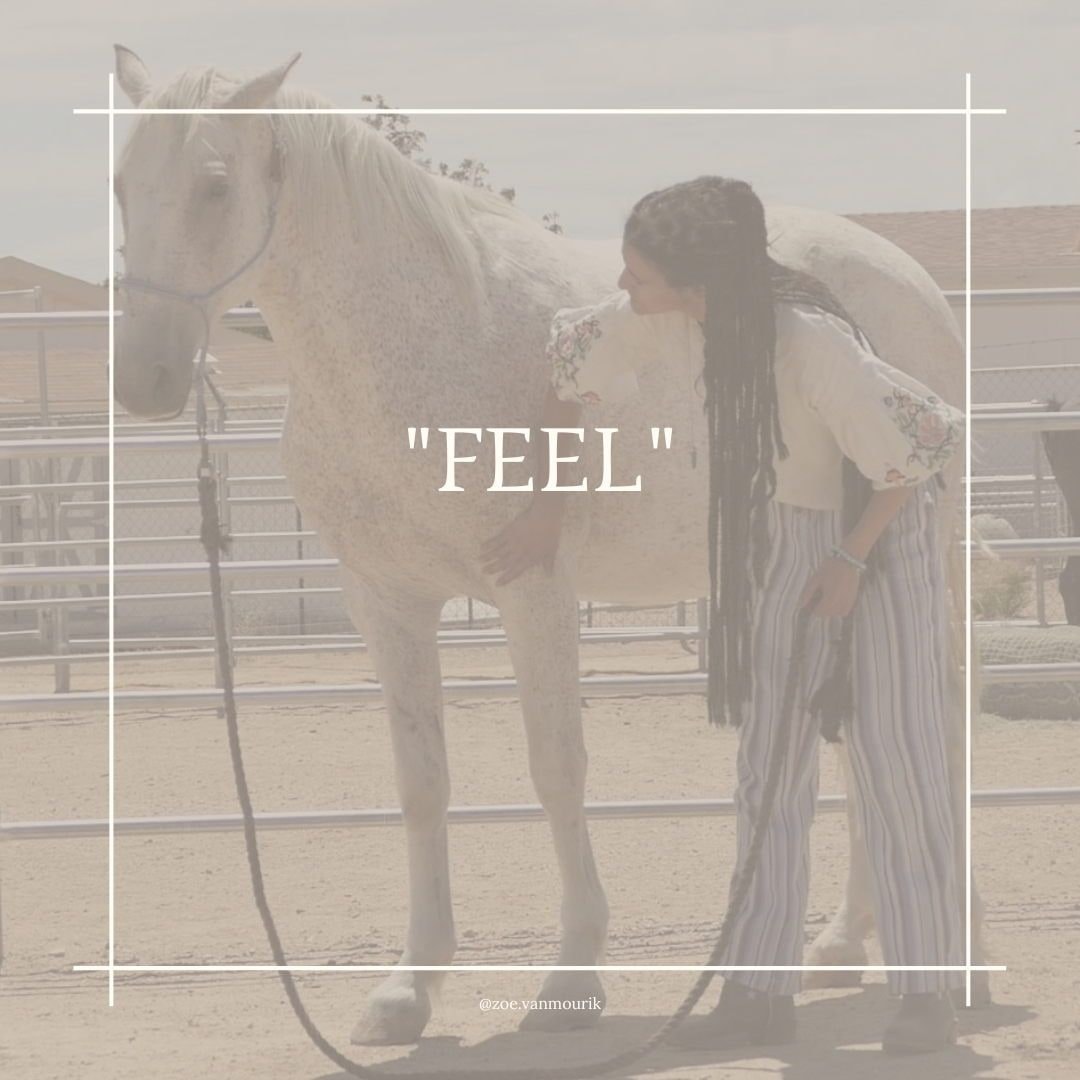
Love,
Zoë van Mourik | Equine Trauma & Behavior Specialist
www.zoevanmourik.com & www.houseofhorsemanship.nl
Love,
Zoë van Mourik | Equine Trauma & Behavior Specialist
www.zoevanmourik.com & www.houseofhorsemanship.nl
Veelgestelde Vragen over Wilde en Feral Paarden Beantwoord!
》Naar aanleiding van ons bezoek aan de Oak Creek Wild Horses en de paarden van de Navajo-stam (over dat laatste meer in een volgende post) kwamen er wat vragen over deze en andere wilde en feral paarden.
》Naar aanleiding van ons bezoek aan de Oak Creek Wild Horses en de paarden van de Navajo-stam (over dat laatste meer in een volgende post) kwamen er wat vragen over deze en andere wilde en feral paarden.
- 'Wat is het verschil tussen Feral en Wild?'
A: met 'feral' bedoelen we een verwilderd paard dat gedomesticeerde voorouders heeft. Een wild paard heeft dat niet. De Namib Desert Horses bijvoorbeeld is een feral groep; verwilderde nakomelingen uit paarden die zijn losgelaten na de Eerste Wereldoorlog.
- 'Zijn de Morgan Horses Mustangs?'
A: Nee, de naam 'Mustang' stamt af van het Spaanse/Mexicaanse woord 'mestengo' dat 'wild' betekent. Elke Mustang is dus een wild paard, maar niet elk wild paard is een Mustang. Zo worden de wilde paarden van Australië 'Brumby's' genoemd en heten de feral paarden in Nieuw-Zeeland 'Kaimanawa'.
-'Waar staat BLM voor?'
A: Bureau of Land Management
-'Waarom worden Mustangs gevangen?'
A: Farmers (vlees/melkindustrie) nemen steeds meer openbare grond in om hun ranch op te kunnen bouwen en vee te kunnen houden. Dit levert een land en overheid meer geld op dan de Mustangs beschermen, dus worden ze jaarlijks op gewelddadige wijze met helikopters bijeengedreven. Niet alle paarden overleven dit, zeker de jonge veulens en hoogdrachtige merries kunnen het niet bijbenen en overlijden tijdens de round-ups.
-'Wat kost de aanschaf van een wild paard?'
A: De meeste paarden worden uitgeadopteerd en niet verkocht, de adoptieprijzen variëren afhankelijk van de leeftijd maar ook hoogte en soms kleur van het paard. Daarnaast wordt iedere potentiële adoptant gecontroleerd en zul je ook moeten denken aan het aanschaffen van speciale omheiningen en vervoer.
>> Meer zien en leren over wilde en feral kuddes paarden? Er zijn verschillende (Facebook) kanalen waar je van alles op voorbij ziet komen, hieronder een paar van mijn favorieten:
- Pine Nut Wild Horse Advocates
- Friends Of Oak Creek Wild Horses
- Wild Horses of Alberta Society
- SkyDog Sanctuary
- The Wild Beauty Foundation
- Wild Horses of Sand Wash Basin
- American Wild Horse Campaign
Bekijk meer foto's van (ons bezoek aan) de Oak Creek Wild Horses door op onderstaande foto te klikken:
Liefs,
Zoë van Mourik | Equine Trauma & Behavior Specialist
www.zoevanmourik.com & www.houseofhorsemanship.nl
Zoë van Mourik | Equine Trauma & Behavior Specialist
www.zoevanmourik.com & www.houseofhorsemanship.nl
When Life gives you Lemons, you Squeeze 'em!
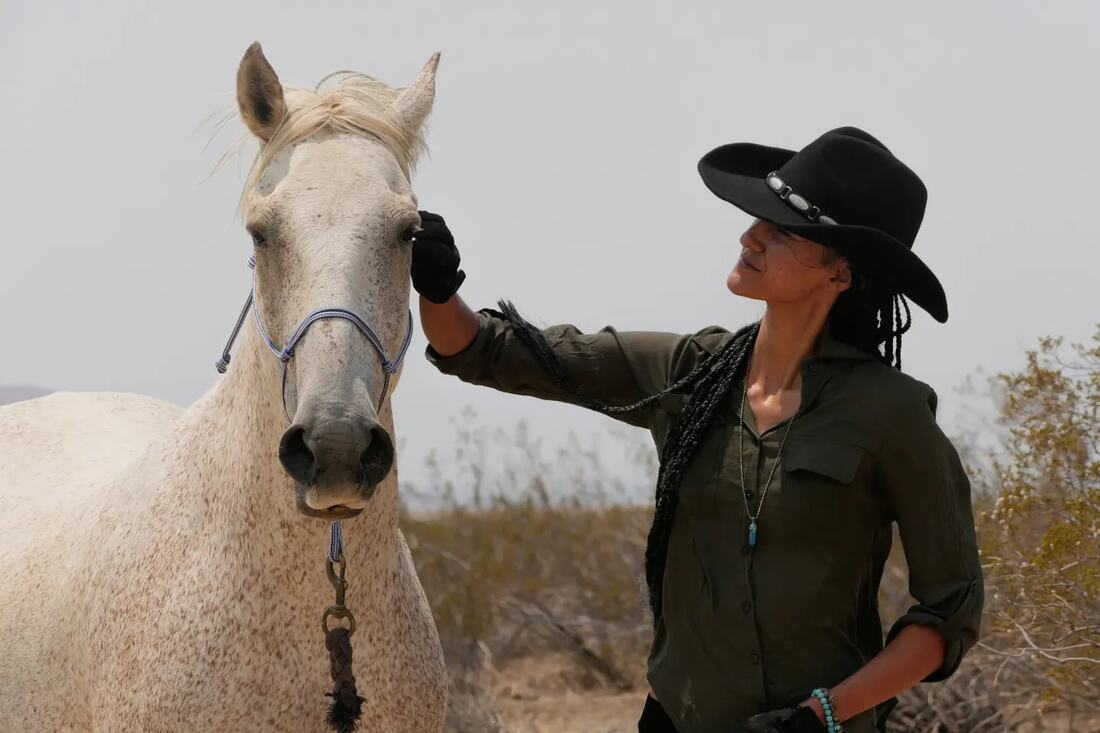
Video onder: de Squeeze Game volgens de NATO/E+ manier met Walter
Ondanks dat ik jaren geleden gestopt ben met het Parelli programma vind ik oefeningen als de Seven Games nog steeds heel waardevol om in te zetten. Zeker bij trailerladen gaat het nog wel eens mis, door te weinig/onduidelijke aanwijzingen van de handler en te veel gaten in de basis. De Squeeze Game is dan een handige oefening om toe te passen om juist die gaten te ontdekken, maar niet alleen aan de rechter- en linkerkant!
De correcte uitvoering van de Squeeze Game is het werken voor, achter, links, rechts, onder en boven een paard en met gebruikmaking van zowel geluid, beweging als aanraking. En natuurlijk altijd binnen het proces van het paard / onder de individuele threshold.
Èèn van de redenen waarom ik destijds stopte met Parelli was het veelvuldig gebruik van druk, met een te snelle opbouw en weinig input voor "Follow the Horse".
Zo werkt PNH met 4 levels van fysieke druk, waar je naar mijn mening ook al kunt beginnen met niet-fysieke druk (energie, lichaamstaal) en de laatste 2 levels zelfs achterwege kunt laten of geheel vervangen door kleinere en minder bedreigende stappen. Heel fijn voor zwaar getraumatiseerde paarden zoals Walter, die de combinaties van dingen om hem heen nog wel spannend vind. Ik focus me in de video daarom niet op de uitkomst van de Squeeze Game (het paard ergens onder, tussen, of over krijgen) maar op zijn gemoedstoestand en wat ik kan doen om die te verbeteren.
》Meer informatie en voorbeelden van het toepassen van de Seven Games volgens de NATO-wijze vind je later deze zomer in de leeromgeving!
|
Liefs,
Zoë van Mourik | Equine Trauma & Behavior Specialist www.zoevanmourik.com & www.houseofhorsemanship.nl |
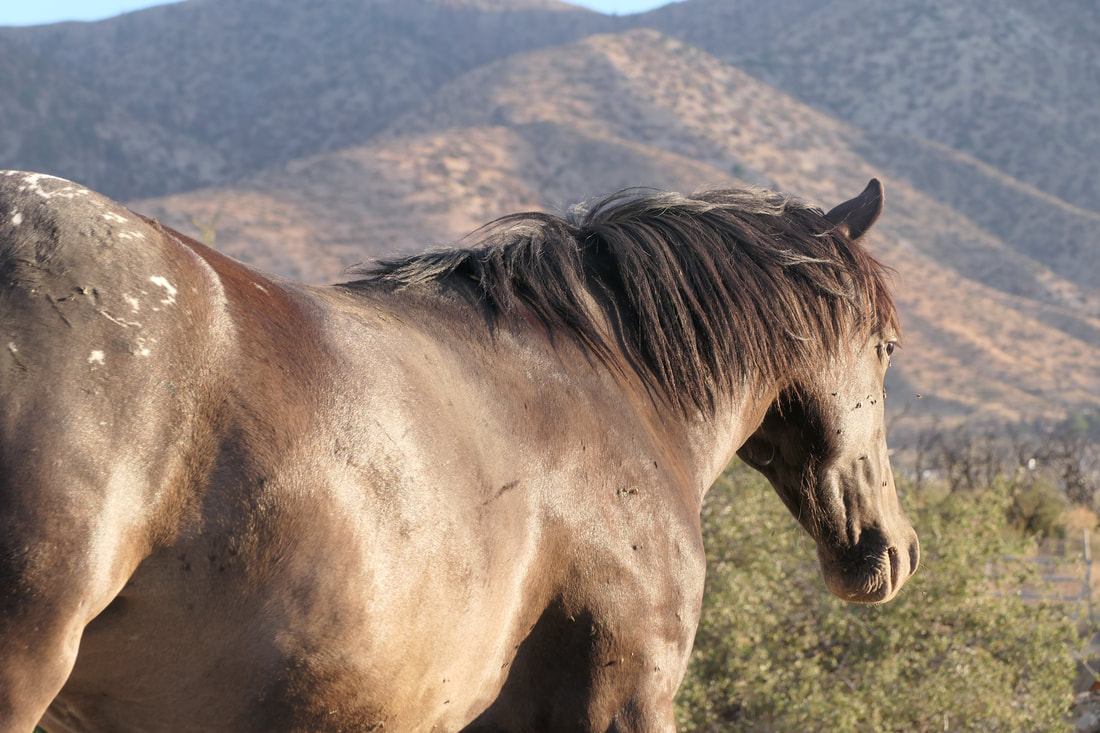
'For centuries, wild horses have roamed the Navajo Nation, where they serve as both a symbol of the unconquerable Native spirit and the iconic image of the American West'
. -www.americanwildhorsecampaign.org
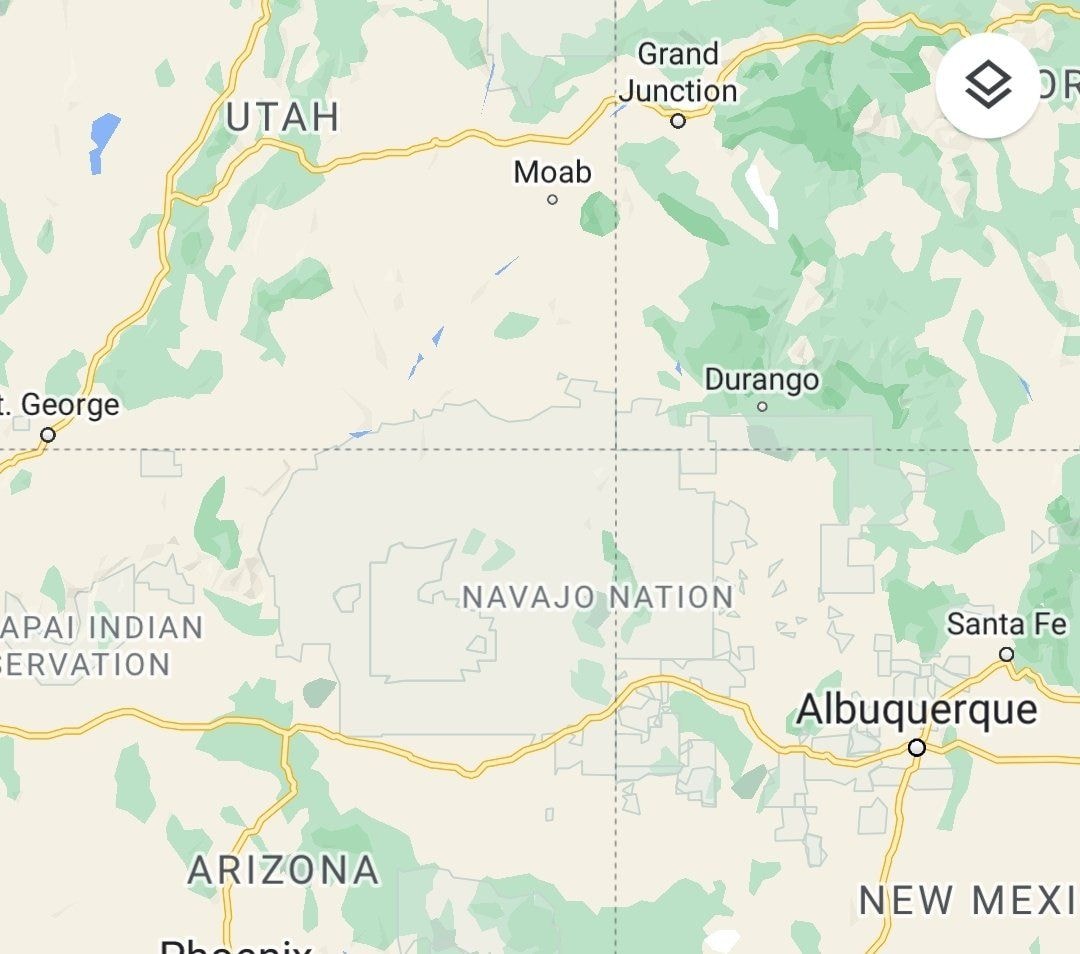
Nog een onverwacht maar veel voorkomend onderwerp tijdens onze vakantie: de feral en wilde paarden van de Navajo-stam uit Arizona.
Milo - de jonge en kleine Appaloosa van Freedom Ranch - komt via een veiling van dit reservaat, net als Fiona en Freya - de feral Fjordenmerries bij Love This Horse waar ik deze maand mee werk.
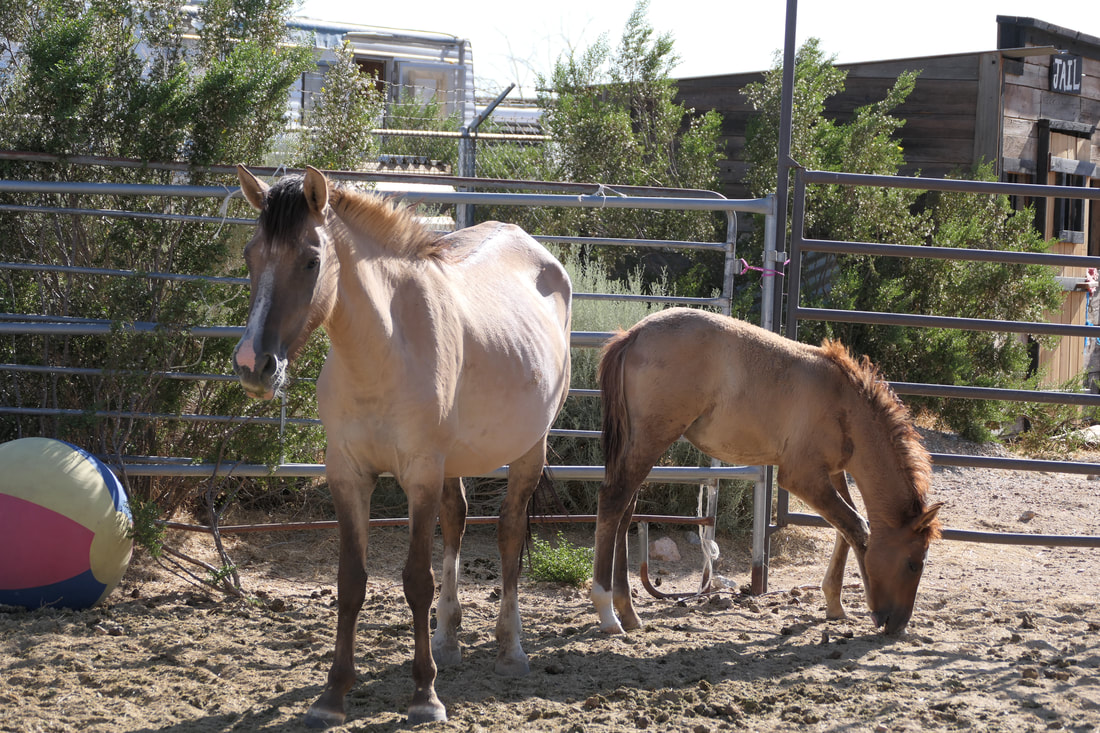
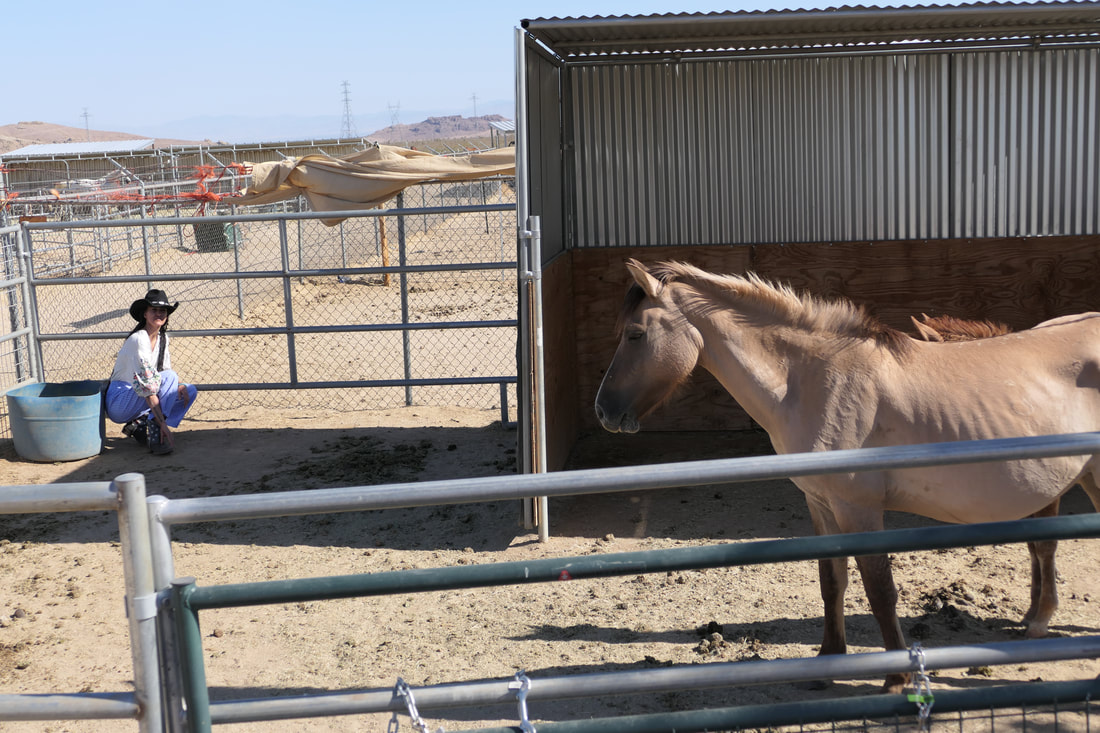
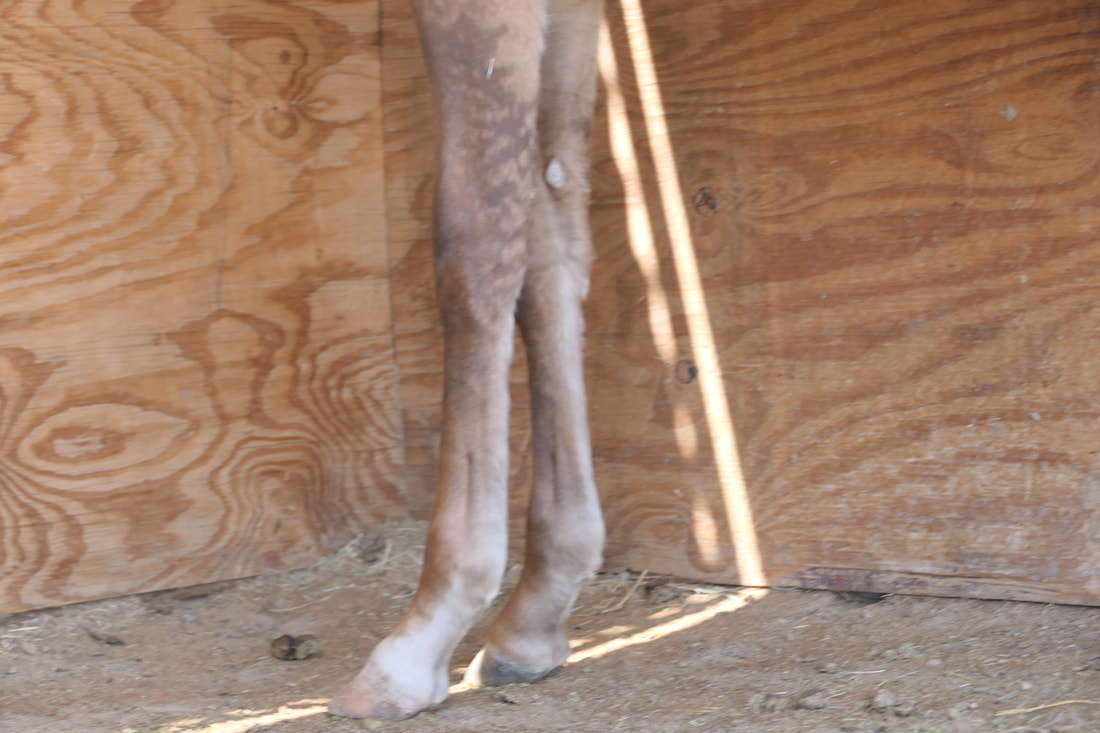
Wegens aanhoudende droogte en overpopulatie zijn er al eeuwen problemen binnen deze groepen paarden. Zo is de overheid in 1930 begonnen met het reduceren van dieren als (eerst schapen en geiten en toen) paarden, in 1950 nam de Navajo natie dit over en vielen de paarden onder hun nieuwe management. Doordat de Navajo hun eigen, gedomesticeerde paarden heeft werd er met de wilde paarden niets gedaan. Ze vermenigvuldigden zich snel, waardoor veel paarden (soms via adopties) het reservaat verlieten en regelmatig bij de slacht belandden. In 2005 werd het slachten van paarden in Amerika verboden, waardoor het nog moeilijker werd de populatie onder controle te houden. Inmiddels worden er nog steeds paarden (ca. 15.000 in de afgelopen 5-6 jaar) uit het reservaat gehaald om elders geadopteerd te worden, op een veiling terecht te komen of om over de grens alsnog in een slachthuis terecht te komen. Op dit moment is nog er steeds onduidelijkheid over wat het beste plan van aanpak is, maar duidelijk is dat ook deze kuddes ander management nodig hebben om gezond te kunnen blijven voortbestaan.
'The solution, Grass said, is to return to traditional beliefs and natural range management practices.
“Is there an answer?” he said. “Yes, of course. Kneel down and pray. Tend to the horses, talk to them, pray with them and about them. Return to our teachings. Horses are the mirror image of our culture. The horses themselves are the solution.'
Originally posted by Navajo-Hopi Observer
- Alysa Landry, Indian Country Today Media Network"
 | Liefs, Zoë van Mourik | Equine Trauma & Behavior Specialist www.zoevanmourik.com & www.houseofhorsemanship.nl |
Months before Stephanie asked us if we could come over to take care of their ranch and animals for a while, I had this reoccurring dream. It was always very vivid, always the same and it happened almost every night for at least 4 months.
In this dream, I was sitting in the passengers seat or in the back seat of a car (like a big truck) with my husband, driving across the interstate near the town where we used to live. This is always how the dream started. Then - in my dream - I would somehow realize that I was in California again and asked my husband (since we're already here) if we could go and visit Walter. On the way, I would just peacefully and gratefully gaze out the window to take it all in: the beauty of California that I find in palmtrees and big mountains.
The dream always ended the same way: I woke up right before we arrived at the rescue to see Walter. It was pretty hard for me not to feel disheartened because of course I missed him and the very first place I ever dared to call home. I had a lot of talks with my dear friend about keeping my head high and my hopes up, because I also knew that there was more to this. It wasn’t just a dream. And the way everything unfolded right after, making the reoccurring dream stop, made me believe in that even more.
The facts that even in my dream I already knew my husband would be there and that Walter wasn't the main reason for us being back in California again (our visit to Freedom Ranch was) were just surreal to me. But I am grateful. Grateful for this opportunity, which I feel like has been a chance or test to see if this is really what I want. If I still find it worthy to fight for.
And I can wholeheartedly say that this dream, this vacation, this opportunity has only ignited my fire even more.
In this dream, I was sitting in the passengers seat or in the back seat of a car (like a big truck) with my husband, driving across the interstate near the town where we used to live. This is always how the dream started. Then - in my dream - I would somehow realize that I was in California again and asked my husband (since we're already here) if we could go and visit Walter. On the way, I would just peacefully and gratefully gaze out the window to take it all in: the beauty of California that I find in palmtrees and big mountains.
The dream always ended the same way: I woke up right before we arrived at the rescue to see Walter. It was pretty hard for me not to feel disheartened because of course I missed him and the very first place I ever dared to call home. I had a lot of talks with my dear friend about keeping my head high and my hopes up, because I also knew that there was more to this. It wasn’t just a dream. And the way everything unfolded right after, making the reoccurring dream stop, made me believe in that even more.
The facts that even in my dream I already knew my husband would be there and that Walter wasn't the main reason for us being back in California again (our visit to Freedom Ranch was) were just surreal to me. But I am grateful. Grateful for this opportunity, which I feel like has been a chance or test to see if this is really what I want. If I still find it worthy to fight for.
And I can wholeheartedly say that this dream, this vacation, this opportunity has only ignited my fire even more.
 | Liefs, Zoë van Mourik | Equine Trauma & Behavior Specialist www.zoevanmourik.com & www.houseofhorsemanship.nl |
𝘛𝘳𝘺𝘪𝘯𝘨 𝘵𝘰 𝘥𝘦𝘴𝘤𝘳𝘪𝘣𝘦 𝘵𝘩𝘦 𝘧𝘦𝘦𝘭 𝘵𝘩𝘢𝘵 𝘐 𝘧𝘰𝘭𝘭𝘰𝘸 𝘸𝘩𝘦𝘯 𝘐'𝘮 𝘸𝘪𝘵𝘩 𝘢 𝘩𝘰𝘳𝘴𝘦.. 𝘢𝘯𝘥 𝘩𝘰𝘸 𝘵𝘰 𝘱𝘳𝘰𝘱𝘦𝘳𝘭𝘺 𝘥𝘦𝘴𝘤𝘳𝘪𝘣𝘦 𝘮𝘺 𝘳𝘦𝘩𝘢𝘣𝘪𝘭𝘪𝘵𝘢𝘵𝘪𝘯𝘨 𝘱𝘳𝘪𝘯𝘤𝘪𝘱𝘭𝘦𝘴.
𝘛𝘩𝘢𝘯𝘬 𝘺𝘰𝘶 𝘧𝘰𝘳 𝘺𝘰𝘶𝘳 𝘴𝘶𝘱𝘱𝘰𝘳𝘵
When I'm asked to describe my work or methods I always have to think about how to properly explain, not what I am doing, but what I am feeling. Because to me, what we feel when we're with a horse is the best guideline to follow. They will tell us exactly how they feel and what they're ready for, as long as we are open to allow ourselves to feel and think outside the box.
I do like horses to have their freedom. It is etched in their eternal hoofprints, transporting soldiers, families, supplies and fighting alongside humans to protect that freedom. But who is fighting for theirs? Emotional, Mental and Physical freedom are most important to me when I start rehabilitating. I'd like a horse to feel heard, seen and understood before I even ask for anything. And as soon as we've established that baseline, I implement more freedom. Instead of trying to get closer, using more tools and putting more stuff on the horse, I like to do less. If they run away, they run away. If they aren't ready to engage in our training, we can just hang out and do whatever they feel like. It's not a bootcamp, it's a partnership
How wonderful it is to honor the horse, by allowing them to make their choices in complete Freedom and let them be in charge of their own process. To offer them emotional safety and ask for nothing in return.
"Follow the Horse, Not the Method"
𝘛𝘩𝘢𝘯𝘬 𝘺𝘰𝘶 𝘧𝘰𝘳 𝘺𝘰𝘶𝘳 𝘴𝘶𝘱𝘱𝘰𝘳𝘵
When I'm asked to describe my work or methods I always have to think about how to properly explain, not what I am doing, but what I am feeling. Because to me, what we feel when we're with a horse is the best guideline to follow. They will tell us exactly how they feel and what they're ready for, as long as we are open to allow ourselves to feel and think outside the box.
I do like horses to have their freedom. It is etched in their eternal hoofprints, transporting soldiers, families, supplies and fighting alongside humans to protect that freedom. But who is fighting for theirs? Emotional, Mental and Physical freedom are most important to me when I start rehabilitating. I'd like a horse to feel heard, seen and understood before I even ask for anything. And as soon as we've established that baseline, I implement more freedom. Instead of trying to get closer, using more tools and putting more stuff on the horse, I like to do less. If they run away, they run away. If they aren't ready to engage in our training, we can just hang out and do whatever they feel like. It's not a bootcamp, it's a partnership
How wonderful it is to honor the horse, by allowing them to make their choices in complete Freedom and let them be in charge of their own process. To offer them emotional safety and ask for nothing in return.
"Follow the Horse, Not the Method"
 | Liefs, Zoë van Mourik | Equine Trauma & Behavior Specialist www.zoevanmourik.com & www.houseofhorsemanship.nl |
Engagement+ voor nerveuze paarden
E+ is een concept dat ik binnen/voor House of Horsemanship aan het uitwerken ben. In de leeromgeving en het komende boek vind je meer uitleg, tips & How To's maar bij deze alvast een inkijkje in deze aanpak!
NATO staat binnen de sportpsychologie voor:
Not
Attached
To
Outcome
Je focust je hierbij dus niet op de uitkomst of het doel van (in dit geval) je training, maar "You Follow The Horse". Swipe voor een video van Cash, een jonge Quarter × Thoroughbred ruin van de dochter van de rancheigenaresse, die hier nog niet lang is en al zo'n 5 eigenaars heeft gehad. Ze waren allemaal bang voor hem, maar hij ook voor hen.
Tijdens het werken/filmen vanmorgen bouwde Cash niet veel spanning op, maar hij hield het wel vast. Tijd om Cash weer in een ontspannen en gewillige mindset te krijgen, door het toepassen van E+.
Veel trainers zouden in zo'n geval (video hieronder) proberen in te grijpen, of het gedrag te veranderen/shapen (met R+). Voor mij voelt dat als een stap te ver/snel; het paard is immers helemaal niet geïnteresseerd of klaar om samen te werken. Iets Reinforcen (R+ of R-) kan op dat moment al te veel zijn, zoals voor een paard als Cash. In plaats daarvan halen we àlle druk, vragen en aanwijzingen weg en zijn we er voor het paard. We checken onze buikademhaling, de threshold en lichaamstaal en we wachten.
NATO staat binnen de sportpsychologie voor:
Not
Attached
To
Outcome
Je focust je hierbij dus niet op de uitkomst of het doel van (in dit geval) je training, maar "You Follow The Horse". Swipe voor een video van Cash, een jonge Quarter × Thoroughbred ruin van de dochter van de rancheigenaresse, die hier nog niet lang is en al zo'n 5 eigenaars heeft gehad. Ze waren allemaal bang voor hem, maar hij ook voor hen.
Tijdens het werken/filmen vanmorgen bouwde Cash niet veel spanning op, maar hij hield het wel vast. Tijd om Cash weer in een ontspannen en gewillige mindset te krijgen, door het toepassen van E+.
Veel trainers zouden in zo'n geval (video hieronder) proberen in te grijpen, of het gedrag te veranderen/shapen (met R+). Voor mij voelt dat als een stap te ver/snel; het paard is immers helemaal niet geïnteresseerd of klaar om samen te werken. Iets Reinforcen (R+ of R-) kan op dat moment al te veel zijn, zoals voor een paard als Cash. In plaats daarvan halen we àlle druk, vragen en aanwijzingen weg en zijn we er voor het paard. We checken onze buikademhaling, de threshold en lichaamstaal en we wachten.
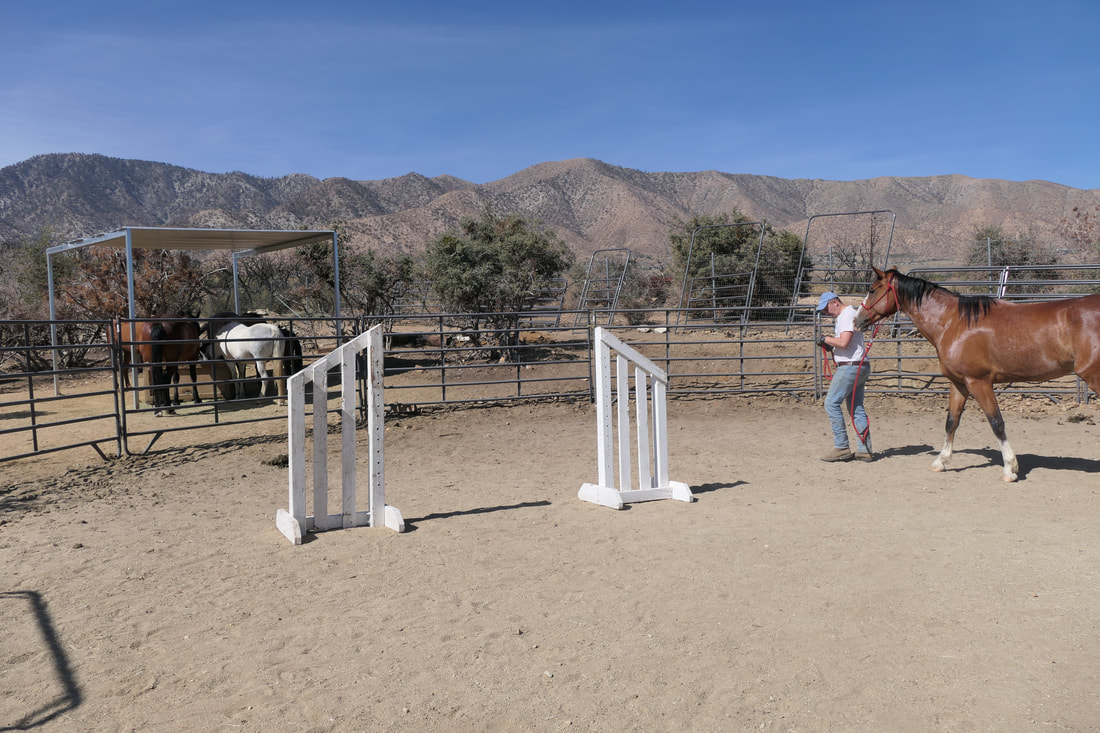
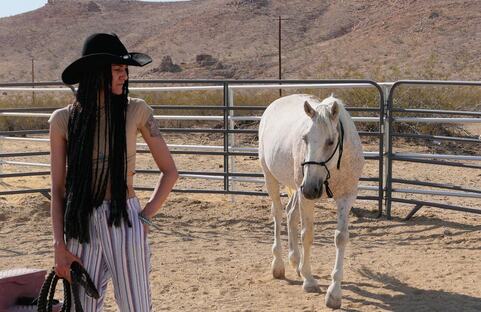
Cash liet al snel heel plotseling alle spanning los, veel kauwen/likken/rollen met zijn ogen. Op de foto's zie je hoe hij uit zichzelf weer interesse in mijn man heeft (Engagement!); een mooie foundation om te beginnen met je training, en leerkwadranten als R+/R-.
》Meer over E+ en NATO voor Paarden vind je straks in de leeromgeving en boeken.
"Follow the Horse, Not the Method"
|
Liefs,
Zoë van Mourik | Equine Trauma & Behavior Specialist www.zoevanmourik.com & www.houseofhorsemanship.nl |
Monty Roberts; geen onbekende naam in de paardenwereld en een waar veel van ons mee zijn opgegroeid.
Termen als een round-pen werden (in Nederland) nieuw leven in geblazen en van een Join-Up hadden we destijds nooit gehoord, behalve misschien uit de Heartland boeken van Lauren Brooks. Desondanks stonden we met verbazing te kijken hoe deze man wilde/feral paarden in 1 sessie weer gewillig en kalm leek te krijgen en ze zelfs direct kon rijden.
Termen als een round-pen werden (in Nederland) nieuw leven in geblazen en van een Join-Up hadden we destijds nooit gehoord, behalve misschien uit de Heartland boeken van Lauren Brooks. Desondanks stonden we met verbazing te kijken hoe deze man wilde/feral paarden in 1 sessie weer gewillig en kalm leek te krijgen en ze zelfs direct kon rijden.
Hoe kies ik de juiste tools?
De meeste keuzes die ik maak wat betreft (ook) de tools waarmee ik werk, maak ik grotendeels gevoelsmatig.
Toen ik in 2017 aan het werk ging in Amerika en te maken kreeg met echt zwaar getraumatiseerde of wilde paarden, voelde meer druk/leverage/tools juist niet logisch voor mij. Dit soort paarden (en eigenlijk alle paarden) wil ik zo veel mogelijk vrijheid geven en zo min mogelijk opties om tegen te vechten. Een optie die de Dually Halters bemoeilijkt en in sommige gevallen zelfs in zijn geheel wegneemt. Maar ondanks mijn intuïtieve (en averechtse) reacties op bepaalde onderwerpen, ben ik altijd nieuwsgierig naar de wetenschappelijke onderbouwing.
Dus toen in januari 2020 een wetenschappelijk onderzoek uitkwam met resultaten die precies dat onderstreepten en bevestigen wat ik gevoelsmatig al wist, ben ik alleen maar meer gaan luisteren naar mijn eigen gevoel.
Toen ik in 2017 aan het werk ging in Amerika en te maken kreeg met echt zwaar getraumatiseerde of wilde paarden, voelde meer druk/leverage/tools juist niet logisch voor mij. Dit soort paarden (en eigenlijk alle paarden) wil ik zo veel mogelijk vrijheid geven en zo min mogelijk opties om tegen te vechten. Een optie die de Dually Halters bemoeilijkt en in sommige gevallen zelfs in zijn geheel wegneemt. Maar ondanks mijn intuïtieve (en averechtse) reacties op bepaalde onderwerpen, ben ik altijd nieuwsgierig naar de wetenschappelijke onderbouwing.
Dus toen in januari 2020 een wetenschappelijk onderzoek uitkwam met resultaten die precies dat onderstreepten en bevestigen wat ik gevoelsmatig al wist, ben ik alleen maar meer gaan luisteren naar mijn eigen gevoel.
Het onderzoek
Door Dr David Marlin
27 januari 2020
"TRAINING HEADCOLLARS AND THEIR EFFECT ON HORSE BEHAVIOUR - OLIVIA TURNER"
*** GUEST POST *** by Olivia Turner B.Sc Hons, Animal Behaviour Consultant & Equine Bitting Specialist
Handling issues are very common in the horse world and there are many gadgets and training aids available which claim to fix the problem, but what effect do these have on equine emotional state and behaviour? The gadgets utilise pressure, the more pressure you apply, the more uncomfortable it becomes for the horse. The goal being that the pressure motivates the horse to perform the right behaviour, then the handler releases that pressure.
This method of pressure and release is called negative reinforcement. A stimulus is removed to increase the performance of a behaviour, e.g. applying pressure on a headcollar (HC) for a horse to stop, then releasing the pressure the second the horse stops. The horse will learn on the release of that pressure, so if your timing isn’t accurate the horse will find it harder to learn what you intend it to. Techniques (such as pressure and release) are only deemed ethical if they are proportionate to the desired response, are predictable for the horse and are released immediately upon the correct response (McLean and McGreevy, 2010). The context of the situation is very important when we’re thinking about using aversive stimuli. In a fearful situation what we really want is for the horse to relax, listen and learn something positive about what’s frightening them. Applying increasing amounts of pressure that is magnified by a training HC might get the job done, but at what cost to the emotional welfare of your horse? If you’re frightened and someone puts pressure on you, what’s your first response and how does it make you feel?
There is a level where pressure becomes a punisher and it’s something I see a lot of when watching people train in training HC’s. The horse doesn’t offer the right behaviour, so they ramp up the pressure very quickly or hold it for a longer duration. What they fail to notice are the early indicators given by the horse that it wasn’t coping in that situation. Now the pressure has been escalated and they’ve made the horse feel worse about what’s going on, rather than teaching it the desired response in a more ethical way. So, the horse might perform the desired behaviour, but is experiencing emotional conflict, stress and discomfort while doing so. For example: your horse is frightened of the trailer, forcing it on by increasing aversive pressure will eventually work. However, you haven’t made the experience positive or enjoyable. Your horse is ‘behaving’ as a result of active punishment and discomfort, not because it’s truly happy at walking onto the trailer.
There are a number of training HC’s on the market, perhaps the most common is the Dually Headcollar, designed by Monty Roberts. This magnifies the pressure a handler can apply in a normal headcollar and concentrates it on the nose and subsequently will create some poll pressure. Research by Iijichi et al, 2018 looked at the effects on compliance, discomfort and stress in naïve horses trained with a Dually and a normal HC in 2 novel handling tests. Their results showed that the Dually didn’t increase compliance compared to a standard HC and it caused an increase in discomfort as measured by the Horse Grimace Scale (HGS).
Other similar HC’s on the market are the Ezy Loader, the Eskadron Control Headcollar and the Be Nice Halter. All give the handler a mechanical advantage and apply escalating pressure to the horse. Research has already proven that high pressures on the nose and poll caused by tight bridles and nosebands increase stress, handler avoidance, tissue damage and head shyness (Doherty et al, 2016; Fenner et al, 2016; Hockenhull and Creighton, 2013 and McGreevy et al, 2012). All things we want to avoid when teaching horses to be safe and relaxed when being handled by us on the ground. It would be interesting to see what pressures on the facial tissues are actually being exerted by these HC’s and to assess the consequences on equine emotional state and welfare.
Once we understand why a horse isn’t doing a behaviour that we want, we can see things from their perspective and know which area of training needs more practice. All horses are individuals and will respond differently to various training methods, just make sure your timing is correct and you’re rewarding your horse for the behaviours you want!
TAKE HOME POINTS
* Increasing aversive pressure will only increase discomfort, stress, fear and pain. You might get the behaviour you want, but your horse was in a negative emotional state and therefore won’t have made a positive memory at performing that behaviour.
* Identify why your horse won’t do something and focus on re-training the behaviours needed to do it.
* Aim to train your horse to respond to a light aid and proof that behavioural response by practising it in a variety of situations.
* Make sure your timing is accurate and reward the ‘try’ if your horse is struggling.
* Be predictable for your horse and make it easy for them to get the answer right.
* If your horse is struggling with something scary like trailer loading, then be realistic with what they can manage in any one session. That competition you’ve got planned might need to wait!
* Don’t rush anything, be relaxed and go at the pace your horse is comfortable with.
* Interested in scoring equine facial expressions for yourself? Then download the HGS app: https://awin-project-hgs.en.aptoide.com/
References:
Docherty, O., Casey, V., Arkins, S., 2016. An investigation into noseband tightness levels on competition horses. Journal of Veterinary Behaviour. 15,pp.78-95.
Fenner, K., Yoon, S., White, P., Starling, M., McGreevy, P., 2016. The Effect of Noseband Tightening on Horses’ Behaviour, Eye Temperature, and Cardiac Responses. PLoS ONE. 1:5,pp. 1-20.
Hockenhull, J. and Creighton, E., 2013. Training horses: Positive reinforcement, positive punishment, and ridden behaviour problems. Journal of Veterinary Behaviour. 8,pp. 245-252.
Iijchi, C., Tunstall, S., Putt, E., Squibb, K., 2018. Dually Noted: The effects of a pressure headcollar on compliance, discomfort and stress in horses during handling. Applied Animal Behaviour Science. 205,pp.68-73.
McGreevy, P., Warren-Smith, A., Gruisard, Y., 2012. The effect of double bridles and jaw-clamping crank nosebands on temperature of eyes and facial skin of horses. Journal of Veterinary Behaviour. 7, pp. 142-148.
McLean, A., McGreevy, P., 2010. Ethical equitation: Capping the price horses pay for human glory. Journal of Veterinary Behaviour. 5,pp. 203-209.
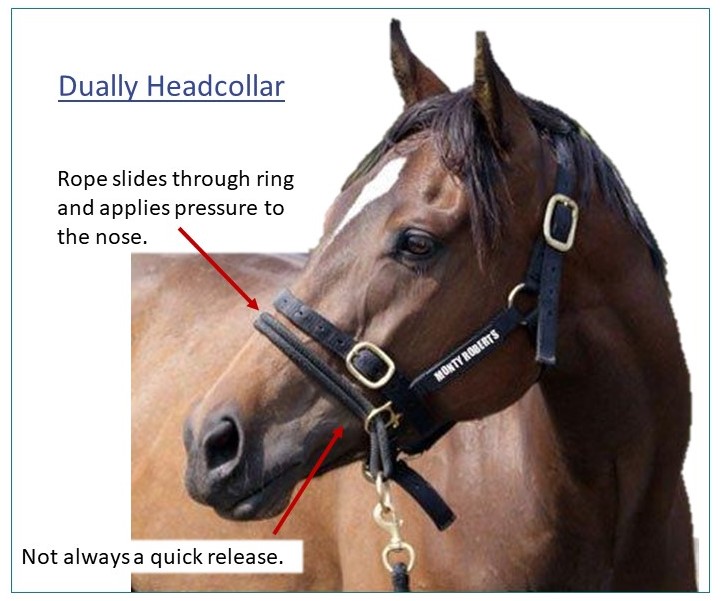
foto hoort bij bovenstaand onderzoek: https://www.facebook.com/photo?fbid=1268361883368030&set=pcb.1268363193367899
Paarden zelf geven dus ook de voorkeur aan een trainingshalster zonder hefboomwerking/leverage: "Their results showed that the Dually didn’t increase compliance compared to a standard HC and it caused an increase in discomfort as measured by the Horse Grimace Scale (HGS)."
Touwhalsters, kaptomen en/of nylon/biothane halsters zijn fijnere en veilige tools om mee te werken en communiceren, doordat er geen hefboomwerking aanwezig is wanneer we de fysieke druk opvoeren. De zogenoemde 'consequentie' als het paard tegen de druk in beweegt, blijft dus uit. Zoals met meer tools het geval is zal de Dually in de juiste handen geen schade aanrichten; zolang deze niet ingezet wordt bij zwaar getraumatiseerde of wilde paarden want hun 3 Second Window is ontzettend klein! Dit betekent dat de quick release van -in dit geval- een Dually meer schade dan goeds aan kan richten, waardoor het fijner kan zijn jezelf bekend te maken met tools die te allen tijden toepasbaar zijn en op ieder individueel paard.
Naast het feit dat ik het persoonlijk niet fijn/eerlijk vind om met extra/veel druk te werken, heeft werken op gevoel echt mijn voorkeur; en 'Feel can be taught, but not always learned'. Wat het dus moeilijker maakt om 'het juiste te doen' of om te bepalen wanneer een tool zich 'in de juiste handen begeeft'. Want wie beoordeeld en beantwoord deze vragen en situaties? En is dat wel objectief?
Als je moeite hebt met het kiezen van de juiste/meest vriendelijke/eerlijke tools om mee te communiceren en werken, helpt het wellicht om aan te denken aan deze quote, die mij helpt om dingen in het juiste perspectief te (blijven) zien:
"You will never have to force anything that is truly meant to be"
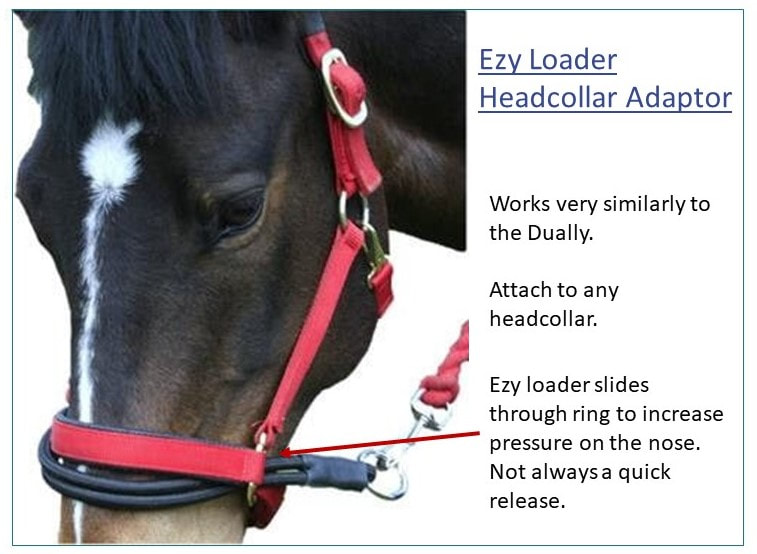
https://www.facebook.com/photo?fbid=1268361883368030&set=pcb.1268363193367899
"Increasing aversive pressure will only increase discomfort, stress, fear and pain. You might get the behaviour you want, but your horse was in a negative emotional state and therefore won’t have made a positive memory at performing that behaviour."
Nog zo'n waardevolle zin uit bovenstaand onderzoek, die belicht waarom ik niet achter principes sta die gedrag 'shapen' of 'redirecten'; zo ontstaat inderdaad het gewenste gedrag, maar vanuit welke emotie stamt dit? Acceptatie, omdat het paard het samenwerken leuk vindt? Of irritatie en tolerantie, omdat het paard onder jouw druk uit probeert te komen en zich vanuit stress/angst/kwaadheid overgeeft?
'Volg het paard en niet de methode' is dus ook toepasbaar op de tools waarmee we werken en als we eerlijker en met een open mind durven kijken naar onze paarden, laten zij hun gevoel vaak al tijdig aan ons merken.
De massa
Iets waar we bij het uitkiezen van tools misschien niet zo snel/lang bij stilstaan, maar zo belangrijk is; de massa van het object!
Persoonlijk geef ik bijvoorbeeld de voorkeur aan een lichtgewicht halster, zonder hardware, zonder leverage en van niet te zacht of hard materiaal. De Dually checkt dus alle punten aan die ik persoonlijk probeer te vermijden; een handige test om even te checken of de tools waar je voor gekozen hebt ook daadwerkelijk passen bij jou/jouw training.
Een voorbeeld uit de praktijk, via een collega (vertaald);
Persoonlijk geef ik bijvoorbeeld de voorkeur aan een lichtgewicht halster, zonder hardware, zonder leverage en van niet te zacht of hard materiaal. De Dually checkt dus alle punten aan die ik persoonlijk probeer te vermijden; een handige test om even te checken of de tools waar je voor gekozen hebt ook daadwerkelijk passen bij jou/jouw training.
Een voorbeeld uit de praktijk, via een collega (vertaald);
'Ik heb mijn paard nu twee jaar, ze is bijna drie. Ik heb Monty's boek gekocht om haar te kunnen trainen en ik begon met een geknoopt touwhalster in plaats van de Dually. Inmiddels heb ik er 1 aangeschaft maar alleen het geluid van het hardware maakt haar zo nerveus, het duurt weer erg lang voor ik haar kan overtuigen dat het veilig is. Ze is nog jong en heel intelligent, ze volgt me overal en als ik haar touwhalster om wil doen komt ze naar me toe en stopt ze zelf haar neus door het halster!
Nu ik met de Dually werk en aan kom is ze direct nerveus, ook als ik mijn tijd neem haar te laten wennen schiet ze toch achteruit als ik mijn arm over haar nek doe. '
Een voorbeeld van hoe een paard zelf dus aan kan geven zich wantrouwend te voelen tegenover een nieuwe situatie; in dit geval het introduceren van een nieuw trainingshalster. In de video hieronder zie je hoe Walter op een soortgelijke manier reageert op zijn kennismaking met een kaptoom. Let op hoe ik te werk ga wanneer Walter (vanuit wantrouwen) weg stapt.
Newton's Third Law: Action & Reaction
Tot slot/ter inspiratie een stukje wetenschap; de Derde Wet van Newton.
"His third law states that for every action (force) in nature there is an equal and opposite reaction. If object A exerts a force on object B, object B also exerts an equal and opposite force on object A. In other words, forces result from interactions."
Formule: F actie = - F reactie
Deze wet is tegenwoordig ook wel bekend als 'de wet van Actie en Reactie'; Elke kracht (actie) heeft als gevolg dat er ook een andere kracht (reactie) optreedt. Een voorbeeld is een geweer dat kracht uitoefent op een kogel, maar de kogel oefent ook reactiekracht uit op het geweer; de terugslag die je voelt.
Krachten treden dus altijd in paren op. Maar hoe vertaalt dit zich naar het gebruik van de Dually Halters?
Eigenlijk speelt de grootste rol van de Dually zich af in het fysieke aspect van de training/de handler. Een veelgehoord gezegde is 'het fysieke gevecht kun je niet winnen' maar dat is wel de focus van de Dually Halters. Door middel van het toevoegen van leverage/een hefboomwerking, kunnen we onze fysieke vragen met extra kracht en druk stellen, in plaats van met meer geduld en zachtheid - door consquenties als een hefboom weg te laten. We kunnen dus extra fysieke kracht toevoegen en toepassen, druk die vaak ten koste van de mentale en emotionele gesteldheid van het paard gaat. Opnieuw het (belangrijke) verschil tussen het camoufleren van emoties (door te focussen op het gedrag) en het verkrijgen van gedragspatronen op een natuurlijke wijze, door het erkennen van onderliggende emoties.
Wat je paard VOELT is dus altijd belangrijker dan wat ze laten zien; iets wat de Dually vaak alleen maar bemoeilijkt door de ruis in communicatie.
Tot slot:
Het kiezen van tools is vaak een persoonlijke keuze; maar maak deze keuzes wel bewust! Hopelijk heb je dankzij dit blog weer inspiratie gekregen om bij jouw eigen overtuigingen en persoonlijke overwegingen stil te staan, om jezelf eerlijk (en tijdig!) af te vragen of dit wel de juiste manier is. Objectief (misschien met behulp van een collega?) naar je paard blijven kijken helpt ook om te bepalen of en welke tools geschikt zijn.
Wees niet bang om dingen uit te proberen en blijf luisteren naar je paard!
Liefs,
Zoë van Mourik | Equine Trauma & Behavior Specialist
www.zoevanmourik.com & www.houseofhorsemanship.nl
Krachten treden dus altijd in paren op. Maar hoe vertaalt dit zich naar het gebruik van de Dually Halters?
Eigenlijk speelt de grootste rol van de Dually zich af in het fysieke aspect van de training/de handler. Een veelgehoord gezegde is 'het fysieke gevecht kun je niet winnen' maar dat is wel de focus van de Dually Halters. Door middel van het toevoegen van leverage/een hefboomwerking, kunnen we onze fysieke vragen met extra kracht en druk stellen, in plaats van met meer geduld en zachtheid - door consquenties als een hefboom weg te laten. We kunnen dus extra fysieke kracht toevoegen en toepassen, druk die vaak ten koste van de mentale en emotionele gesteldheid van het paard gaat. Opnieuw het (belangrijke) verschil tussen het camoufleren van emoties (door te focussen op het gedrag) en het verkrijgen van gedragspatronen op een natuurlijke wijze, door het erkennen van onderliggende emoties.
Wat je paard VOELT is dus altijd belangrijker dan wat ze laten zien; iets wat de Dually vaak alleen maar bemoeilijkt door de ruis in communicatie.
Tot slot:
Het kiezen van tools is vaak een persoonlijke keuze; maar maak deze keuzes wel bewust! Hopelijk heb je dankzij dit blog weer inspiratie gekregen om bij jouw eigen overtuigingen en persoonlijke overwegingen stil te staan, om jezelf eerlijk (en tijdig!) af te vragen of dit wel de juiste manier is. Objectief (misschien met behulp van een collega?) naar je paard blijven kijken helpt ook om te bepalen of en welke tools geschikt zijn.
Wees niet bang om dingen uit te proberen en blijf luisteren naar je paard!
Liefs,
Zoë van Mourik | Equine Trauma & Behavior Specialist
www.zoevanmourik.com & www.houseofhorsemanship.nl
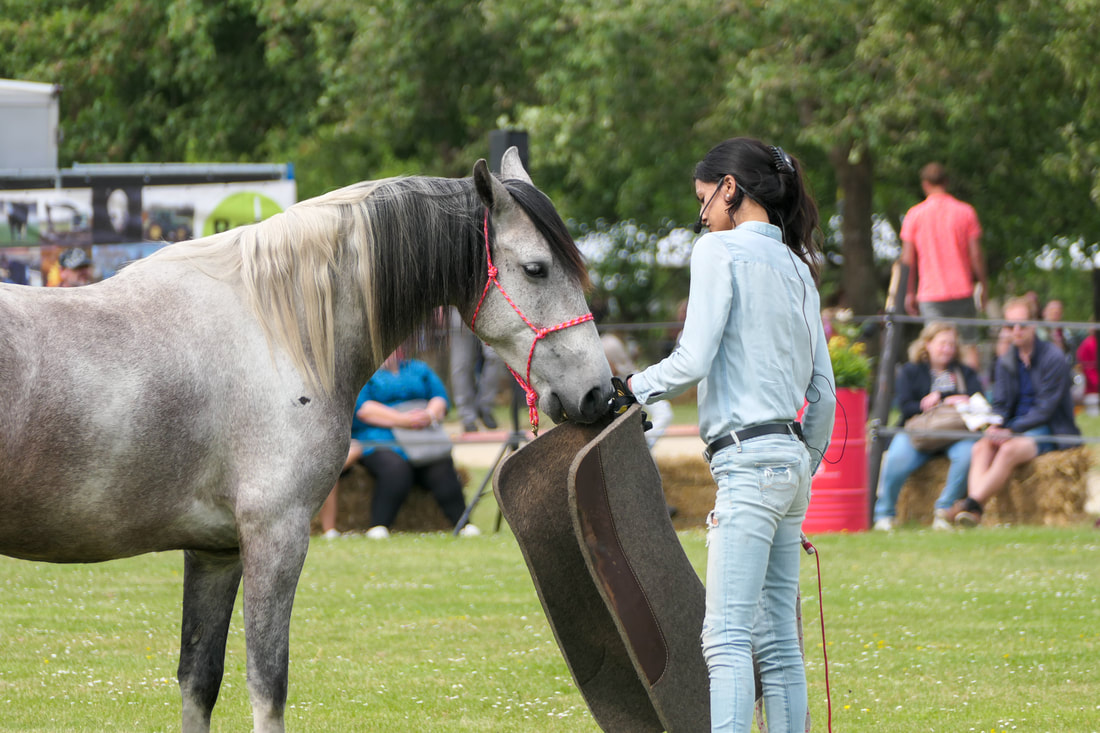
Afgelopen Oktober was ik in Friesland bij @royal.golden.horse om te werken met een van hun nieuwe paarden, die een wel heel serieus probleem liet zien, namelijk (schijn)aanvallen.
Deze (net gecastreerde) ruin kwam recentelijk uit Spanje waar hij het een en ander heeft meegemaakt. Zijn emoties liepen op zijn nieuwe plek zodanig op dat het zelfs in de algemene omgang tijdens bijvoorbeeld het leiden, een probleem werd.
Bij dit soort gedragingen houd ik een kort assessment zodat ik kan observeren wat dit individuele paard precies doet en waarom. In de eerste video zie je hoe Marcello nog wantrouwend is en de strijd met zijn mentale/emotionele druk aangaat. In plaats van hem te bestraffen, help ik hem in de eerste plaats beter om te gaan met zijn emoties om vanuit die baseline te kunnen communiceren en dus daadwerkelijk 'trainen'. De focus lag tijdens deze sessie voornamelijk op communicatie, tussen eerst Marcello en mij en vervolgens met zijn eigenaars.
Bekijk ook hoe hij even helemaal losgaat op de vlag, wat heel fijn werkt voor zijn gemoedstoestand: de vlag op zichzelf betekent namelijks niks! Best handig om je als paard even bewust van te zijn.
Deze (net gecastreerde) ruin kwam recentelijk uit Spanje waar hij het een en ander heeft meegemaakt. Zijn emoties liepen op zijn nieuwe plek zodanig op dat het zelfs in de algemene omgang tijdens bijvoorbeeld het leiden, een probleem werd.
Bij dit soort gedragingen houd ik een kort assessment zodat ik kan observeren wat dit individuele paard precies doet en waarom. In de eerste video zie je hoe Marcello nog wantrouwend is en de strijd met zijn mentale/emotionele druk aangaat. In plaats van hem te bestraffen, help ik hem in de eerste plaats beter om te gaan met zijn emoties om vanuit die baseline te kunnen communiceren en dus daadwerkelijk 'trainen'. De focus lag tijdens deze sessie voornamelijk op communicatie, tussen eerst Marcello en mij en vervolgens met zijn eigenaars.
Bekijk ook hoe hij even helemaal losgaat op de vlag, wat heel fijn werkt voor zijn gemoedstoestand: de vlag op zichzelf betekent namelijks niks! Best handig om je als paard even bewust van te zijn.
De complete sessie vind je later dit jaar in de Leeromgeving !
Liefs,
Zoë van Mourik | Equine Trauma & Behavior Specialist
www.zoevanmourik.com & www.houseofhorsemanship.nl
Liefs,
Zoë van Mourik | Equine Trauma & Behavior Specialist
www.zoevanmourik.com & www.houseofhorsemanship.nl
Een paar weken geleden belde Yara mij op; of ik met spoed op afstand iets kon betekenen voor een van haar pony's, die lusteloos in de wei stond of lag en het steeds slechter deed. In verband met de stormen van vorige maand, een maagzweer en medicatie was de kleine ruin fysiek en mentaal wat opgebrand. Zijn gemoedstoestand was dus wel te verklaren, maar leek niet beter te worden.
Door middel van een afstandsbehandeling (IET gecombineerd met Shamanisme) kon ik wat blokkades wegnemen zoals wat restafval van medicatie en ook wat mentale verlichting aanbrengen. De ruin voelde vooral oververmoeid aan, wat na de behandeling al direct een stuk minder was. In het begin bracht hij mijn focus telkens terug naar zijn mondgebied, wat ik zelf niet helemaal kon plaatsen maar achteraf begreep ik dat hij na een tandartsbezoek wat trauma's heeft opgelopen. Ik zag dit momentje als een vraag of ik 'wel voorzichtig met zijn mond wilde zijn', zo bijzonder hoe ze dat kunnen communiceren!
Vorige week (een week na de afstandsbehandeling) kwam ik in real life langs, om de ruin opnieuw een behandeling te geven. Zijn eigenaresse vroeg zich af of ik de hele kudde kon meenemen, waar ik meteen ja op zei! Dus, even later zat ik op mijn knieën in de wei, bij de kleine ruin tussen zijn kuddegenootjes te zoeken naar fysieke, emotionele en mentale problemen en oplossingen. ZO gaaf hoe sterk paarden hun boodschap kunnen doorgeven!
Afzonderlijk van elkaar kwam de rest van de kudde bij bepaalde vragen, gebieden of blokkades heel duidelijk iets vertellen, door bijvoorbeeld een bepaalde positie in te nemen, contact te maken met ons/de ruin. De drachtige merrie kwam zelfs nog even 'meedoen' en legde liefdevol en zacht haar neus een paar keer op het schoudergebied van de ruin, dat ik net aan het behandelen was. 'Hier kan ik hem wel bij helpen' was haar boodschap.
De sterke band met zijn eigenaresse kwam ook naar boven; zelf stond de kleine ruin vooral te slapen en te genieten (wat het lichaam kan doen om de geest te beschermen) waardoor zijn releases zoals gapen bij zijn baasje eruit kwamen! Ook bij het hart- en keelgebied voelde ik wat spanning en blokkades; bij zijn eigenaresse werd dit ervaren als een brok in haar keel, bijna direct bij het aanraken van dit gebied. Ook deze blokkades werden weer goed weg-gegaapt!
Uiteindelijk deden behalve alle pony's dus ook het baasje fanatiek mee met de bijzondere behandeling. Zelfs het veulen in de buik van 1 van de merries (bijna uitgerekend!) kwam af en toe overduidelijk door met een boodschap en bracht heel mooi naar voren hoe de kudde een beetje 'hol' aanvoelde. "Is iedereen wel goed met zichzelf en elkaar verbonden? Is het veilig om geboren te worden? Is iedereen klaar voor mijn komst? Is er ruimte voor mijn leven?"
Ik sta nog vaak met bewondering te kijken en te voelen hoe sterk een (ongeboren) paard hun zorgen naar ons kunnen uiten. Merries die gedekt worden maar hier emotioneel niet klaar voor waren en doorgeven dat "er nooit naar mijn mening of gevoel gevraagd is", waardoor ze naarmate de dracht steeds nerveuzer worden en zelfs een veulen (kunnen) afstoten. Hartverscheurende, maar soms ook logische gebeurtenissen waar ik meer en vaker bewust probeer stil te staan zodat ik net als in deze kudde de basis kan helpen herstellen.
Deze ruin en de hele kudde staan nu gelukkig weer sterker met elkaar in verbinding, wat de komst van nieuw leven ook makkelijker maakt. Er zal met name fysiek nog wat tijd gaan zitten in het helingsproces, maar naarmate dit verbetert zal zijn mentale gemoedstoestand ook verbeteren; het gedrag van een paard is grotendeels het resultaat van hoe ze zich voelen.
Een bijzondere behandeling dus, voor een bijzondere kudde! Er wordt nu nieuwsgierig en geduldig gewacht op de komst van het nieuwe veulen, die na de behandeling steeds meer aangeeft er klaar voor te zijn; haar moeder zondert zich vaker af, haar banden worden slapper en ze staat steeds vaker een beetje te slapen... super spannend!
Door middel van een afstandsbehandeling (IET gecombineerd met Shamanisme) kon ik wat blokkades wegnemen zoals wat restafval van medicatie en ook wat mentale verlichting aanbrengen. De ruin voelde vooral oververmoeid aan, wat na de behandeling al direct een stuk minder was. In het begin bracht hij mijn focus telkens terug naar zijn mondgebied, wat ik zelf niet helemaal kon plaatsen maar achteraf begreep ik dat hij na een tandartsbezoek wat trauma's heeft opgelopen. Ik zag dit momentje als een vraag of ik 'wel voorzichtig met zijn mond wilde zijn', zo bijzonder hoe ze dat kunnen communiceren!
Vorige week (een week na de afstandsbehandeling) kwam ik in real life langs, om de ruin opnieuw een behandeling te geven. Zijn eigenaresse vroeg zich af of ik de hele kudde kon meenemen, waar ik meteen ja op zei! Dus, even later zat ik op mijn knieën in de wei, bij de kleine ruin tussen zijn kuddegenootjes te zoeken naar fysieke, emotionele en mentale problemen en oplossingen. ZO gaaf hoe sterk paarden hun boodschap kunnen doorgeven!
Afzonderlijk van elkaar kwam de rest van de kudde bij bepaalde vragen, gebieden of blokkades heel duidelijk iets vertellen, door bijvoorbeeld een bepaalde positie in te nemen, contact te maken met ons/de ruin. De drachtige merrie kwam zelfs nog even 'meedoen' en legde liefdevol en zacht haar neus een paar keer op het schoudergebied van de ruin, dat ik net aan het behandelen was. 'Hier kan ik hem wel bij helpen' was haar boodschap.
De sterke band met zijn eigenaresse kwam ook naar boven; zelf stond de kleine ruin vooral te slapen en te genieten (wat het lichaam kan doen om de geest te beschermen) waardoor zijn releases zoals gapen bij zijn baasje eruit kwamen! Ook bij het hart- en keelgebied voelde ik wat spanning en blokkades; bij zijn eigenaresse werd dit ervaren als een brok in haar keel, bijna direct bij het aanraken van dit gebied. Ook deze blokkades werden weer goed weg-gegaapt!
Uiteindelijk deden behalve alle pony's dus ook het baasje fanatiek mee met de bijzondere behandeling. Zelfs het veulen in de buik van 1 van de merries (bijna uitgerekend!) kwam af en toe overduidelijk door met een boodschap en bracht heel mooi naar voren hoe de kudde een beetje 'hol' aanvoelde. "Is iedereen wel goed met zichzelf en elkaar verbonden? Is het veilig om geboren te worden? Is iedereen klaar voor mijn komst? Is er ruimte voor mijn leven?"
Ik sta nog vaak met bewondering te kijken en te voelen hoe sterk een (ongeboren) paard hun zorgen naar ons kunnen uiten. Merries die gedekt worden maar hier emotioneel niet klaar voor waren en doorgeven dat "er nooit naar mijn mening of gevoel gevraagd is", waardoor ze naarmate de dracht steeds nerveuzer worden en zelfs een veulen (kunnen) afstoten. Hartverscheurende, maar soms ook logische gebeurtenissen waar ik meer en vaker bewust probeer stil te staan zodat ik net als in deze kudde de basis kan helpen herstellen.
Deze ruin en de hele kudde staan nu gelukkig weer sterker met elkaar in verbinding, wat de komst van nieuw leven ook makkelijker maakt. Er zal met name fysiek nog wat tijd gaan zitten in het helingsproces, maar naarmate dit verbetert zal zijn mentale gemoedstoestand ook verbeteren; het gedrag van een paard is grotendeels het resultaat van hoe ze zich voelen.
Een bijzondere behandeling dus, voor een bijzondere kudde! Er wordt nu nieuwsgierig en geduldig gewacht op de komst van het nieuwe veulen, die na de behandeling steeds meer aangeeft er klaar voor te zijn; haar moeder zondert zich vaker af, haar banden worden slapper en ze staat steeds vaker een beetje te slapen... super spannend!
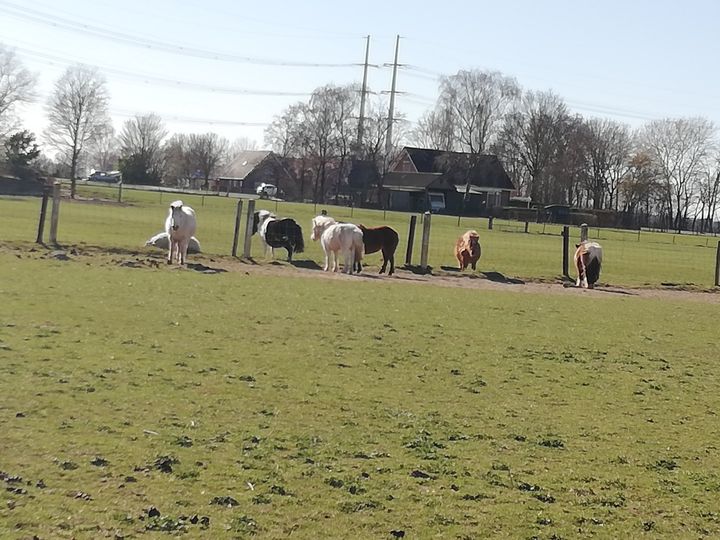
Ik ben ontzettend dankbaar dat ik deze mooie sessie mocht delen met deze groep pony's en hun eigenaresse die overigens ook mooi aansloot op èèn van mijn leefregels die horen bij The Law of Detachement (mijn huiswerk voor dit jaar): 'Step into the field of all possibilities'
"Om Anandham Namah"
Liefs,
Zoë van Mourik | Equine Trauma & Behavior Specialist
www.zoevanmourik.com & www.houseofhorsemanship.nl
"Om Anandham Namah"
Liefs,
Zoë van Mourik | Equine Trauma & Behavior Specialist
www.zoevanmourik.com & www.houseofhorsemanship.nl
>> Tip: Lees ook de vorige blog: Angst bij Ruiters Deel 1 voor tips en inspiratie!
In deze blog: mijn ervaringen met vallen en opstaan.
In deze blog: mijn ervaringen met vallen en opstaan.
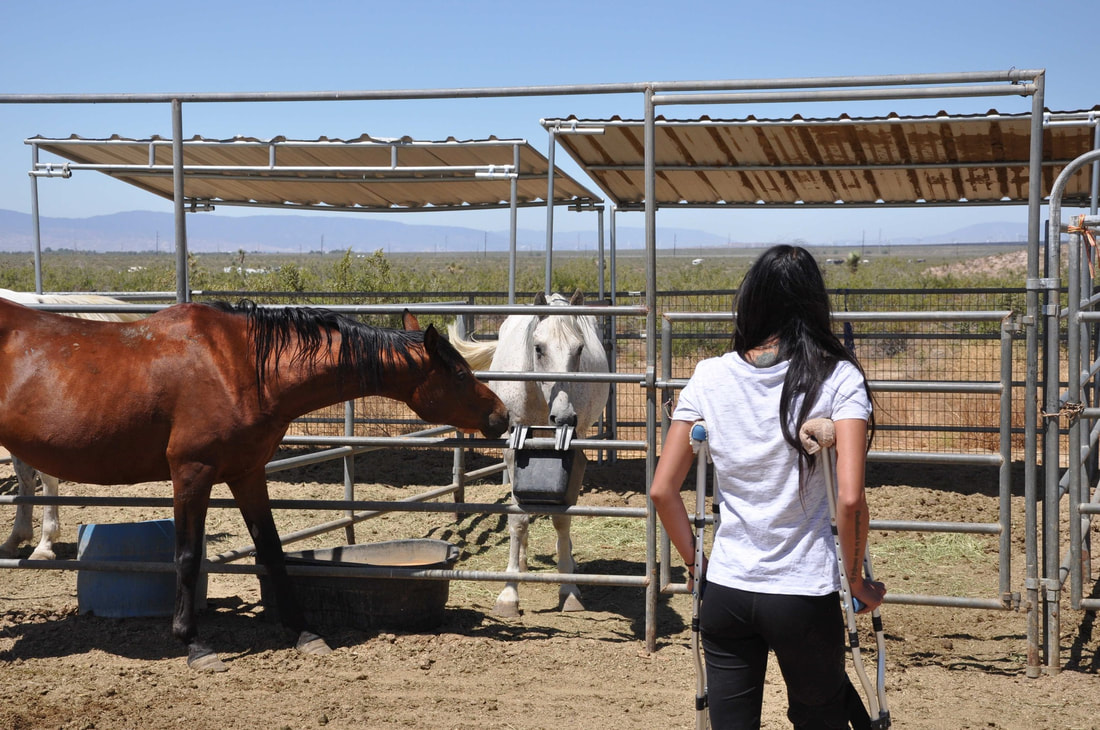
Iedereen is menselijk, ook ik maak dus nog wel eens foutjes doordat ik elementen over het hoofd zie of te doelmatig bezig ben, in plaats van gevoelsmatig. Het kunnen (h)erkennen van je eigen valkuilen is daarom een onmisbare en belangrijke eerste stap wanneer je bewuster wil gaan werken en samenzijn met een paard. Zonder regelmatig op je eigen zijn en kunnen te reflecteren glippen foutjes er namelijk steeds sneller in, waardoor uiteindelijk een klein of groot ongeluk niet uit kan blijven.
Buck Brannaman verwoord het mooi in deze quote:
'Fear has to do with helplessness. The only thing that conquers it is knowledge. When you learn about how a horse thinks and makes decisions that helplessness goes away'
Hetzelfde geldt voor zelfkennis; het (h)erkennen van je eigen strengths en weaknesses zorgt ervoor dat je een situatie of dier gemakkelijker kunt beoordelen en dus de juiste keuzes kan maken. Objectief een situatie beoordelen nadat er iets fout is gegaan is dus ontzettend belangrijk en iets dat ik zelf ook doe. Naar aanleiding van de vorige post deel ik hierbij (een paar van) mijn eigen ervaringen, waarom het destijds fout gegaan is, hoe ik ermee om gegaan ben en hoe ik mijn aanpak in de tussentijd regelmatig aanpas om meer veiligheid te kunnen garanderen voor mij en de paarden waar ik mee werk.
1. In 2004 brandde de boerderij van onze buren af, waardoor hun oudere Appaloosa merrie tijdelijk bij ons in de wei kwam te staan. Ik was toen 13 jaar oud en net een jaar eigenaresse van mijn pony Sofie, waar we een flink hectare weiland en een paddock met stal voor hadden gemaakt. Toen ik op een middag in de wei kwam om even bij ze te checken, draaide de Appaloosa merrie zich plotseling om en trapte met twee achterbenen behoorlijk hard tegen mijn bekken. Door de schrik werd het even zwart voor mijn ogen en viel ik op de grond, waarop mijn Opa (die het van begin tot eind zag gebeuren) bleef roepen dat ik meteen de wei uit moest kruipen. Gelukkig bleef het bij een lichte kneuzing en wat blauwe/paarse plekken rondom mijn bekken.
Achteraf gezien realiseerde ik me dat ik waarschijnlijk veel te snel/plotseling bij de merrie in de buurt was gekomen, die haar verhuizing en de brand nog niet had kunnen verwerken. Extra en voor haar onbekende prikkels maakte haar dus nog onrustiger en uiteindelijk echt angstig, waardoor ze de behoefte voelde zichzelf te beschermen. Na dit voorval ben ik (eerst buiten de wei) veel beter gaan observeren en timen wanneer het voor de merrie wel een goed/beter moment was om benaderd te worden. Dankzij die nieuwe strategie heb ik nooit meer iets geks met haar meegemaakt en hebben we zelfs kunnen genieten van wandelingen en poetsbeurten voordat ze uiteindelijk terug ging naar onze buren.
2. In 2006 viel ik voor het eerst van mijn eerste (rij)pony, met een hersenschudding, schouder en elleboog uit de kom als gevolg. De pony was een jonge Haflingermerrie die behoorlijk heftig kon reageren wanneer een situatie wat spannend werd of nog onbekend terrein voor haar was; logisch, als jong paard dat nog geen jaar onder het zadel was. Haar explosie kwam deze keer in de wei, toen ik van de bak terugreed richting haar weide om haar daar af te zadelen en de buurman op het pad naast ons zijn grasmaaier startte. Mijn Haflinger schrok, bracht haar hoofd tussen haar voorbenen en begon te bokken, rennen, springen en 'crowhopping'. Uiteindelijk vloog ik over haar hals van haar rug en kwam ik terecht op mijn linkerarm, die de klap dus opving. Eenmaal in het ziekenhuis bleek de breuk in mijn elleboog gecompliceerder dan gedacht en verbleef ik een nachtje zodat mijn arm operatief weer gezet kon worden.
Inmiddels is mijn arm geheeld, maar werkt deze niet meer 100%. Zo ben ik links minder sterk en flexibel en voel ik ook niet altijd alles doordat er wat zenuwen bekneld geraakt zijn geweest en zijn weggehaald. Hier kan ik me gelukkig goed mee redden tijdens bijvoorbeeld One Rein Stops of het rijden van Engelse paarden met constant contact, maar helemaal 'goed' zal mijn linkerarm niet meer worden.
Het is dus ook belangrijk om na een ongeluk heel eerlijk te voelen wat je fysiek nog wel aan kunt zodat je eventuele aanpassingen kan maken zodat je werk leuk en dus veilig blijft!
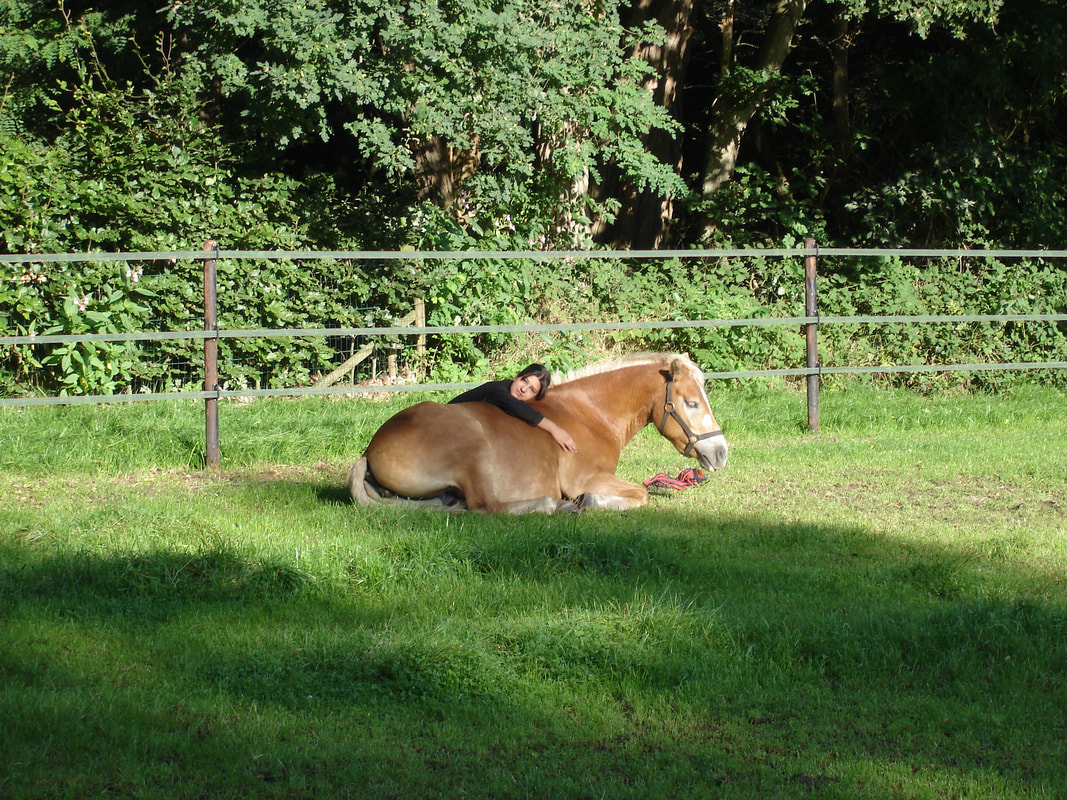
3. Een jaar later viel ik opnieuw van mijn Haflingermerrie; ik kwam terug van een buitenrit met mijn buurmeisje (die op mijn andere pony reed) toen we aan de lange teugel het pad op stapten richting de stallen en wei. Er waren net nieuwe buren in het huis naast ons pad komen wonen, die ook een hond hadden; een enorme Bordeaux Dog die als vanuit het niets naar de heg sprintte en er luid blaffend tegenaan sprong. Mijn buurmeisje en ik reden aan de andere kant van de heg, nietsvermoedend te kletsen tot de enorme hond dus plotseling in de heg verscheen. Mijn merrie zette het in paniek opnieuw op een bokken en rennen waardoor ik met een harde klap tegen eerst de omheining en vervolgens op de grond terechtkwam.
Gelukkig kwamen buren snel in actie en haalden mijn ouders op, die een ambulance belden omdat ik niet op kon staan en weinig voelde in/vanaf mijn ruggebied. Eenmaal in de ambulance zat deze al snel muurvast op het pad (gras/modder) en kwamen de buren helpen om ons te bevrijden en de ambulance van het pad te duwen. De apparatuur in de ambulance deed het overigens niet, dus dingen als mijn bloeddruk opmeten moest wachten tot in het ziekenhuis. Daar bleek dat ik naast een hersenschudding ook een botsplinter uit mijn heupbot miste, een paar ribben gekneusd had en wat misalignments in mijn ruggenwervels en opnieuw mijn bekken.
Eenmaal thuis liep ik een paar dagen verdoofd van pijnstillers rond op krukken, waarmee ik eigenwijs naar de paarden ging. Ik was namelijk vooral benieuwd naar hoe het met mijn pony ging en hoe zij deze ervaring aan het verwerken was. Dit was overigens mijn laatste ongeluk met haar; door nog langzamer met haar te werken, meer tijd te spenderen aan de basis zoals samen zijn zonder daar iets tegenover te zetten zoals trainen, begon ze meer te ontspannen en dus na te denken. Haar reactieve en instinctieve gedrag verdween in bijna een jaar tijd naar vanuit rust en kalmte kunnen nadenken en samenwerken.
4. Tot slot mijn meest recente ongeluk, waar ik ook achteraf weer veel waardevolle informatie uit heb kunnen halen met betrekking tot mijzelf.
In 2020 liep ik met een van mijn trainingspaarden van de poetsplek naar de round pen, met de intentie om voor inmiddels de 4e keer met hem te werken. Omdat ik met zo veel paarden per dag werkte (5 tot 8 paarden) kroop de routine er al snel in, waardoor ik dacht tijd te kunnen besparen door dit paard tegelijkertijd met mijn trainingsspullen naar de round pen te brengen. Halverwege de route explodeerde de ruin, sprong de lucht in en trapte met beide achterbenen tegen mijn bovenbeen waardoor de tibial spine in mijn knie afbrak en mijn kruisbanden ook een klap kregen. Gelukkig bleek een operatie niet nodig en kreeg ik al snel een brace waarmee ik voorzichtig weer mocht gaan lopen.
Achteraf vond ik het heel logisch dat dit paard zo reageerde; de poetsplek was anders door de nieuwe zadelkamer, ik had al die spullen vast terwijl ik hem naar de round pen leidde en onderweg liepen we langs mijn man die druk bezig was met het bouwen van nieuwe stallen. Die 3 nieuwe/onbekende dingen brachten zo veel prikkels met zich mee dat een explosie gewoonweg niet uit kon blijven. Ik werkte te veel vanuit routine en te weinig vanuit gevoel. Deze quote van Warwick Schiller schoot mij ook bijna direct te binnen na dit ongeluk: Als er 3 dingen anders dan anders zijn kun je er eigenlijk vanuit gaan dat het gedrag van een paard anders tot uiting zal komen.
Had ik dus meer tijd besteedt aan;
1. eerst de nieuwe zadelkamer rustig ontdekken
2. het paard en mijn spullen apart naar de round pen brengen
3. het paard bewust laten zien wat mijn man aan het doen was
dan was dit ongeluk hoogstwaarschijnlijk niet gebeurd. Maar; ik heb er weer waardevolle lessen uit kunnen halen.
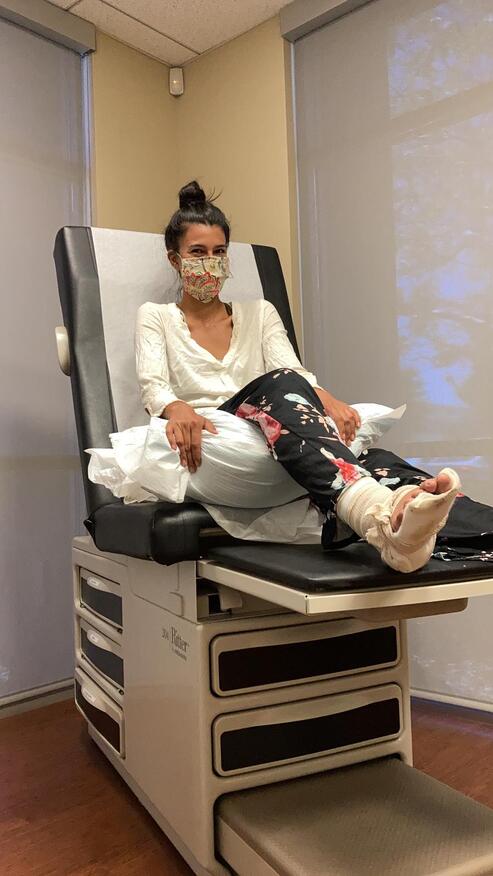
Tot zover de 'highlights' van mijn ongelukken, waar ik achteraf toch dankbaar voor ben dankzij de informatie die ik eruit heb kunnen halen door langzaam en zonder oordelen eerst opnieuw de verbinding aan te gaan met jezelf (durven voelen en ervaren) en vervolgens met het paard (je gevoel durven uiten). Een ongeluk zit natuurlijk in een klein hoekje, maar goede voorbereiding kan een hoop voorkomen.
"Be humble enough to suck for as long as it takes you to become better."
- Rachel Hollis
Liefs,
Zoë van Mourik | Equine Trauma & Behavior Specialist
www.zoevanmourik.com & www.houseofhorsemanship.nl
Angst voor/tijdens het rijden is een bekend fenomeen voor veel ruiters. Soms komen deze gevoelens opzetten op latere leeftijd, wanneer we bijvoorbeeld kinderen krijgen of na een lange tijd/een ongeluk weer eens op een paard stappen. Andere ruiters ervaren deze emoties als golven; ze komen en ze gaan, wat het nog lastiger kan maken want hoe bereid je je hier op voor?
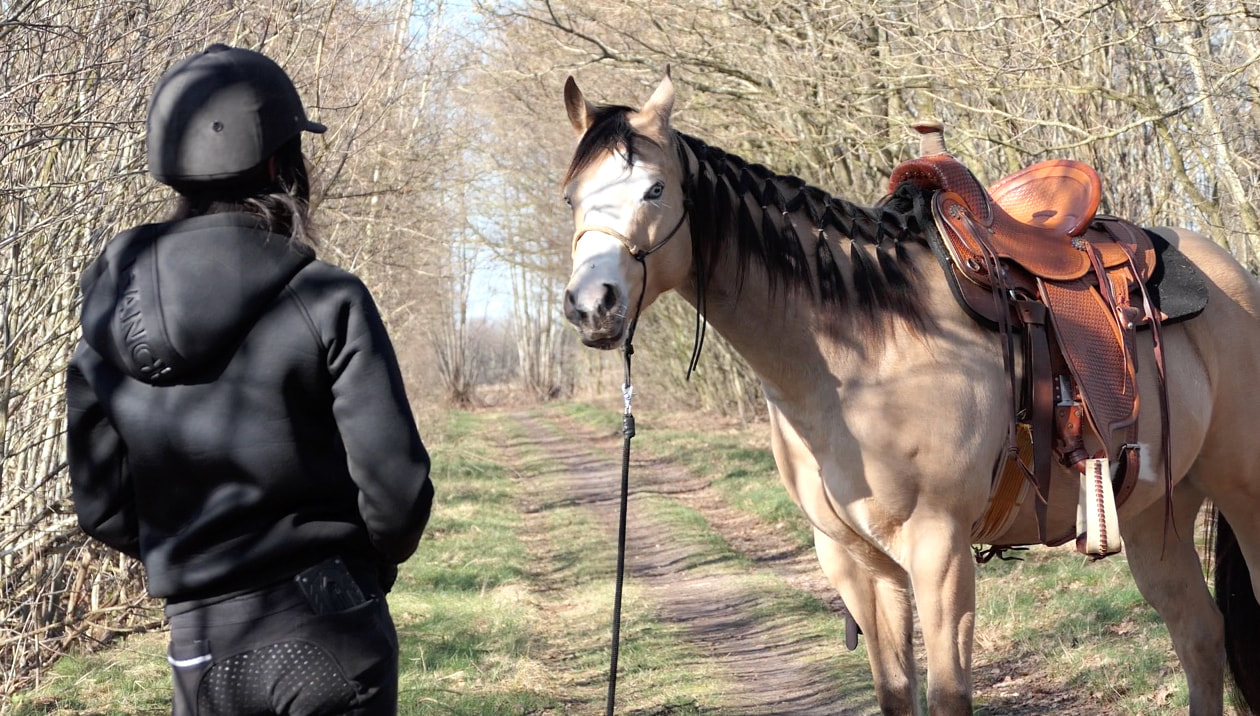
1. 𝐂𝐨𝐧𝐭𝐫𝐨𝐥𝐞
De controle ergens over hebben vinden wij als mens prettig en is heel natuurlijk. Dit concept wordt echter lastig wanneer we werken met dieren, die hun eigen emoties ervaren. Focus je op dingen waar je wèl controle op kunt uitoefenen, zoals; de tools waarmee je werkt, je tuigage, je cap, hoe is het paard waar je mee werkt? Hoe is de omgeving? Hoe is het weer?
Ervaar en bepaal zelf in wat voor situatie en omgeving jij je het meest 'in control' voelt.
2. 𝐕𝐞𝐫𝐭𝐫𝐨𝐮𝐰𝐞𝐧
Je angsten overwinnen is haast onmogelijk in je eentje: vind daarom iemand die jou kan helpen en stel jezelf de vragen; 'Vertrouw ik zijn/haar oordeel? Kan ik dit paard vertrouwen? Vertrouw ik mezelf om de juiste keuzes te maken?'
3. 𝐙𝐢𝐧𝐭𝐮𝐢𝐠𝐞𝐧
Wat zie je? Wat ruik je? Hoe veel andere paarden zie je? Welke kleuren hebben ze? Je meer bewust worden van omgevingsfactoren en dus invloeden, helpt om stress te reguleren. Zet je zintuigen dus aan het werk en vergeet ook je ademhaling niet; deze helpt je terug te brengen naar het Hier en Nu.
4. 𝐁𝐚𝐛𝐲 𝐒𝐭𝐞𝐩𝐬
Raak niet overmoedig door na 1 sessie al meer te willen; stel vooraf realistische doelen en houd je hieraan. Slow & steady wins the race!
5. 𝐕𝐢𝐞𝐫 𝐡𝐞𝐭!
Schrijf op wat je gaat doen om jezelf te belonen voor het harde werk en het overwinnen van je angsten! Geef jezelf die extra vrije dag, maak een lekkere home-made maaltijd of koop iets leuks voor jezelf. Erken je progressie en harde werk; wees trots op elke stap
Hope this helps! In de volgende blog ga ik wat meer in op mijn eigen ervaringen en hoe ik hier mee omga.
Liefs,
Zoë van Mourik | Equine Trauma & Behavior Specialist
www.zoevanmourik.com & www.houseofhorsemanship.nl
De controle ergens over hebben vinden wij als mens prettig en is heel natuurlijk. Dit concept wordt echter lastig wanneer we werken met dieren, die hun eigen emoties ervaren. Focus je op dingen waar je wèl controle op kunt uitoefenen, zoals; de tools waarmee je werkt, je tuigage, je cap, hoe is het paard waar je mee werkt? Hoe is de omgeving? Hoe is het weer?
Ervaar en bepaal zelf in wat voor situatie en omgeving jij je het meest 'in control' voelt.
2. 𝐕𝐞𝐫𝐭𝐫𝐨𝐮𝐰𝐞𝐧
Je angsten overwinnen is haast onmogelijk in je eentje: vind daarom iemand die jou kan helpen en stel jezelf de vragen; 'Vertrouw ik zijn/haar oordeel? Kan ik dit paard vertrouwen? Vertrouw ik mezelf om de juiste keuzes te maken?'
3. 𝐙𝐢𝐧𝐭𝐮𝐢𝐠𝐞𝐧
Wat zie je? Wat ruik je? Hoe veel andere paarden zie je? Welke kleuren hebben ze? Je meer bewust worden van omgevingsfactoren en dus invloeden, helpt om stress te reguleren. Zet je zintuigen dus aan het werk en vergeet ook je ademhaling niet; deze helpt je terug te brengen naar het Hier en Nu.
4. 𝐁𝐚𝐛𝐲 𝐒𝐭𝐞𝐩𝐬
Raak niet overmoedig door na 1 sessie al meer te willen; stel vooraf realistische doelen en houd je hieraan. Slow & steady wins the race!
5. 𝐕𝐢𝐞𝐫 𝐡𝐞𝐭!
Schrijf op wat je gaat doen om jezelf te belonen voor het harde werk en het overwinnen van je angsten! Geef jezelf die extra vrije dag, maak een lekkere home-made maaltijd of koop iets leuks voor jezelf. Erken je progressie en harde werk; wees trots op elke stap
Hope this helps! In de volgende blog ga ik wat meer in op mijn eigen ervaringen en hoe ik hier mee omga.
Liefs,
Zoë van Mourik | Equine Trauma & Behavior Specialist
www.zoevanmourik.com & www.houseofhorsemanship.nl
Bekijk onderstaande video:
Dit is de Natuur, paardentaal in haar meest pure vorm.
Beelden als deze vindt niet iedereen fijn om te zien; zeker in Nederland circuleert er op het moment veel onjuiste en vooral vermenselijkte informatie over paardengedrag. Waar we namelijk niet (vaak genoeg) bij stilstaan is het feit dat er grote verschillen zijn tussen een wild/feral, of gedomesticeerd paard. Hoe wij met deze verschillende paarden omgaan en met ze communiceren is daarom ook van groot belang. En dat begint allemaal met normaal paardengedrag correct kunnen observeren, zonder oordelen.
De paardenwereld en hun emoties zijn lang niet zo zwart/wit als nog vaak gedacht wordt. De complexiteit van paarden, hun familie en kuddes wordt met deze video nog eens extra onderstreept. Ook wilde paarden 'discussiëren'. Ook zij zijn het lang niet altijd eens met keuzes die binnen hun groep gemaakt worden. En soms wordt er naar die emoties gehandeld, zoals Woya doet in de video. Heftig om te zien misschien, maar ik geniet van de vrijheid die ze heeft om zich erin te mengen en haar zegje te doen. Om haar stem te gebruiken, die onze gedomesticeerde paarden vaak niet eens meer hebben.
We nemen ze hun levensruimte af, hun stem, hun familie en daarmee ook het vermogen om zichzelf te kunnen verdedigen of kunnen uiten. Een leven lang dienen als mentale en fysieke 'slaaf' is meer de regel dan uitzondering.
Komt het paard na lange tijd eindelijk voor zichzelf op, dan wordt er gesproken van een "gedragsprobleem" of "pismerries" of "dominantie". Misplaatste vermenselijkingen die onze onkunde verbloemen en afschuiven op het paard, die daar logischerwijs onrustig, verward en zelfs gevaarlijk door kan worden.
Train jezelf om te herkennen wat nou nog wel "normaal" is en wat niet, in zowel gedomesticeerde als wilde kuddes paarden. Observeer overeenkomsten en verschillen en bedenk of hoe je verbeteringen kan aanpassen in de leefomgeving of training van jouw paard. Zeker een aanrader voor gedragstrainers, die vaak nog te eenzijdig worden blootgesteld aan paarden, gedrag, waar dit vandaan komt en onze invloed hierop. Zo kunnen we hopelijk de hype van het "shapen" van gedrag, veranderen naar het kunnen opmerken van de emotie; de onderliggende reden.
De gemoedstoestand van het paard verbeteren is namelijk vele mate effectiever dan controle uitoefenen op hoe het paard deze gevoelens tot uiting brengt; hierdoor voelen ze zich gehoord, gezien en begrepen, zonder dat wij hun gevoelens veroordelen. Een belangrijke basis voor ieder paard, lang voordat we aan zaken als training of rehabilitatie beginnen.
Liefs,
Zoë van Mourik | Equine Trauma & Behavior Specialist
www.zoevanmourik.com & www.houseofhorsemanship.nl
Beelden als deze vindt niet iedereen fijn om te zien; zeker in Nederland circuleert er op het moment veel onjuiste en vooral vermenselijkte informatie over paardengedrag. Waar we namelijk niet (vaak genoeg) bij stilstaan is het feit dat er grote verschillen zijn tussen een wild/feral, of gedomesticeerd paard. Hoe wij met deze verschillende paarden omgaan en met ze communiceren is daarom ook van groot belang. En dat begint allemaal met normaal paardengedrag correct kunnen observeren, zonder oordelen.
De paardenwereld en hun emoties zijn lang niet zo zwart/wit als nog vaak gedacht wordt. De complexiteit van paarden, hun familie en kuddes wordt met deze video nog eens extra onderstreept. Ook wilde paarden 'discussiëren'. Ook zij zijn het lang niet altijd eens met keuzes die binnen hun groep gemaakt worden. En soms wordt er naar die emoties gehandeld, zoals Woya doet in de video. Heftig om te zien misschien, maar ik geniet van de vrijheid die ze heeft om zich erin te mengen en haar zegje te doen. Om haar stem te gebruiken, die onze gedomesticeerde paarden vaak niet eens meer hebben.
We nemen ze hun levensruimte af, hun stem, hun familie en daarmee ook het vermogen om zichzelf te kunnen verdedigen of kunnen uiten. Een leven lang dienen als mentale en fysieke 'slaaf' is meer de regel dan uitzondering.
Komt het paard na lange tijd eindelijk voor zichzelf op, dan wordt er gesproken van een "gedragsprobleem" of "pismerries" of "dominantie". Misplaatste vermenselijkingen die onze onkunde verbloemen en afschuiven op het paard, die daar logischerwijs onrustig, verward en zelfs gevaarlijk door kan worden.
Train jezelf om te herkennen wat nou nog wel "normaal" is en wat niet, in zowel gedomesticeerde als wilde kuddes paarden. Observeer overeenkomsten en verschillen en bedenk of hoe je verbeteringen kan aanpassen in de leefomgeving of training van jouw paard. Zeker een aanrader voor gedragstrainers, die vaak nog te eenzijdig worden blootgesteld aan paarden, gedrag, waar dit vandaan komt en onze invloed hierop. Zo kunnen we hopelijk de hype van het "shapen" van gedrag, veranderen naar het kunnen opmerken van de emotie; de onderliggende reden.
De gemoedstoestand van het paard verbeteren is namelijk vele mate effectiever dan controle uitoefenen op hoe het paard deze gevoelens tot uiting brengt; hierdoor voelen ze zich gehoord, gezien en begrepen, zonder dat wij hun gevoelens veroordelen. Een belangrijke basis voor ieder paard, lang voordat we aan zaken als training of rehabilitatie beginnen.
Liefs,
Zoë van Mourik | Equine Trauma & Behavior Specialist
www.zoevanmourik.com & www.houseofhorsemanship.nl
Vorige week deelde ik in mijn verhaal een update over de Equine Trauma & Behavior opleiding die ik aan het uitschrijven ben:
"𝘖𝘮𝘥𝘢𝘵 𝘷𝘦𝘦𝘭 𝘪𝘯𝘧𝘰𝘳𝘮𝘢𝘵𝘪𝘦 𝘶𝘪𝘵 𝘸𝘦𝘵𝘦𝘯𝘴𝘤𝘩𝘢𝘱𝘱𝘦𝘭𝘪𝘫𝘬𝘦 𝘰𝘯𝘥𝘦𝘳𝘻𝘰𝘦𝘬𝘦𝘯 𝘬𝘰𝘮𝘵 𝘸𝘪𝘭 𝘪𝘬 𝘥𝘦 𝘳𝘦𝘴𝘶𝘭𝘵𝘢𝘵𝘦𝘯 𝘯𝘢𝘢𝘴𝘵 𝘶𝘪𝘵𝘴𝘤𝘩𝘳𝘪𝘫𝘷𝘦𝘯, 𝘰𝘰𝘬 𝘵𝘰𝘦𝘭𝘪𝘤𝘩𝘵𝘦𝘯 𝘮𝘦𝘵 𝘸𝘢𝘵 𝘱𝘳𝘢𝘬𝘵𝘪𝘫𝘬𝘷𝘰𝘰𝘳𝘣𝘦𝘦𝘭𝘥𝘦𝘯 (𝘤𝘢𝘴𝘦𝘴). 𝘕𝘢𝘢𝘴𝘵 𝘨𝘦𝘥𝘳𝘢𝘨 𝘬𝘶𝘯𝘯𝘦𝘯 𝘸𝘪𝘫 𝘮𝘦𝘯𝘴𝘦𝘯 𝘯𝘢𝘮𝘦𝘭𝘪𝘫𝘬 𝘰𝘰𝘬 𝘢𝘯𝘥𝘦𝘳𝘦 𝘴𝘰𝘰𝘳𝘵𝘦𝘯 𝘪𝘯𝘧𝘰𝘳𝘮𝘢𝘵𝘪𝘦 𝘷𝘦𝘳𝘮𝘦𝘯𝘴𝘦𝘭𝘪𝘫𝘬𝘦𝘯, 𝘸𝘢𝘢𝘳𝘥𝘰𝘰𝘳 𝘰𝘯𝘥𝘦𝘳𝘻𝘰𝘦𝘬𝘴𝘳𝘦𝘴𝘶𝘭𝘵𝘢𝘵𝘦𝘯 𝘥𝘰𝘰𝘳 𝘷𝘦𝘳𝘴𝘤𝘩𝘪𝘭𝘭𝘦𝘯𝘥𝘦 𝘮𝘦𝘯𝘴𝘦𝘯 𝘰𝘱 𝘷𝘦𝘳𝘴𝘤𝘩𝘪𝘭𝘭𝘦𝘯𝘥𝘦 𝘮𝘢𝘯𝘪𝘦𝘳𝘦𝘯 𝘬𝘶𝘯𝘯𝘦𝘯 𝘸𝘰𝘳𝘥𝘦𝘯 𝘰𝘱𝘨𝘦𝘷𝘢𝘵."
In een studie uit 2012 (door Dr. Heleski en Dr. Anthony) wordt dit fenomeen nog eens extra belicht:
1. “Researchers in equitation science have worked diligently to use objective measures in horse behavior and welfare studies, ones that colleagues will appreciate. This is appropriate. However, because equine welfare is not purely an empirical matter, we must recognize that science alone may not be enough when assessing equine treatment.”
2. ”The science community must realize, as does the public already, that different value assumptions will lead to different welfare emphases. Thus, there is an intimate interplay between science and values where the quality of life of both human and nonhuman animals are concerned. If certain training practices or aesthetic modifications are shown to the public and a majority finds them objectionable, the practices should be further scrutinized.”
3. ”There are still many that believe if a horse is healthy and performing competitively then its welfare is good. On closer scrutiny, equine welfare is conceptually more nuanced than this and includes an ethical/values-based component. Welfare is not only concerned with biological functioning, but also with “affective states” such as emotions, pain, suffering, and frustration when opportunities to express species-characteristic behaviors are thwarted. These emphases, informed by empirical insights, reflect value frameworks that influence the scientific study of equine welfare.”
Samengevat ontbreekt het dus behoorlijk aan empathie wanneer het gaat om toegepaste wetenschap bij dieren. Zoals hierboven omschreven is de paardenwereld niet zwart/wit; er zijn grote grijze gebieden die wij als mens horen te leren begrijpen en mee te nemen in onze research maar ook in onze training. Het (bewust of onbewust) uit de weg gaan van deze gebieden betekent het ontkennen van delen van het paard zelf.
Zolang we niet in staat zijn om het paard als geheel te kunnen observeren en begrijpen, blijft antropomorfisme (vermenselijken) voor de hand liggen. Hoe wij mensen onderzoeksresultaten opvatten is dus grotendeels afhankelijk van onze eigen overtuigingen en dagelijkse waarnemingen in ons eigen leven en dat van onze paarden. Maar hoe kunnen we vermenselijken effectief verminderen en uiteindelijk zelfs voorkomen?
In Boek 1 van de Equine Trauma & Behavior Opleiding (dat steeds meer vorm begint te krijgen!) vind je later dit jaar een praktische oefening die je kunt toepassen bij jezelf en je eigen paard(en) maar ook bij trainingspaarden en/of lesklanten; een waardevolle oefening die onze mindset van Oordelen helpt veranderen in Observeren zodat we gedrag maar ook onderzoeksresultaten correct kunnen waarnemen en hier effectief naar kunnen handelen.
1. “Researchers in equitation science have worked diligently to use objective measures in horse behavior and welfare studies, ones that colleagues will appreciate. This is appropriate. However, because equine welfare is not purely an empirical matter, we must recognize that science alone may not be enough when assessing equine treatment.”
2. ”The science community must realize, as does the public already, that different value assumptions will lead to different welfare emphases. Thus, there is an intimate interplay between science and values where the quality of life of both human and nonhuman animals are concerned. If certain training practices or aesthetic modifications are shown to the public and a majority finds them objectionable, the practices should be further scrutinized.”
3. ”There are still many that believe if a horse is healthy and performing competitively then its welfare is good. On closer scrutiny, equine welfare is conceptually more nuanced than this and includes an ethical/values-based component. Welfare is not only concerned with biological functioning, but also with “affective states” such as emotions, pain, suffering, and frustration when opportunities to express species-characteristic behaviors are thwarted. These emphases, informed by empirical insights, reflect value frameworks that influence the scientific study of equine welfare.”
Samengevat ontbreekt het dus behoorlijk aan empathie wanneer het gaat om toegepaste wetenschap bij dieren. Zoals hierboven omschreven is de paardenwereld niet zwart/wit; er zijn grote grijze gebieden die wij als mens horen te leren begrijpen en mee te nemen in onze research maar ook in onze training. Het (bewust of onbewust) uit de weg gaan van deze gebieden betekent het ontkennen van delen van het paard zelf.
Zolang we niet in staat zijn om het paard als geheel te kunnen observeren en begrijpen, blijft antropomorfisme (vermenselijken) voor de hand liggen. Hoe wij mensen onderzoeksresultaten opvatten is dus grotendeels afhankelijk van onze eigen overtuigingen en dagelijkse waarnemingen in ons eigen leven en dat van onze paarden. Maar hoe kunnen we vermenselijken effectief verminderen en uiteindelijk zelfs voorkomen?
In Boek 1 van de Equine Trauma & Behavior Opleiding (dat steeds meer vorm begint te krijgen!) vind je later dit jaar een praktische oefening die je kunt toepassen bij jezelf en je eigen paard(en) maar ook bij trainingspaarden en/of lesklanten; een waardevolle oefening die onze mindset van Oordelen helpt veranderen in Observeren zodat we gedrag maar ook onderzoeksresultaten correct kunnen waarnemen en hier effectief naar kunnen handelen.
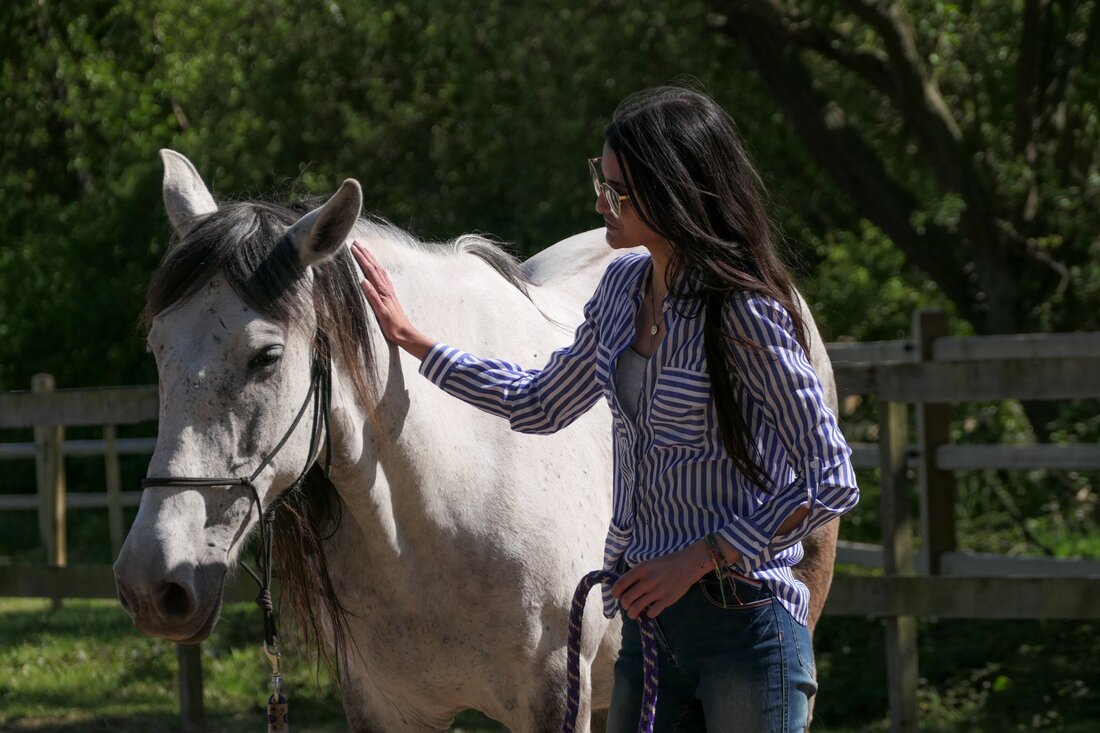
𝐇𝐞𝐭 𝐛𝐞𝐥𝐚𝐧𝐠 𝐯𝐚𝐧 𝐄𝐪𝐮𝐢𝐭𝐚𝐭𝐢𝐨𝐧 𝐒𝐜𝐢𝐞𝐧𝐜𝐞
Tot slot kan het ook voorkomen dat wetenschappelijke informatie wordt vermenselijkt dankzij de moeilijkheidsgraad van bijvoorbeeld het onderwerp. Hierdoor staat de stof gevoelsmatig direct verder van mensen vandaan (ondanks dat ze interesse in het onderwerp hebben!). Het te bespreken onderwerp, zoals een presentatie, in kleinere stukken verdelen of het gebruiken van audiovisuele tools zoals beelden uit de praktijk kunnen al voor opheldering zorgen.
Wees je ook bewust van je publiek en pas waar nodig de overdracht van informatie (je speech, presentatie of seminar) aan. Zo blijft de informatie intact en precies hetzelfde, maar benader je elk publiek met een persoonlijke tintje zodat het voor hen niet alleen interessant is maar ook leuk blijft.
Een stukje uit een review over bovenstaand artikel door Journal of Veterinary Behavior in 2018, die ditzelfde belang nog eens onderstreept:
“𝘖𝘯𝘦 𝘰𝘧 𝘵𝘩𝘦 𝘢𝘪𝘮𝘴 𝘰𝘧 𝘦𝘲𝘶𝘪𝘵𝘢𝘵𝘪𝘰𝘯 𝘴𝘤𝘪𝘦𝘯𝘤𝘦 (𝘌𝘚) 𝘪𝘴 𝘵𝘰 𝘪𝘮𝘱𝘳𝘰𝘷𝘦 𝘩𝘰𝘳𝘴𝘦 𝘸𝘦𝘭𝘧𝘢𝘳𝘦 𝘵𝘩𝘳𝘰𝘶𝘨𝘩 𝘢 𝘴𝘤𝘪𝘦𝘯𝘵𝘪𝘧𝘪𝘤 𝘢𝘱𝘱𝘳𝘰𝘢𝘤𝘩. 𝘏𝘰𝘸𝘦𝘷𝘦𝘳, 𝘭𝘪𝘵𝘵𝘭𝘦 𝘪𝘴 𝘬𝘯𝘰𝘸𝘯 𝘢𝘣𝘰𝘶𝘵 𝘩𝘰𝘸 𝘦𝘲𝘶𝘦𝘴𝘵𝘳𝘪𝘢𝘯𝘴 𝘱𝘦𝘳𝘤𝘦𝘪𝘷𝘦 𝘌𝘚.
𝘛𝘰 𝘥𝘦𝘵𝘦𝘳𝘮𝘪𝘯𝘦 𝘸𝘩𝘢𝘵 𝘦𝘲𝘶𝘦𝘴𝘵𝘳𝘪𝘢𝘯𝘴 𝘵𝘩𝘪𝘯𝘬 𝘢𝘣𝘰𝘶𝘵 𝘌𝘚, 𝘸𝘦 𝘢𝘯𝘢𝘭𝘺𝘻𝘦𝘥 𝘵𝘩𝘦 𝘦𝘷𝘦𝘳𝘺𝘥𝘢𝘺 𝘵𝘢𝘭𝘬 𝘰𝘧 𝘦𝘲𝘶𝘦𝘴𝘵𝘳𝘪𝘢𝘯𝘴 𝘱𝘢𝘳𝘵𝘪𝘤𝘪𝘱𝘢𝘵𝘪𝘯𝘨 𝘪𝘯 𝘢𝘯 𝘰𝘯𝘭𝘪𝘯𝘦 𝘧𝘰𝘳𝘶𝘮 𝘵𝘩𝘳𝘦𝘢𝘥 𝘥𝘦𝘣𝘢𝘵𝘪𝘯𝘨 𝘌𝘚. 𝘜𝘴𝘪𝘯𝘨 𝘲𝘶𝘢𝘭𝘪𝘵𝘢𝘵𝘪𝘷𝘦 𝘥𝘢𝘵𝘢 𝘢𝘯𝘢𝘭𝘺𝘴𝘪𝘴 𝘵𝘦𝘤𝘩𝘯𝘪𝘲𝘶𝘦𝘴, 𝘸𝘦 𝘪𝘯𝘧𝘦𝘳𝘳𝘦𝘥 4 𝘣𝘦𝘭𝘪𝘦𝘧𝘴 𝘢𝘣𝘰𝘶𝘵 𝘴𝘤𝘪𝘦𝘯𝘤𝘦 𝘵𝘩𝘢𝘵 𝘱𝘳𝘦𝘷𝘦𝘯𝘵𝘦𝘥 𝘵𝘩𝘦 𝘶𝘱𝘵𝘢𝘬𝘦 𝘰𝘧 𝘌𝘚 (𝘴𝘤𝘪𝘦𝘯𝘤𝘦 𝘥𝘪𝘴𝘤𝘰𝘶𝘯𝘵𝘴 𝘧𝘦𝘦𝘭, 𝘴𝘤𝘪𝘦𝘯𝘤𝘦 𝘪𝘴 𝘰𝘷𝘦𝘳-𝘳𝘢𝘵𝘦𝘥, 𝘴𝘤𝘪𝘦𝘯𝘤𝘦 𝘪𝘴 𝘢 𝘨𝘪𝘮𝘮𝘪𝘤𝘬, 𝘢𝘯𝘥 𝘴𝘤𝘪𝘦𝘯𝘤𝘦 𝘪𝘴 𝘳𝘦𝘥𝘶𝘤𝘵𝘪𝘰𝘯𝘪𝘴𝘵) 𝘢𝘯𝘥 𝘰𝘯𝘦 𝘵𝘩𝘢𝘵 𝘴𝘶𝘱𝘱𝘰𝘳𝘵𝘦𝘥 𝘪𝘵𝘴 𝘢𝘪𝘮𝘴 (𝘴𝘤𝘪𝘦𝘯𝘤𝘦 𝘪𝘴 𝘶𝘴𝘦𝘧𝘶𝘭 𝘢𝘯𝘥 𝘱𝘳𝘰𝘨𝘳𝘦𝘴𝘴𝘪𝘷𝘦).
𝘛𝘩𝘦𝘴𝘦 𝘣𝘦𝘭𝘪𝘦𝘧𝘴 𝘢𝘳𝘦 𝘥𝘪𝘴𝘤𝘶𝘴𝘴𝘦𝘥 𝘸𝘪𝘵𝘩 𝘳𝘦𝘴𝘱𝘦𝘤𝘵 𝘵𝘰 𝘵𝘩𝘦 𝘥𝘶𝘢𝘭 𝘴𝘺𝘴𝘵𝘦𝘮𝘴 𝘰𝘧 𝘳𝘢𝘵𝘪𝘰𝘯𝘢𝘭 𝘢𝘯𝘥 𝘪𝘯𝘵𝘶𝘪𝘵𝘪𝘷𝘦 𝘪𝘯𝘧𝘰𝘳𝘮𝘢𝘵𝘪𝘰𝘯 𝘱𝘳𝘰𝘤𝘦𝘴𝘴𝘪𝘯𝘨 𝘱𝘳𝘦𝘴𝘦𝘯𝘵 𝘢𝘮𝘰𝘯𝘨 𝘢𝘯𝘺 𝘨𝘪𝘷𝘦𝘯 𝘱𝘰𝘱𝘶𝘭𝘢𝘵𝘪𝘰𝘯, 𝘢𝘴 𝘸𝘦𝘭𝘭 𝘢𝘴 𝘵𝘩𝘦 𝘵𝘳𝘪𝘶𝘯𝘦 𝘥𝘪𝘮𝘦𝘯𝘴𝘪𝘰𝘯𝘴 𝘰𝘧 𝘥𝘦𝘤𝘪𝘴𝘪𝘰𝘯-𝘮𝘢𝘬𝘪𝘯𝘨 𝘨𝘦𝘳𝘮𝘢𝘯𝘦 𝘵𝘰 𝘩𝘰𝘳𝘴𝘦 𝘸𝘦𝘭𝘧𝘢𝘳𝘦 𝘪𝘴𝘴𝘶𝘦𝘴 (𝘦𝘵𝘩𝘪𝘤𝘢𝘭, 𝘮𝘰𝘳𝘢𝘭, 𝘢𝘯𝘥 𝘢𝘦𝘴𝘵𝘩𝘦𝘵𝘪𝘤).
𝘛𝘰 𝘢𝘷𝘰𝘪𝘥 𝘶𝘯𝘪𝘯𝘵𝘦𝘯𝘵𝘪𝘰𝘯𝘢𝘭𝘭𝘺 𝘤𝘳𝘦𝘢𝘵𝘪𝘯𝘨 𝘳𝘦𝘴𝘪𝘴𝘵𝘢𝘯𝘤𝘦 𝘧𝘳𝘰𝘮 𝘵𝘩𝘰𝘴𝘦 𝘸𝘩𝘰 𝘢𝘳𝘦 𝘴𝘬𝘦𝘱𝘵𝘪𝘤𝘢𝘭 𝘢𝘣𝘰𝘶𝘵 𝘴𝘤𝘪𝘦𝘯𝘤𝘦 𝘰𝘳 𝘌𝘚, 𝘸𝘦 𝘳𝘦𝘤𝘰𝘮𝘮𝘦𝘯𝘥 𝘢 𝘴𝘦𝘯𝘴𝘪𝘵𝘪𝘷𝘦 𝘸𝘦𝘭𝘧𝘢𝘳𝘦-𝘤𝘦𝘯𝘵𝘦𝘳𝘦𝘥 𝘳𝘦𝘴𝘦𝘢𝘳𝘤𝘩 𝘦𝘹𝘵𝘦𝘯𝘴𝘪𝘰𝘯 𝘢𝘯𝘥 𝘤𝘰𝘮𝘮𝘶𝘯𝘪𝘤𝘢𝘵𝘪𝘰𝘯 𝘴𝘵𝘳𝘢𝘵𝘦𝘨𝘺 𝘵𝘩𝘢𝘵 𝘪𝘴 𝘵𝘢𝘪𝘭𝘰𝘳𝘦𝘥 𝘧𝘰𝘳 𝘢𝘶𝘥𝘪𝘦𝘯𝘤𝘦𝘴 𝘢𝘯𝘥 𝘦𝘯𝘥 𝘶𝘴𝘦𝘳𝘴 𝘣𝘦𝘺𝘰𝘯𝘥 𝘵𝘩𝘦 𝘢𝘤𝘢𝘥𝘦𝘮𝘪𝘤 𝘱𝘳𝘰𝘥𝘶𝘤𝘵𝘪𝘰𝘯 𝘢𝘯𝘥 𝘤𝘰𝘯𝘴𝘶𝘮𝘱𝘵𝘪𝘰𝘯 𝘰𝘧 𝘌𝘚.”
>> De praktische oefening 'Leren Omdenken'; Een Mindset Challenge voor Ruiters vind je binnenkort in Boek 1 van de Equine Trauma & Behavior Opleiding!
"Follow the Horse, not the Method"
Liefs,
Zoë van Mourik | Equine Trauma & Behavior Specialist
www.zoevanmourik.com & www.houseofhorsemanship.nl
Tijdens de Gedragscursus in Gelderland kwam collega Ruchama Hofman mee om te kijken/doen en had ze ook haar ESDR spullen meegenomen.
'𝘗𝘢𝘢𝘳𝘥𝘦𝘯 𝘩𝘦𝘣𝘣𝘦𝘯 𝘰𝘰𝘬 𝘣𝘢𝘢𝘵 𝘣𝘪𝘫 𝘌𝘔𝘋𝘙 𝘵𝘩𝘦𝘳𝘢𝘱𝘪𝘦 (𝘌𝘚𝘋𝘙)'
- Bit Magazine
Ik heb Ruchama ruim een jaar geleden leren kennen en zij was een van de eersten die contact zocht toen ik net in Nederland was. Inmiddels hebben we al vaker samengewerkt, maar ik had ESDR nog nooit in werking gezien!
Shetlander Bas was door zijn angsten voor heel veel dingen heel geschikt voor een sessie met Ruchama. Samen letten we extra goed op marginale verschillen in zijn gemoedstoestand en eventuele stress responses/releases. De eigenaar wordt helemaal meegenomen in het (best intieme) proces, heel gaaf om te zien hoe Ruchama wetenschap met metaphysica combineert door middel van het gehele plaatje mee te nemen.
Het is dus meer dan alleen het apparaat zelf!
Shetlander Bas was door zijn angsten voor heel veel dingen heel geschikt voor een sessie met Ruchama. Samen letten we extra goed op marginale verschillen in zijn gemoedstoestand en eventuele stress responses/releases. De eigenaar wordt helemaal meegenomen in het (best intieme) proces, heel gaaf om te zien hoe Ruchama wetenschap met metaphysica combineert door middel van het gehele plaatje mee te nemen.
Het is dus meer dan alleen het apparaat zelf!
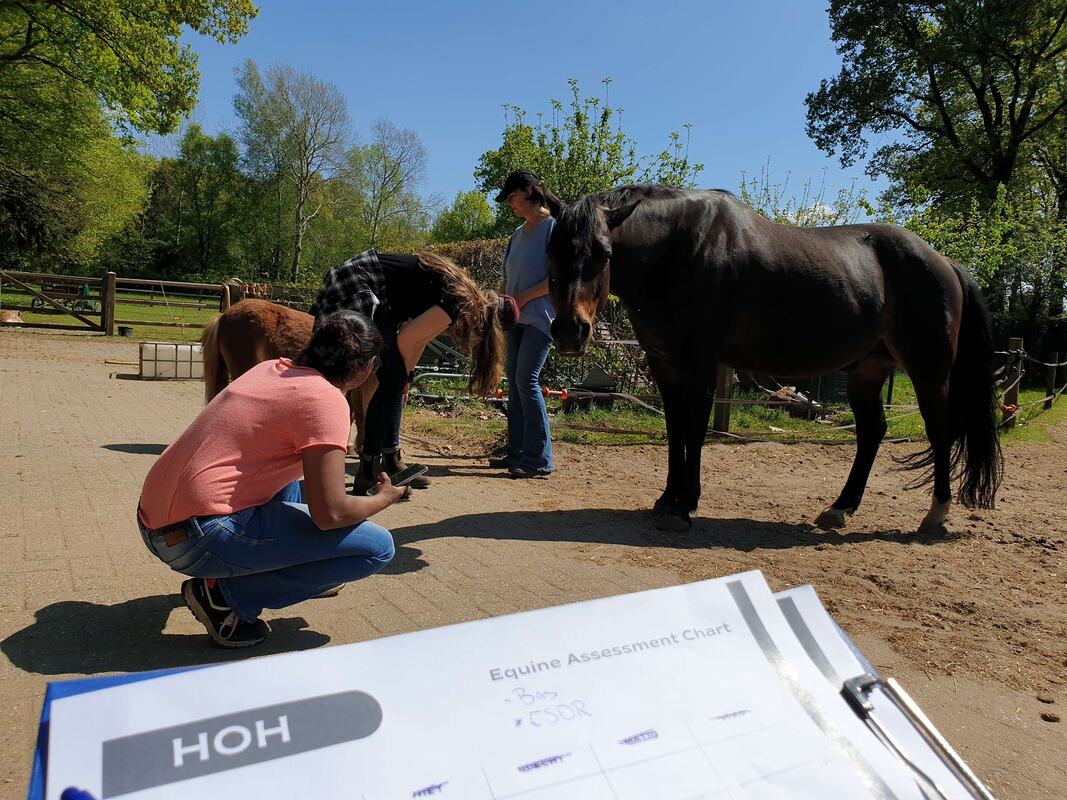
》TIP: Lees ook mijn blog 'Wetenschap Alleen Is Niet Genoeg'
Wil je meer leren over ESDR? Neem contact op met Ruchama Hofman/Ragini Horse Bonding!
Liefs,
Zoë van Mourik | Equine Trauma & Behavior Specialist
www.zoevanmourik.com & www.houseofhorsemanship.nl
𝐖𝐢𝐬𝐭 𝐣𝐞 𝐝𝐚𝐭: 'Ashwagandha' Sanskriet is voor 'Smell of the Horse'?
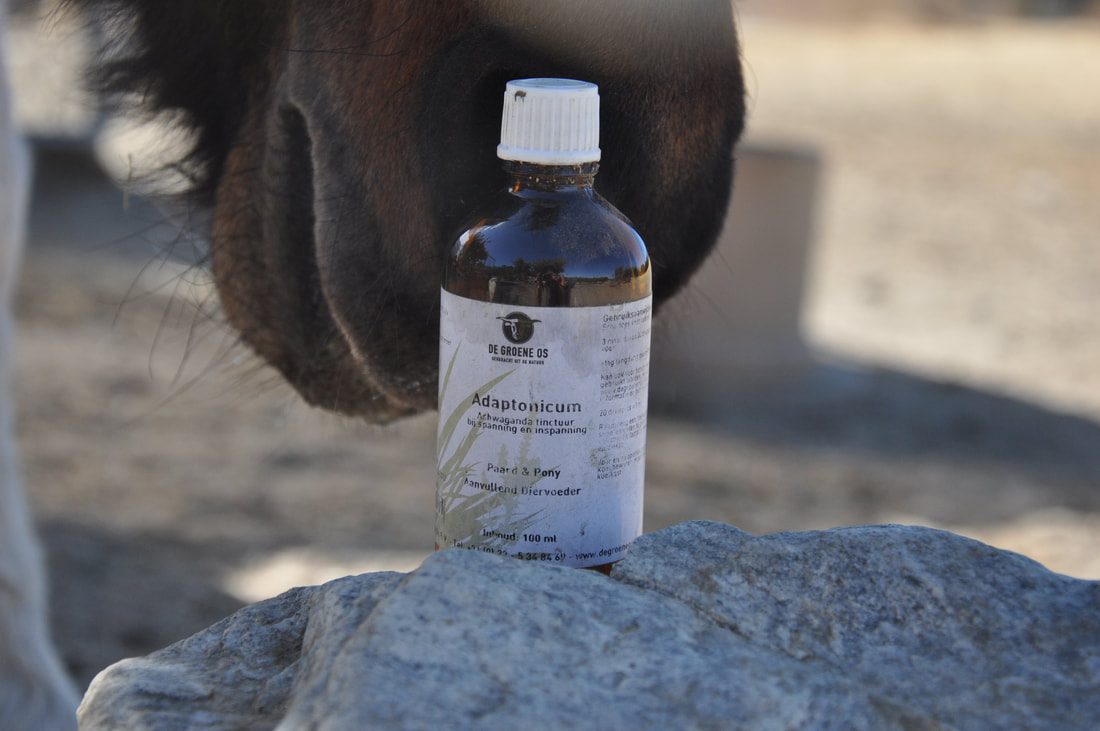
Dit heeft niet alleen te maken met de geur, maar ook met de krachtige werking van deze plant (waar we voornamelijk alleen de wortel als werkzaam bestanddeel van gebruiken).
Het brengt kracht, uithoudingsvermogen en ondersteund een gezond voortplantingssysteem voor zowel mannen als vrouwen (bij zowel mensen, als paarden). Ik gebruik bijvoorbeeld Ashwagandha in poedervorm door mijn smoothies en yoghurt ter ondersteuning van mijn hormoonhuishouding (PCOS) en het tegengaan van mastopathie (cystes bij de borst).
Het brengt kracht, uithoudingsvermogen en ondersteund een gezond voortplantingssysteem voor zowel mannen als vrouwen (bij zowel mensen, als paarden). Ik gebruik bijvoorbeeld Ashwagandha in poedervorm door mijn smoothies en yoghurt ter ondersteuning van mijn hormoonhuishouding (PCOS) en het tegengaan van mastopathie (cystes bij de borst).
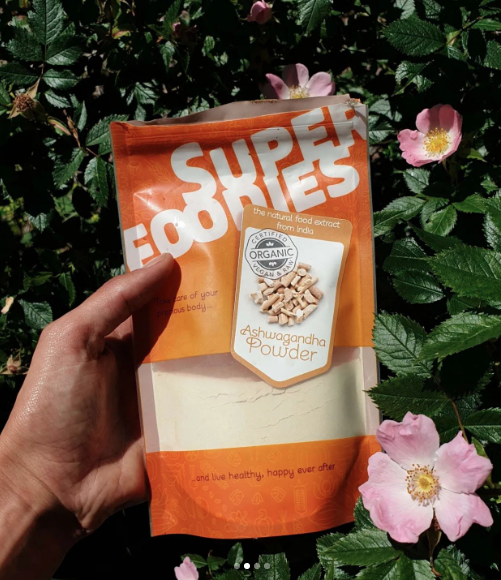
Opmerkelijk is dat de omgeving waarin deze plant voorkomt, verre van ideaal en zelfs vijandig is voor bepaalde planten. De grond is vaak Alkaline-arm en de lucht extreem droog; moeilijke omstandigheden voor een plant om succesvol uit te kunnen groeien! Deze unieke weerbaarheid zien we ook terug in het gebruik van dit kruid op het gebied van ondersteuning en veerkracht in het zenuwstelsel en endocriene systeem en bij zowel emotionele als -diepgewortelde- fysieke stress (bij dus zowel mensen, als paarden).
Doordat Ashwagandha een Adaptogeen is heeft het nóg een bijzondere werking: deze tonic is in staat om een opgejaagd/oververmoeid zenuwstelsel 𝐭𝐞𝐠𝐞𝐥𝐢𝐣𝐤𝐞𝐫𝐭𝐢𝐣𝐝 te VERSTERKEN èn te KALMEREN. Ideaal bij bijvoorbeeld paarden met een traumatische achtergrond, die vaak maar moeilijk uit hun reactieve/instinctieve cyclus komen.
In de Ayuverdische geneeskunde behoort Ashwagandha overigens tot de 'rasayana' kruiden; 'verjongend'.
𝐀𝐬𝐡𝐰𝐚𝐠𝐚𝐧𝐝𝐡𝐚:
Botanische naam: 𝘞𝘪𝘵𝘩𝘢𝘯𝘪𝘢 𝘴𝘰𝘮𝘯𝘪𝘧𝘦𝘳𝘢
Familie: 𝘕𝘢𝘤𝘩𝘵𝘴𝘤𝘩𝘢𝘥𝘦
Energetica: 𝘉𝘪𝘵𝘵𝘦𝘳, 𝘴𝘢𝘮𝘦𝘯𝘵𝘳𝘦𝘬𝘬𝘦𝘯𝘥, 𝘻𝘰𝘦𝘵, 𝘷𝘦𝘳𝘸𝘢𝘳𝘮𝘦𝘯𝘥
Gebruikte deel: 𝘞𝘰𝘳𝘵𝘦𝘭 (𝘮𝘪𝘯𝘥𝘦𝘳 𝘷𝘰𝘰𝘳𝘬𝘰𝘮𝘦𝘯𝘥; 𝘣𝘭𝘢𝘥 𝘦𝘯 𝘧𝘳𝘶𝘪𝘵)
Properties: 𝘛𝘰𝘯𝘪𝘤, 𝘰𝘯𝘵𝘴𝘵𝘦𝘬𝘪𝘯𝘨𝘴𝘳𝘦𝘮𝘮𝘦𝘯𝘥, 𝘢𝘯𝘵𝘪𝘰𝘹𝘪𝘥𝘢𝘯𝘵, 𝘪𝘮𝘮𝘶𝘶𝘯 𝘢𝘮𝘧𝘰𝘵𝘦𝘦𝘳, 𝘻𝘦𝘯𝘶𝘸𝘬𝘢𝘭𝘮𝘦𝘳𝘦𝘯𝘥, 𝘢𝘯𝘵𝘪-𝘵𝘶𝘮𝘰𝘳, 𝘬𝘳𝘢𝘮𝘱𝘴𝘵𝘪𝘭𝘭𝘦𝘯𝘥, 𝘥𝘪𝘶𝘳𝘦𝘵𝘪𝘤𝘶𝘮
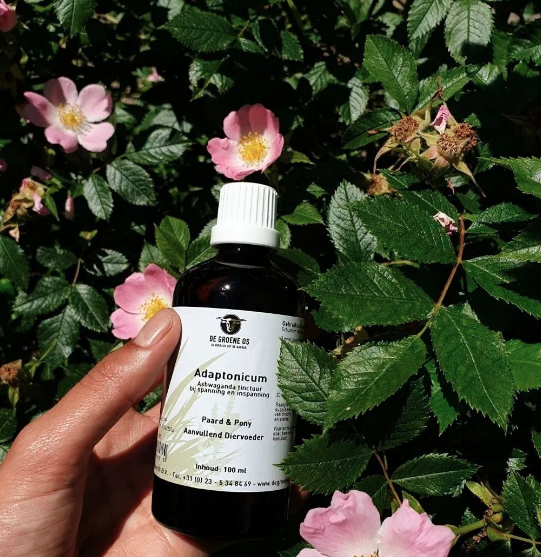 | Meer weten over (het gebruik van) Ashwagandha? Neem contact op! Het Adaptonicum voor paarden bestellen? Dat kan via: www.degroeneos.nl |
Liefs,
Zoë van Mourik | Equine Trauma & Behavior Specialist
www.zoevanmourik.com & www.houseofhorsemanship.nl
Your Trainer Works Hard So You Don't Have To
What makes a 'Trainer'? Riding horses all day? Being overpaid for doing seemingly simple things? But at the same time having trouble to make ends meet every month? There are many contradictions out there but unfortunately, some of them are true. And we should absolutely talk about that.
Because we are so much more than just 'a trainer'. We are the ones who gradually expose your horse to certain troubled areas, so you can have safe rides. We are the ones who carefully swing our leg over their backs for the first time, giving them a strong foundation for you to work with. Our job description ranges from crash-dummy to being a social worker. Why? Because we don't believe in fixed approaches; we believe in the process of every individual horse. Because ultimately we want to give you a 'ready' and reliable horse with said foundation. We enjoy our present rides with them just as much as we want you to enjoy your future ones, together.
Building such a foundation takes time. Transferring all of this information to a horse’s owner also takes time. We as trainers know the emotional investment it takes, which often makes the financial investment pale in comparison. Meaning lots of good trainers will actually give you more than just your money's worth. No matter the future discipline of your horse; a good foundation can help get you there, so always invest in good trainers. They are your horse's building blocks.
Be Grateful For Your Trainer(s) Today
What makes a 'Trainer'? Riding horses all day? Being overpaid for doing seemingly simple things? But at the same time having trouble to make ends meet every month? There are many contradictions out there but unfortunately, some of them are true. And we should absolutely talk about that.
Because we are so much more than just 'a trainer'. We are the ones who gradually expose your horse to certain troubled areas, so you can have safe rides. We are the ones who carefully swing our leg over their backs for the first time, giving them a strong foundation for you to work with. Our job description ranges from crash-dummy to being a social worker. Why? Because we don't believe in fixed approaches; we believe in the process of every individual horse. Because ultimately we want to give you a 'ready' and reliable horse with said foundation. We enjoy our present rides with them just as much as we want you to enjoy your future ones, together.
Building such a foundation takes time. Transferring all of this information to a horse’s owner also takes time. We as trainers know the emotional investment it takes, which often makes the financial investment pale in comparison. Meaning lots of good trainers will actually give you more than just your money's worth. No matter the future discipline of your horse; a good foundation can help get you there, so always invest in good trainers. They are your horse's building blocks.
Be Grateful For Your Trainer(s) Today
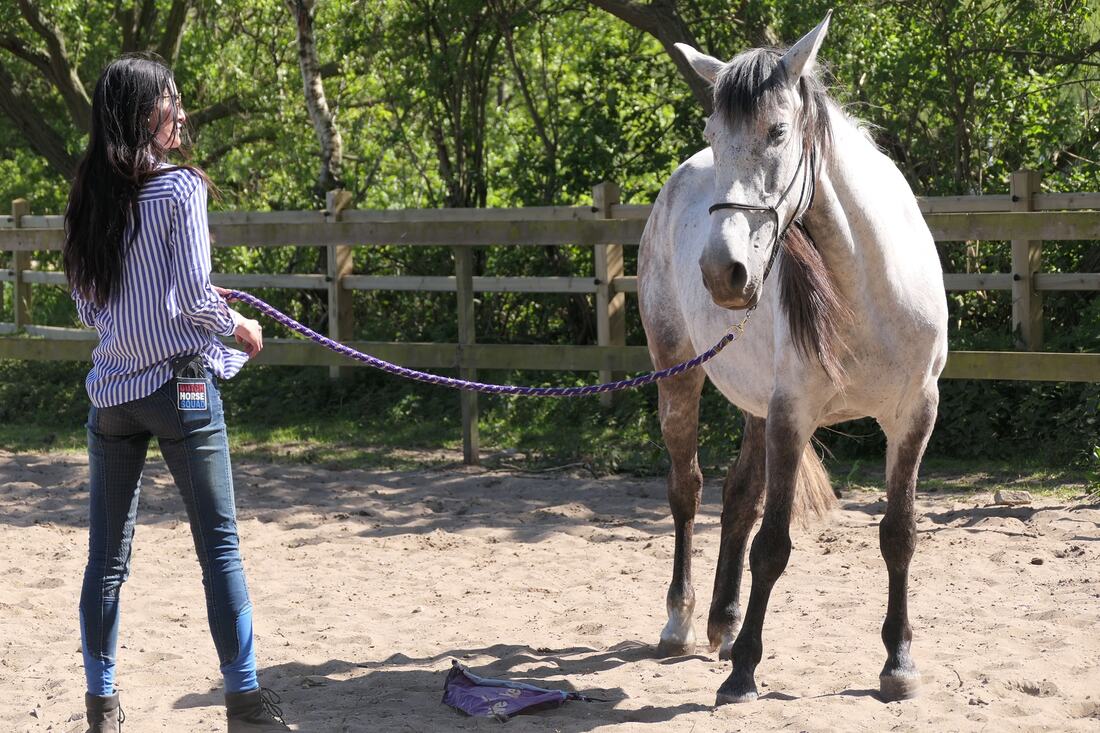
by Zoë van Mourik | Equine Trauma & Behavior Specialist
www.zoevanmourik.com & www.houseofhorsemanship.nl
》Tip: Lees ook de blog "De Financiële en Emotionele waarde van een Paard met een verleden"
Een ander topic dat tijdens sessies met klanten en collega's regelmatig voorbij komt is de aanschafprocedure van een getraumatiseerd/verwaarloosd paard, via bijvoorbeeld een opvang. Want waar komen deze prijzen vandaan? Waarom zit er zo'n verschil in die prijzen? Is dat niet te veel voor een adoptiepaard?
Allereerst is het verstandig om na te gaan waaròm je een adoptiepaard wil. Maak je deze keuze uit financiële overwegingen, omdat je denkt dat je zo goedkoper uit bent? Of wil je een paard een betere toekomst bieden? Er is hier eigenlijk maar 1 goed antwoord..
Een dier aanschaffen en onderhouden is namelijk nooit goedkoop. En onderhoud (zoals ziekten) kun je niet vooraf bepalen, zoals bij de aanschafprijs wel het geval is. Het is dus een fabel dat een duur paard nooit ziek is, of een adoptiepaard altijd in de lappenmand zit.
Maar hoe wordt die aanschafprijs nou bepaald?
Daar komen verschillende factoren bij kijken, te beginnen met wat je doel is met dit paard, wat je eigen skill level is. Een goed getraind en op wedstrijd uitgebracht adoptiepaard is logischerwijs duurder dan een wat ouder recreatiepaard. Trainingskosten dus.
Andere zaken waar veel geld naartoe gaat voordat een paard geadopteerd is, zijn (in de US) het betalen van een fee bij o.a. veilingen, transportkosten, quarantainekosten, stallingskosten, voeding (extra nutrition), basis zorg, speciale zorg (na bijvoorbeeld een fysiek trauma of ziekte) en uiteindelijk training. De gemiddelde prijs van een adoptiepaard dekt vaak nog niet eens de helft van al deze onkosten..! Een adoptiepaard kost in de 1e week na aankomst bij een opvang gemiddeld € 1000,-. In alleen de eerste week! Iets om over na te denken...
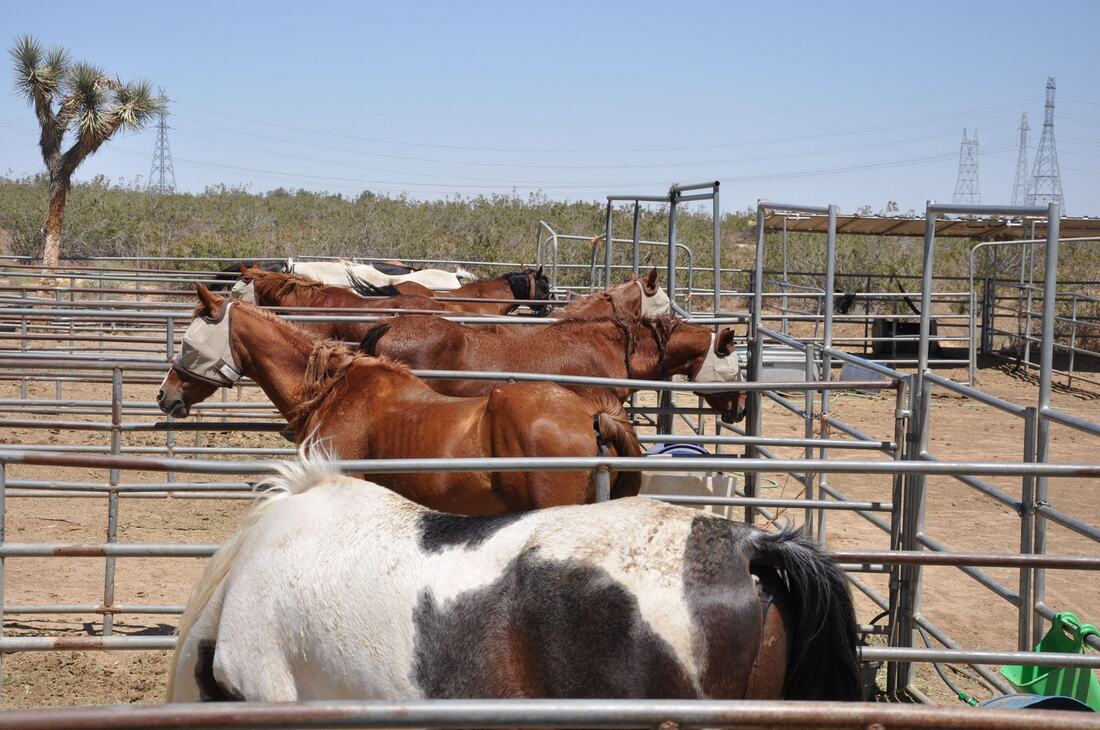
Houd bovenstaande informatie zeker in je achterhoofd wanneer je adoptie overweegt. Heb je vragen? Stel ze gerust! Wil je een paard adopteren en heb je behoefte aan een extra paar ogen/handen? Ik ga graag met je mee om dit proces helder en eerlijk te doorlopen, zodat je met het juiste paard en een goed gevoel naar huis gaat.
Set yourself up for success!
Liefs,
Zoë van Mourik | Equine Trauma & Behavior Specialist
www.zoevanmourik.com & www.houseofhorsemanship.nl
Set yourself up for success!
Liefs,
Zoë van Mourik | Equine Trauma & Behavior Specialist
www.zoevanmourik.com & www.houseofhorsemanship.nl
Author
Zoë van Mourik: Equine Trauma Specialist, Behaviorist
Archives
April 2024
November 2023
August 2023
June 2023
November 2022
October 2022
August 2022
June 2022
May 2022
Categories
All
Abuse
Adaptogeen
Arabier
Balance Pad
Bitloos
Buck-brannaman
Case
De Groene Os
Disregulatie
E+
Energy Healing
Energy Therapy
English
ESDR
Fysieke Problemen
Gangenpaarden
Gedrag
Gedragsproblemen
How To
Iet
Insights
Jonge Paarden
Kruiden
Maagproblemen
Metaphysics
NATO
Natural Horsemanship
Partnerschap
Psychology
Ras
Rehabliteren
Retreat
Ruiters
Self Development
Self-development
Serie
Shamanism
Story
Training
Update
Usa
Vermenselijken
Video
Wetenschap
Wilde Paarden
Zintuigen
 RSS Feed